VB–G RAM G Bill: Modi govt responds to 4 key myths about MGNREGA
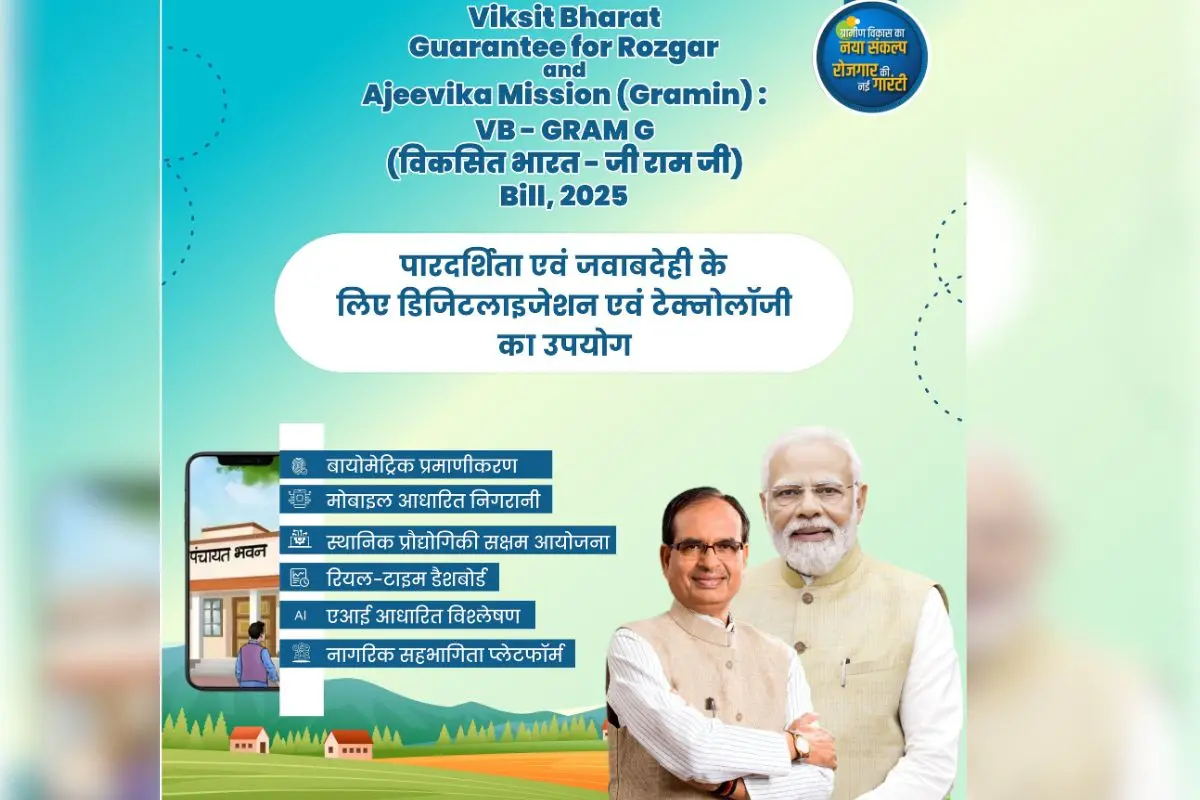
The government on Thursday adressed a series of myths circulating about the Viksit Bharat – Guarantee for Rozgar and Ajeevika Mission (Gramin) Bill, commonly known as the VB–G RAM G Bill, which was recently introduced in the Lok Sabha. The Ministry of Rural Development has shared clarifications on social media to counter incorrect claims about the legislation, particularly concerns over rural employment guarantees and local governance. The bill, intended to replace the existing rural job scheme, has prompted significant public and political debate.
Myth: Employment guarantee is being diluted.
Fact: Under the new legislation, the number of guaranteed days of wage employment for rural households has been increased to 125 days per year, up from the earlier 100 days under the Mahatma Gandhi National Rural Employment Guarantee Act (MGNREGA). The bill aims to modernise the rural employment framework and bring it in line with the vision of Viksit Bharat @2047.
Myth: Local decision-making is getting weakened
Fact: The government says village governance will remain central to the planning and execution of rural works. Under the new framework, Viksit Gram Panchayat Plans prepared by local bodies will still determine what jobs and projects are undertaken, ensuring that the planning process stays rooted in community involvement.
Myth: The Centre is transferring its “burden” to States
Fact: While some changes in funding structure have been proposed, the central government continues to assert its role as the principal funder. Under the new scheme, resources are expected to be shared between the Centre and the states, aiming for cooperative federalism and stronger accountability, rather than shifting the burden wholly to states.
Myth: Workers will have no work for a stretch of 60 days
Fact: To address concerns about labour availability during crucial farming periods, the bill allows states to pause public works for up to 60 days. This flexibility is intended to ensure that rural workers are available for agricultural activities when needed, while still guaranteeing a total of 125 days of employment overall.
What is the aim of the new employment guarantee framework?
The VB–G RAM G Bill, introduced in Parliament, represents a major overhaul of India’s rural employment guarantee framework, replacing the two-decades-old MGNREGA with a new statutory law focused on both employment and infrastructure creation.
It aligns job guarantees with broader rural development goals, including water security, core rural infrastructure, livelihood-related infrastructure and climate resilience works.