Tamil Nadu delimitation row: Why CM Vijay is opposing it in Assembly today
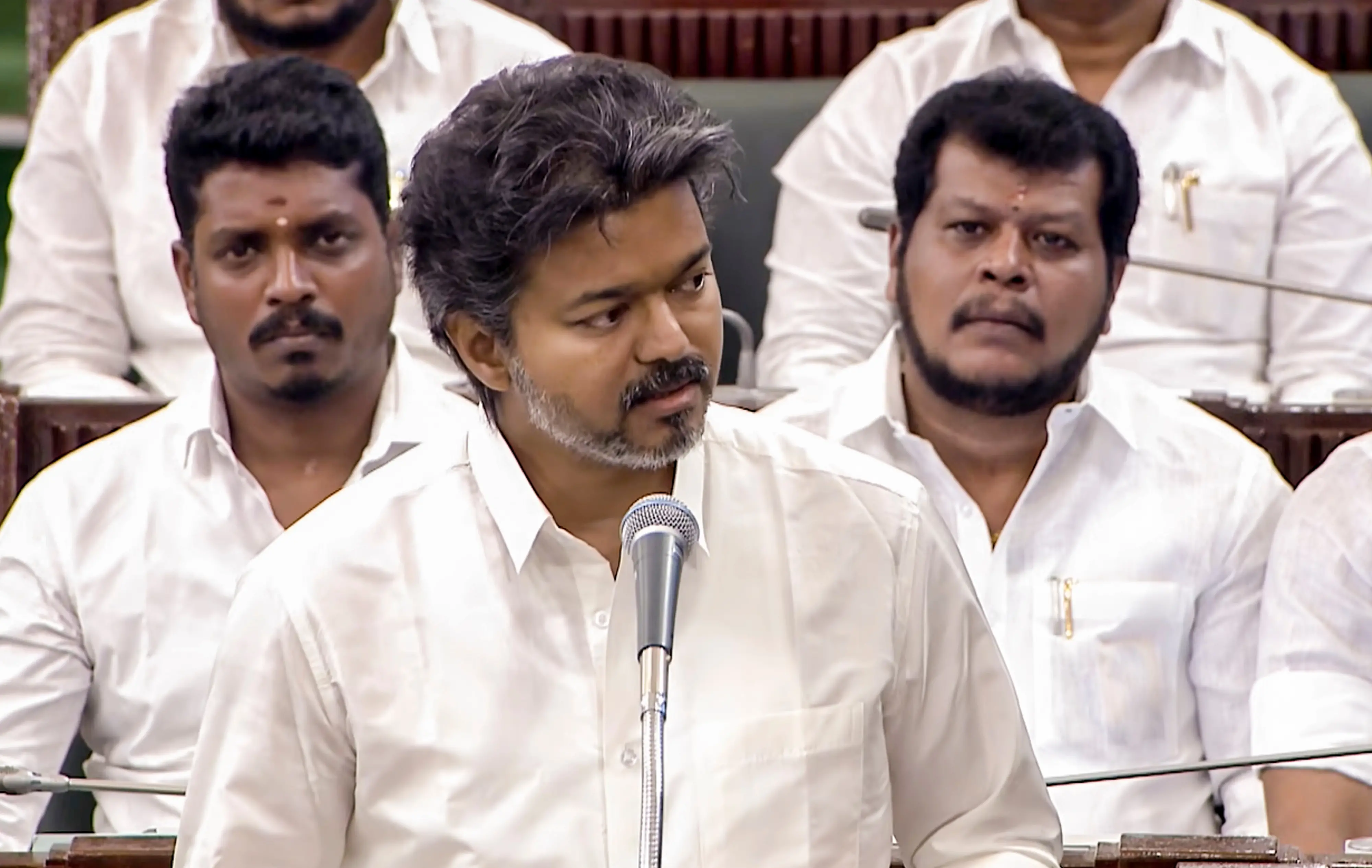
Chennai: Tamil Nadu Chief Minister C. Joseph Vijay is set to move a special resolution in the state Assembly on Wednesday opposing a possible delimitation exercise that could alter the distribution of Lok Sabha seats among states.
The resolution seeks to retain the existing 543-member strength of the Lok Sabha and protect Tamil Nadu's current share of parliamentary representation. The issue has become particularly significant for southern states, which argue that states that successfully controlled population growth could lose relative political representation if seats are redistributed using newer population figures.
What is delimitation?
Delimitation is the process of redrawing the boundaries of electoral constituencies and determining how many seats are allocated to different states based on population.
For Lok Sabha elections, the process is constitutionally linked to population data. The objective is to ensure that constituencies broadly reflect changes in population and that representation remains proportionate.
India's last major allocation of Lok Sabha seats among states was based on the 1971 Census. The Constitution was subsequently amended to freeze the allocation of seats to states to encourage population-control measures.
The freeze has been extended over the years and is due to the possibility of a fresh delimitation after the next Census-based process.
Why is Tamil Nadu opposing delimitation?
Tamil Nadu's concern is primarily about relative political representation.
The state has argued that southern states made significant efforts to control population growth through family-planning programmes while also improving health, education and other social indicators.
If parliamentary seats are redistributed according to newer population figures, states with faster population growth could receive a larger share of seats, while states such as Tamil Nadu could see their proportion of representation decline.
Tamil Nadu's proposed Assembly resolution therefore argues that states should not be penalised for successfully implementing population-control policies.
Why is the number 543 important?
The Lok Sabha currently has 543 elected seats.
Tamil Nadu's proposed resolution calls for the existing strength of 543 seats to be retained and for the current allocation of seats among states to remain frozen.
The state argues that this would protect the existing proportional representation of states while avoiding a redistribution that could alter the political balance between regions.
A government publication discussing the 2026 delimitation debate has also examined scenarios involving an increase in Lok Sabha strength to around 815 seats, while stating that such an increase could preserve the approximate proportional share of states.
What does Tamil Nadu want?
The proposed resolution seeks several safeguards.
- Retain 543 Lok Sabha seats
Tamil Nadu wants the Centre to permanently retain the existing strength of the Lok Sabha at 543.
Protect the current state-wise allocation
It seeks to freeze the existing allocation of parliamentary seats among states so that Tamil Nadu and other southern states do not lose their relative share.
- Preserve the Lok Sabha-Rajya Sabha ratio
The resolution also calls for maintaining the existing relationship between representation in the Lok Sabha and Rajya Sabha.
- Women's reservation
The resolution seeks implementation of 33% reservation for women in the 2029 Lok Sabha election based on the existing 543 constituencies.
It also seeks the extension of one-third reservation to subsequent state Assembly elections.
Why are southern states concerned?
The delimitation debate has become a wider issue involving several southern states, including Tamil Nadu, Kerala, Karnataka, Andhra Pradesh and Telangana.
Their concern is that population-based redistribution could shift the balance of parliamentary representation towards states with larger populations.
Tamil Nadu has previously argued that using population figures to redistribute seats could penalise states that achieved lower population growth through government-backed family-planning measures. A Rajya Sabha debate document recorded concerns that southern states could see their political representation reduced relative to faster-growing states.
What happened to the earlier delimitation proposal?
The resolution refers to a constitutional amendment Bill that, according to the supplied report, failed to pass Parliament in April 2026.
The proposal was linked to ending the long-standing freeze on state-wise seat allocation, using newer Census data for delimitation and substantially increasing the strength of the Lok Sabha.
Tamil Nadu is now expressing concern over reports that a similar constitutional amendment could be brought back.
The state's proposed resolution is therefore intended to establish its position before any such exercise is undertaken.
Why does delimitation matter?
Delimitation is not simply about changing constituency boundaries. It can affect the distribution of political representation across India.
If the total number of seats remains fixed while seats are redistributed according to population, some states could gain seats while others could lose them.
If the total number of seats is increased substantially, the impact could be different because states could gain seats without necessarily losing their existing proportional share. Government material published earlier this year has discussed a possible increase from 543 to roughly 815 seats under such a model.
This distinction — redistribution of existing seats versus increasing the total number of seats — is central to the current debate.
What is the 1971 Census freeze?
The allocation of Lok Sabha seats among states has remained linked to the 1971 Census for decades.
The freeze was introduced partly to ensure that states that implemented population-control measures would not be disadvantaged by losing parliamentary representation because of slower population growth.
The boundaries of constituencies have nevertheless been periodically adjusted. The key issue now is whether the number of seats allocated to each state should also be recalculated using newer population data.
What will the Tamil Nadu Assembly resolution do?
The resolution itself will express the Tamil Nadu government's position and urge the Union government to maintain the existing system.
It does not by itself prevent a future constitutional amendment or delimitation exercise at the national level. Any change to the constitutional framework governing parliamentary representation would require action at the Union level and, where constitutionally required, Parliament.
The immediate significance of the resolution is therefore political: Tamil Nadu is formally placing its objections and demands on record.
Why is this becoming a major political issue now?
The debate has gained momentum as the post-freeze period approaches and questions remain over how the next delimitation should be carried out.
Tamil Nadu's position is that population growth should not be the sole basis for determining political representation when states have followed national population-control policies.
The state's argument is also connected to a broader question of federal representation: Should states that have successfully controlled population growth risk having less influence in Parliament as a consequence?
The opposing principle is that parliamentary representation should ultimately reflect the population being represented. This tension between equal representation of citizens and the federal balance between states lies at the heart of the delimitation debate.
What happens next?
The Tamil Nadu Assembly is scheduled to take up the special resolution on Wednesday.
The House will also consider the government's response to the general discussion on the revised Budget for 2026-27 and the revised Agriculture Budget.
The delimitation resolution is expected to add to the national debate over how India's parliamentary constituencies and state-wise representation should be determined after the long-standing freeze.