Tahawwur Rana’s voice, handwriting samples to be matched with 26/11 attack evidence
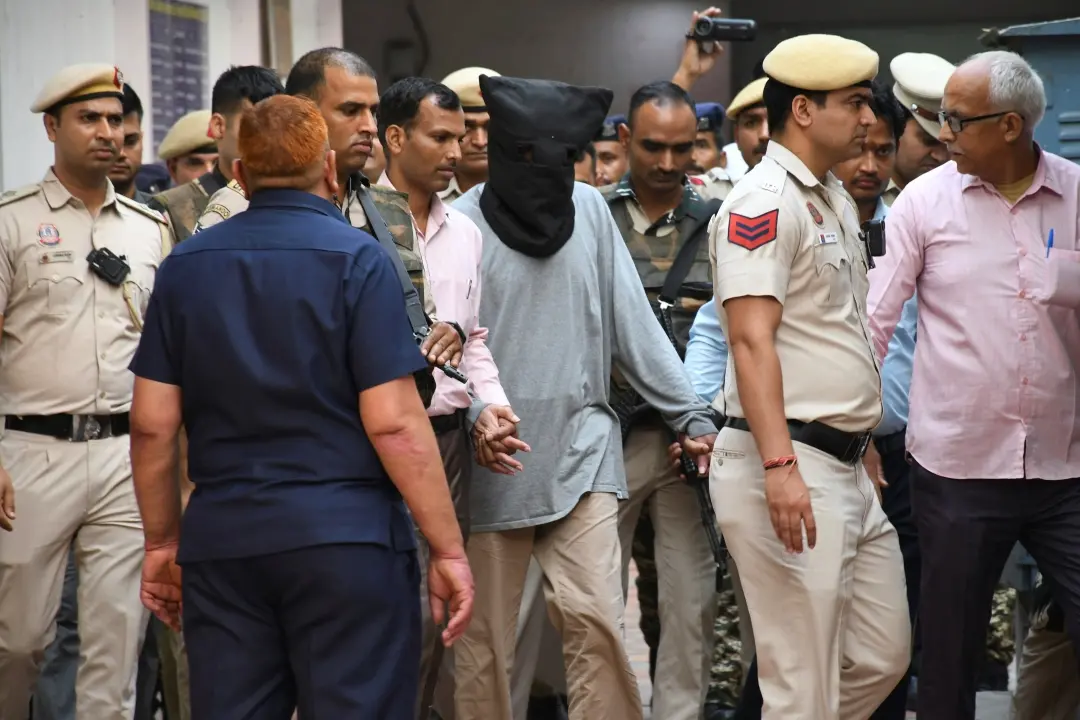
New Delhi: A Special NIA court in Delhi has granted permission for the federal anti-terror agency to collect Pakistani-Canadian national Tahawwur Rana’s voice samples and match them with recordings of his telephonic discussions with 26/11 co-accused David Coleman Headley, an official said on Thursday.
Rana’s handwriting samples will also be compared with written instructions, coordinates, and maps, which he is suspected of passing to Headley to assist in scouting terror targets in Mumbai in 2008, the official added, referring to the trial court’s approval granted on Wednesday.
NIA to reconstruct events of 2008 attack
The National Investigation Agency (NIA) is also preparing to take Rana to Mumbai and other cities to reconstruct the chain of events preceding the 2008 terror attack that resulted in 166 fatalities.
On 28 April, the Special NIA court extended Rana’s custody by 12 additional days to allow further interrogation.
Special Judge Charan Jit Singh accepted Senior Advocate Dayan Krishnan’s submission that more time was required by the investigating agency to uncover Rana’s role in the Mumbai attacks.
Rana’s initial 18-day remand ended on Monday, and he was presented in court for the extension of his NIA custody.
Alleged evasive tactics during questioning
During court proceedings, the Special Judge was informed by the NIA of Rana’s alleged evasive techniques employed during interrogation.
The agency also expressed its intention to take Rana to various cities to reconstruct the sequence of events during his visits to India preceding the terror attack.
The court had earlier directed the NIA to conduct a medical examination of Rana every 24 hours and to permit him to speak to his lawyers every second day.
Rana denies involvement in 26/11 planning
During his 18-day remand, Rana was also questioned by officers of Mumbai Police. In the course of his interrogation, Rana maintained that he had "no connection whatsoever" with the planning or execution of the attack.
He also asserted that his childhood friend and co-accused, David Coleman Headley, was solely responsible for the reconnaissance and planning aspects of the 26/11 attack. Headley is currently serving a sentence in a US prison.
Headley, who turned approver in the case, had previously admitted to conducting reconnaissance missions across India, including in Mumbai, on behalf of Lashkar-e-Taiba (LeT).
Visit to Kerala under scrutiny
During questioning, Rana revealed that besides Mumbai and Delhi, he had also travelled to Kerala. When asked about the purpose of his visit, he claimed to have visited a known acquaintance, providing the individual’s name and address to the agency.
Rana, a former officer in the Pakistan Army’s Medical Corps, was recently extradited to India from the United States to face trial in connection with the Mumbai terror attacks.
IANS inputs