2025 Waqf law: Supreme Court stays few key provisions, refuses to stall entire law
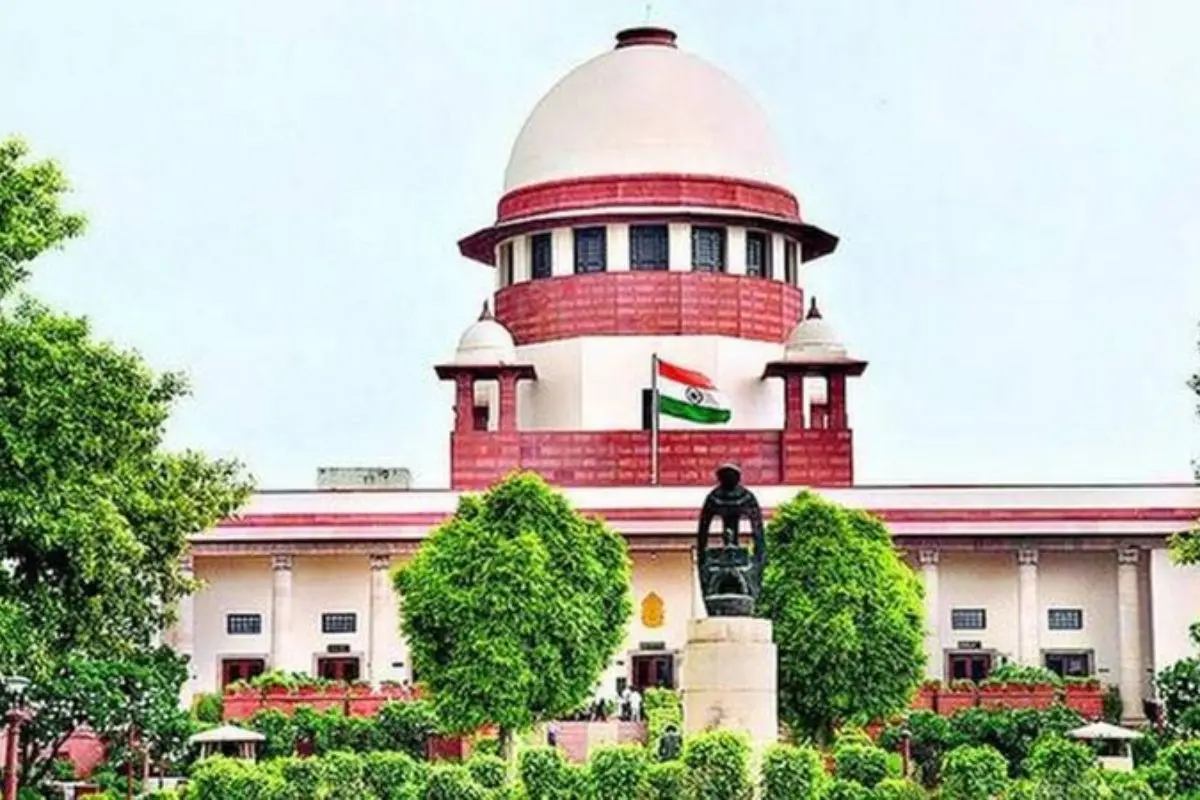
New Delhi: The Supreme Court on Monday issued an interim order staying certain key provisions of the Waqf (Amendment) Act, 2025. While the court refused to halt the entire law, it did intervene to protect the interests of various parties, citing the legal principle that a statute is presumed to be constitutional unless proven otherwise.
A bench comprising Chief Justice BR Gavai and Justice Augustine George Masih stated in their 128-page order, "Presumption is always in favour of constitutionality of a statute and intervention [can be done] only in the rarest of rare cases." They added, "We do not find that any case is made to stay the provisions of the entire statute. The prayer for stay of the impugned Act is, therefore, rejected."
Provisions stayed by the court
Despite refusing to stay the entire law, the court's order suspended several contentious clauses to "protect the interest of parties" and "balancing the equities."
The stayed provisions include:
* Five-Year Practice Clause: The court stayed the provision that required a person to have been "practicing Islam for at least five years" to create a Waqf. The bench noted that no clear mechanism for determining this has been established.
* Collector's Authority: The authority of a collector to adjudicate the status of Waqf properties was also put on hold.
* Property Status: The provision stating that a property should not be treated as a "Waqf property till the designated officer submits his report" was stayed.
* Government Property Clause: A clause that allowed a designated officer to make corrections in revenue records if a property was determined to be government property was also suspended.
The court also ruled on the composition of Waqf boards, directing the Central Waqf Council to have no more than four non-Muslim members out of a total of 20, and state boards to have a maximum of three non-Muslim members out of 11.
The verdict clarified that the directions were "prima facie and interim in nature," and will not prevent petitioners or the government from presenting their full arguments on the law's constitutional validity during the final hearing. The bench referenced historical legislative efforts to manage Waqf properties, noting that the issue of mismanagement has been a concern since the Mussalman Wakf Act of 1923.
The court's decision did not find fault with the five-year practice clause in principle but emphasized that its lack of a procedural framework made it unenforceable at this time. The court also held that no third-party rights can be created on a disputed property until its title is finally determined by a tribunal.