Supreme Court dismisses SpiceJet plea upholds ₹144.5 crore deposit order in Maran dispute
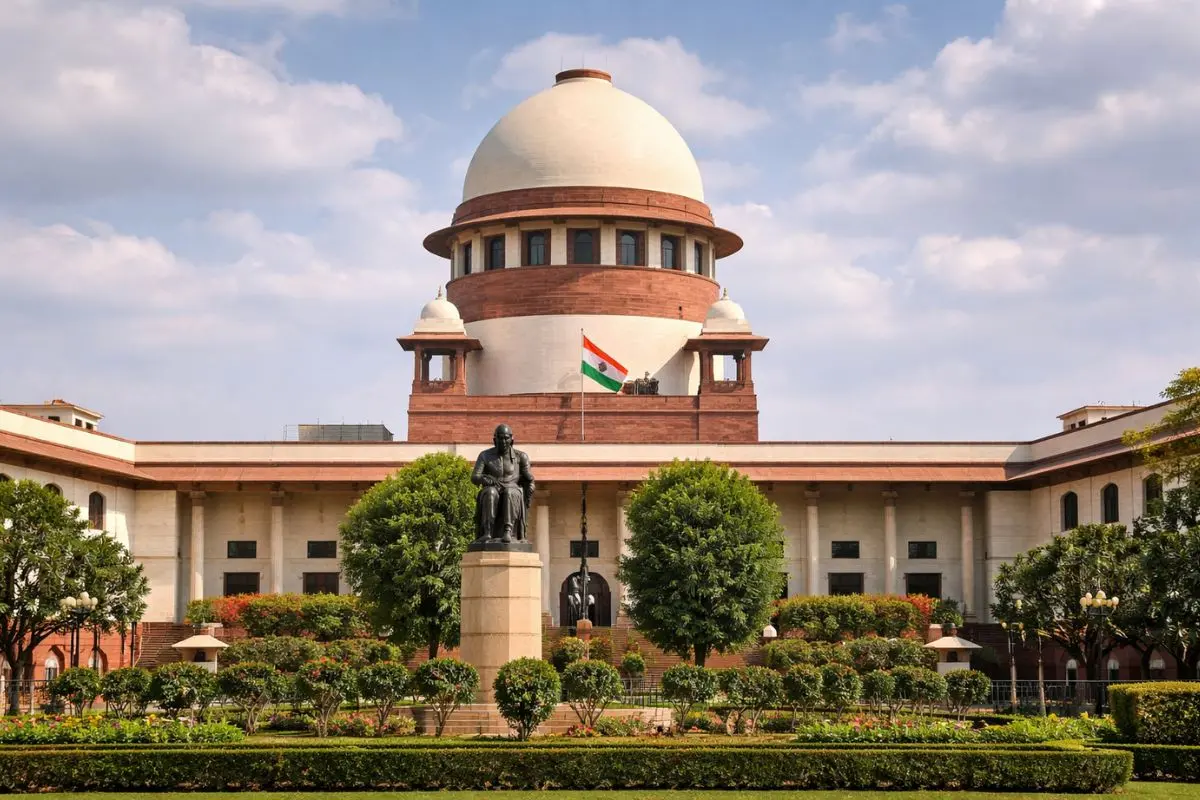
The Supreme Court on Friday dismissed a petition filed by SpiceJet Limited and its Chairman and Managing Director Ajay Singh challenging a Delhi High Court order that directed the airline to deposit ₹144.5 crore in its long-running financial dispute with media baron Kalanithi Maran and KAL Airways Pvt Ltd.
A bench comprising Justices P.S. Narasimha and Alok Aradhe rejected the plea and imposed costs of ₹1 lakh on Singh, effectively upholding the High Court’s directive.
The ruling marks yet another significant development in a corporate legal battle that has stretched over a decade, stemming from the ownership restructuring of SpiceJet during its financial crisis in 2014-15.
The dispute traces back to January 2015 when SpiceJet was on the brink of collapse, facing severe financial distress that threatened to ground its operations. At the time, Kalanithi Maran and KAL Airways were the airline’s promoters and majority shareholders, holding a combined 58.46% stake.
To rescue the carrier, the parties entered into a Share Sale and Purchase Agreement (SSPA), under which Maran and KAL Airways agreed to transfer their entire shareholding to Ajay Singh for a nominal consideration of ₹2.
The agreement involved the issuance of warrants and cumulative redeemable preference shares (CRPS), with an overall funding commitment estimated at approximately ₹450 crore. However, disputes subsequently arose over whether the respective obligations under the SSPA had been fulfilled, leading to arbitration proceedings.
In July 2018, a three-member arbitral tribunal ruled in favour of Maran and KAL Airways. The tribunal directed SpiceJet and Singh to refund ₹308.21 crore along with interest at 12 per cent per annum from November 2015.
Both sides challenged parts of the arbitral award under Section 34 of the Arbitration and Conciliation Act, 1996. At the same time, enforcement proceedings were initiated, resulting in multiple rounds of litigation before the Delhi High Court and the Supreme Court.
During interim proceedings, the Delhi High Court initially directed SpiceJet to deposit ₹579 crore. This was later modified on appeal to permit a combination of a ₹329 crore bank guarantee and a ₹250 crore cash deposit.
In 2019, ₹250 crore was released to the decree holders. An additional ₹58.21 crore was realised through the encashment of the bank guarantee.
The dispute intensified in February 2023 when the Supreme Court ordered the encashment of the bank guarantee and directed SpiceJet and Singh to pay ₹75 crore towards interest within three months. The Court cautioned that failure to comply would render the arbitral award executable in its entirety.
When the airline sought an extension of time, the Supreme Court declined in July 2023, observing that non-compliance had already made the award fully executable.
In January this year, the Delhi High Court heard fresh applications from SpiceJet and Singh seeking a stay on the award.
The High Court noted that earlier directions issued by the Supreme Court had not been complied with. It relied on Article 144 of the Constitution, which mandates that all authorities act in aid of the Supreme Court.
The Court further recorded that the judgment debtors had themselves acknowledged in previous proceedings that ₹194.51 crore remained payable towards interest. Of this amount, ₹50 crore had already been deposited, leaving a balance of ₹144.5 crore, which formed the basis of the deposit order.
Challenging this direction, SpiceJet and Singh once again approached the Supreme Court. On Friday, the apex court dismissed the plea, thereby affirming the Delhi High Court’s order requiring the deposit of ₹144.5 crore.
The latest ruling strengthens the enforceability of the arbitral award and marks another decisive turn in one of India’s most prolonged aviation-related corporate disputes.