SC refuses stay on UPI MDR: Demands answers from Centre, RBI, and NPCI on revenue flow
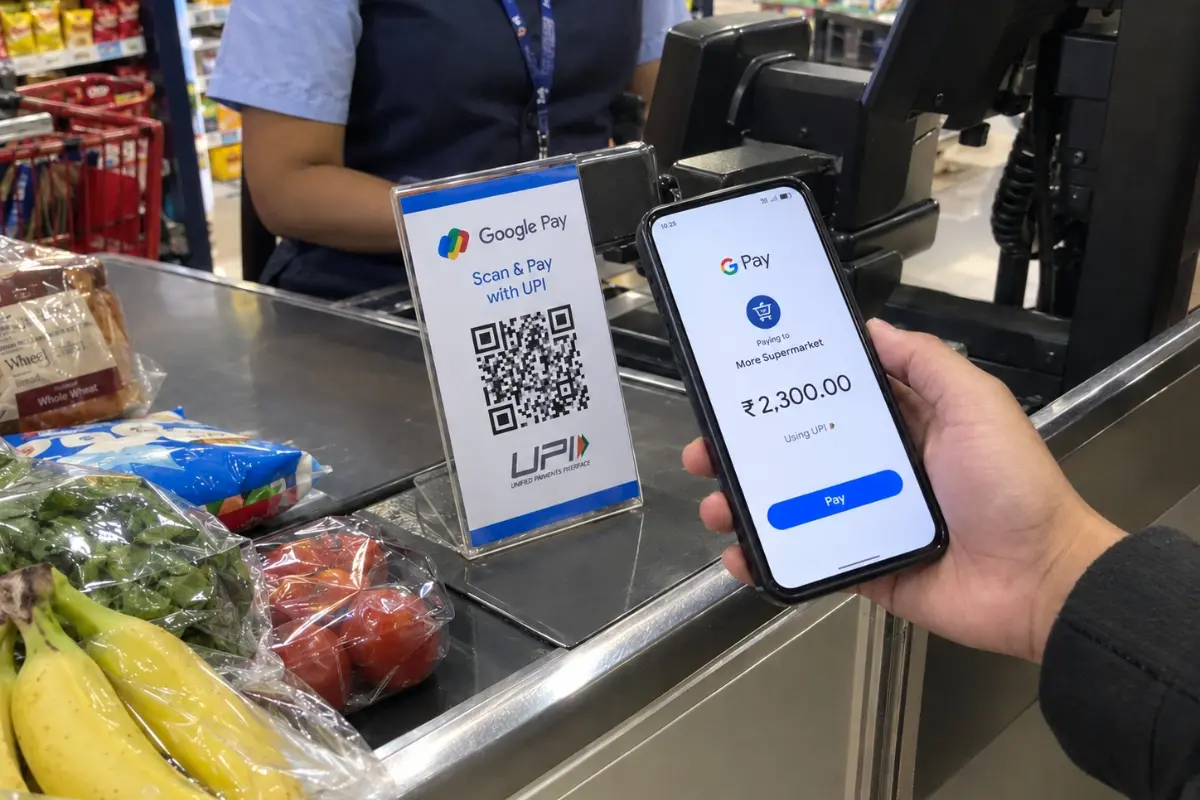
New Delhi: The Supreme Court on Monday questioned the legal authority and specific nature of proposed charges on commercial Unified Payments Interface (UPI) transactions exceeding Rs 2,000, asking which entity ultimately receives the funds and whether the levy can be defined as a fee.
A bench comprising Chief Justice of India Surya Kant and Justices Joymalya Bagchi and V Mohana sought responses from the Union government, the Reserve Bank of India (RBI), and the National Payments Corporation of India (NPCI) on a petition challenging two Gazette notifications that introduced the charges and outlined the procedure for their collection.
During the proceedings, Justice Bagchi questioned counsel representing the respondent authorities on the character of the levy, asking, “Who gets the payment? Who gets the fee?”
ALSO READ: Proposed 0.4% UPI Merchant Fee Will Not Be Passed to Consumers
The court further questioned the executive scope backing the levy, asking, “What is the executive scope of making this expropriation? If not a fee, then what is the character of this charge?”
The bench raised these queries while scrutinising the framework through which UPI transaction fees are gathered and the specific entities to which the collected amounts accrue.
Appearing for one of the respondents, a counsel explained the mechanics of the UPI system by drawing a comparison to credit and debit card transactions. He noted that a UPI transaction relies on the joint operation of multiple entities, including the issuing and receiving banks alongside payment system facilitators.
“Two banks, a coordinating agency, a payer, a recipient,” the counsel submitted while describing the architecture of a transaction.
He stated that all participating entities must connect on a single platform for a transaction to succeed, contending that the service charge functions as a cost-sharing framework for maintaining that infrastructure.
“UPI is no different than Debit-Credit card,” the counsel argued.
The court also evaluated whether the collected sum constituted a statutory levy or a commercial service fee.
The counsel clarified that the charge was not a statutory collection received by the Government of India, adding that the NPCI simply acts as a facilitator and that no portion of the funds goes to the Union government.
Analysing the matter in relation to the Income Tax Act, the court inquired about the tax treatment of the collected revenue, referencing Section 269 to ask whose hands the amount would be recognised as taxable income.
The bench also cited Section 269SU, which governs prescribed electronic payment modes, while tracking the flow of funds among the participating financial entities.
Seeking further clarity, the court asked who ultimately receives the proceeds generated from the UPI transaction fees.
The counsel replied that the funds are allocated to the institutions supporting both sides of the payment network, specifically the aggregators or the participating banks.
He maintained that the setup is a purely administrative structure designed to support payment operations, emphasising that the government is “miles away from this money”.
The Supreme Court directed the Union government to file an affidavit addressing the issues raised during the hearing, while also seeking responses from the RBI and NPCI regarding the character and operation of the charges.
The respondents have been granted four weeks to submit their counter-affidavits.
ANI