Sophia, Vyom, Mishri, Atom: Operation Sindoor inspires names of newly hatched endangered birds in Rajasthan
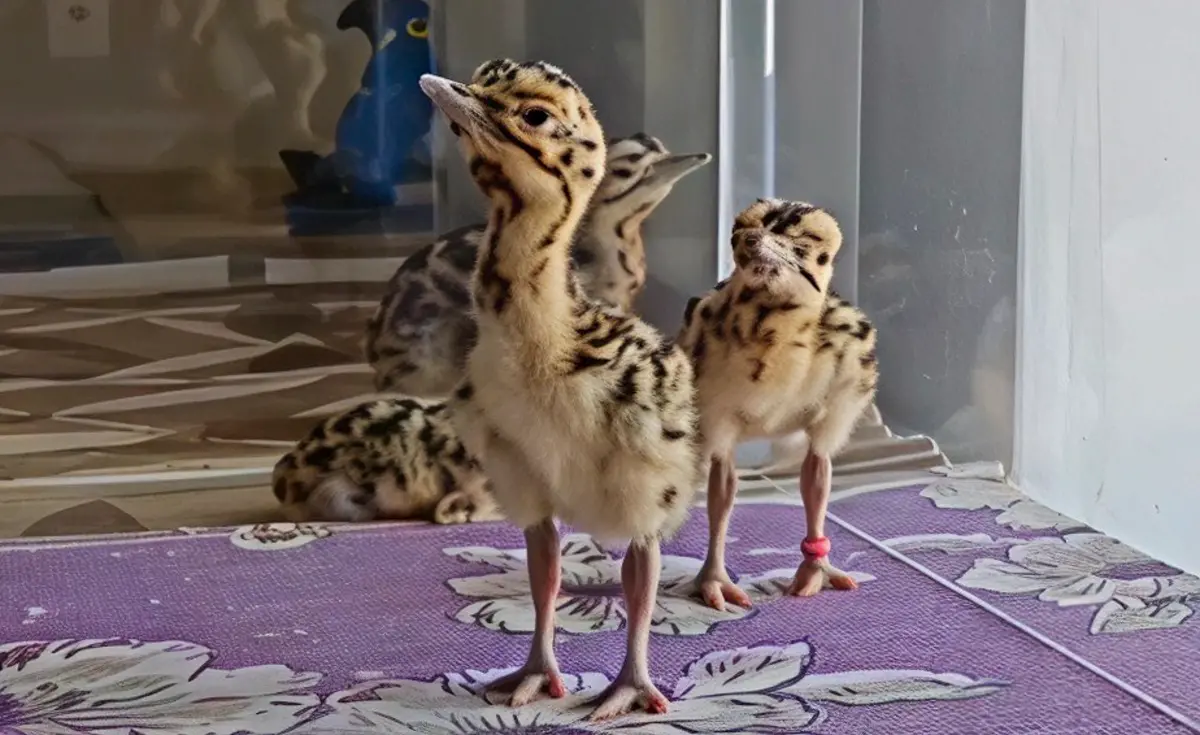
Jaisalmer: In a symbolic tribute to the Indian armed forces after Operation Sindoor, officials at the Desert National Park in Rajasthan have named newly hatched Great Indian Bustard (GIB) chicks after key officers and milestones linked to the military action.
Names such as Sindoor, Atom, Mishri, Vyom, and Sophia now echo across the conservation facilities at Sudasari and Sam, where national pride is being channelled into reviving one of the country's most threatened bird species.
“By giving these chicks these names, we are connecting the story of wildlife conservation with the story of national courage,” said Brijmohan Gupta, Divisional Forest Officer (DFO), Desert National Park.
The initiative began when a chick hatched on May 5 was named Sindoor, marking the codename of the military operation.
Subsequent chicks followed:
- Atom (hatched May 9) signifies the strategic strength of the mission.
- Mishri (May 19) is named after a cyber intelligence officer who worked undercover.
- Vyom (May 23) honours Wing Commander Vyomika Singh.
- Sophia (May 24) is named for Colonel Sophia Qureshi — both officers led the official media briefing for the operation.
A total of 21 chicks have been born under the Project GIB initiative this year, including seven in May and one on June 1.
Operation Sindoor: A backdrop of valour
Operation Sindoor was launched in the early hours of May 7 by the Indian military to target and dismantle nine terror infrastructures in Pakistan and Pakistan-occupied Kashmir (PoK). The action was in retaliation for the April 22 terror attack in Pahalgam.
Following the operation, India responded to Pakistan’s subsequent drone and missile attacks aimed at both military and civilian locations.
“It’s not just about saving a bird, it’s about preserving the values that define us as a nation,” Gupta added.
Bustards at the brink
Once widespread across Indian grasslands, the Great Indian Bustard has been driven to the edge of extinction. Habitat loss, poaching, and threats from power lines have sharply reduced their numbers. Fewer than 150 individuals remain in the wild, the majority of them in Rajasthan.
In response, Project GIB was launched in 2018 as a joint initiative involving the Ministry of Environment, Wildlife Institute of India, and the Rajasthan Forest Department.
AI and technology aiding conservation
The centres at Sudasari and Sam are equipped with AI-powered surveillance, temperature-controlled incubators, and sensor-based monitoring systems that allow real-time observation of egg and chick health.
So far, 65 chicks have been successfully hatched and nurtured.
The newly hatched birds are being trained in semi-natural enclosures to acclimatise them to wild conditions. Officials plan to eventually reintroduce the birds to the open desert, aiming to establish a self-sustaining wild population.
Focus on survival and local involvement
Gupta stated that the next priority is to enhance survival rates and reduce infant mortality. AI technology has already shown promising results in early intervention and around-the-clock monitoring.
Importantly, the project involves local communities to cultivate a sense of shared responsibility in protecting the critically endangered species.