Setback for Justice Yashwant Varma in cash haul case; Supreme Court dismisses plea
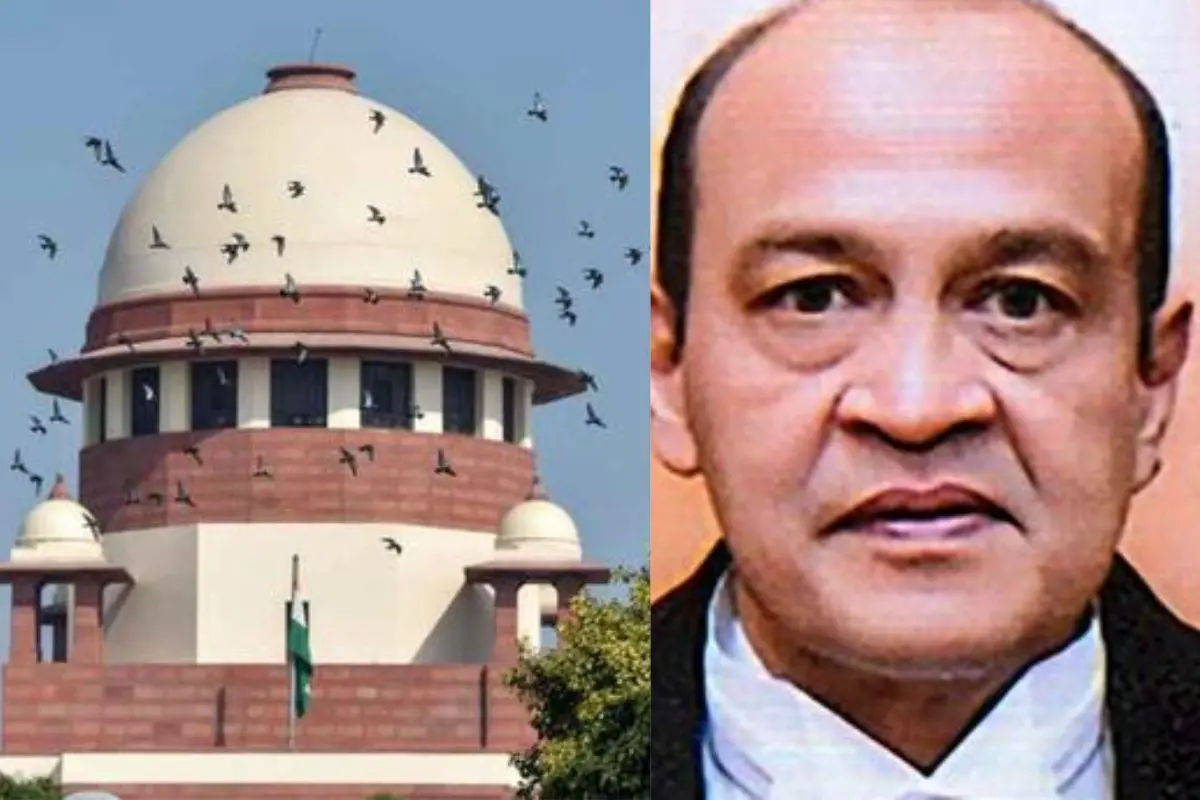
The Supreme Court on Thursday dismissed a petition filed by Allahabad High Court Judge Justice Yashwant Varma, who sought to invalidate an in-house inquiry report that found him guilty of misconduct. The report was linked to the discovery of a large cache of partially burnt cash at his official residence.
A bench of Justices Dipankar Datta and A G Masih observed that the inquiry procedure was "scrupulously followed" and stated that Justice Varma's conduct did not inspire confidence, thus his plea should not be entertained. The ruling is a major setback for the judge who has been at the center of the controversy since the cash was found following a fire in the storeroom of his Delhi residence in March.
CJI's Recommendation
Justice Varma had also sought to quash the recommendation by then Chief Justice of India (CJI) Sanjiv Khanna, who urged the President and Prime Minister to initiate impeachment proceedings against him. The Supreme Court upheld the in-house procedure's legal sanctity, stating it is not a parallel mechanism outside the constitutional framework.
The bench affirmed that the then CJI and the in-house committee adhered to all stipulated procedures, making the recommendation to the President and Prime Minister constitutional.
During the judgment, Justice Datta acknowledged that the uploading of photos and videos of the fire operation on the Supreme Court's website was not required. However, he noted that "nothing turns on it" as Justice Varma did not challenge the action at an "opportune moment."
The court also dismissed a separate petition from advocate Mathews J. Nedumpara, which sought to register an FIR against Justice Varma, on the grounds of "abuse of process of the Court."
Procedural objections and panel's findings
In his petition, Justice Varma had argued that the inquiry "reversed the burden of proof," forcing him to disprove the charges against him. He alleged that the panel's findings were based on a "preconceived narrative" and that the process lacked "procedural fairness."
However, the three-judge inquiry panel, headed by Chief Justice Sheel Nagu of the Punjab and Haryana High Court, had concluded that Justice Varma and his family members had "covert or active control" over the storeroom. This finding of misconduct was deemed serious enough to recommend his removal.
The top court had previously defended the CJI's authority to act on judicial misconduct, stating that the CJI cannot be merely a "post office" but has "certain duties to the nation."