‘Not responsible for casualties’: PG agreement under scrutiny after 7 deaths in Satya Niketan
A paying guest agreement linked to the Satya Niketan building that collapsed in Delhi, killing seven people, has come under scrutiny after it reportedly stated that the hostel authorities would not be responsible for casualties or certain injuries and losses.
The Satya Niketan building collapse has raised fresh questions about the safety and accountability of private paying guest accommodations in Delhi after an alleged PG agreement linked to the property surfaced.
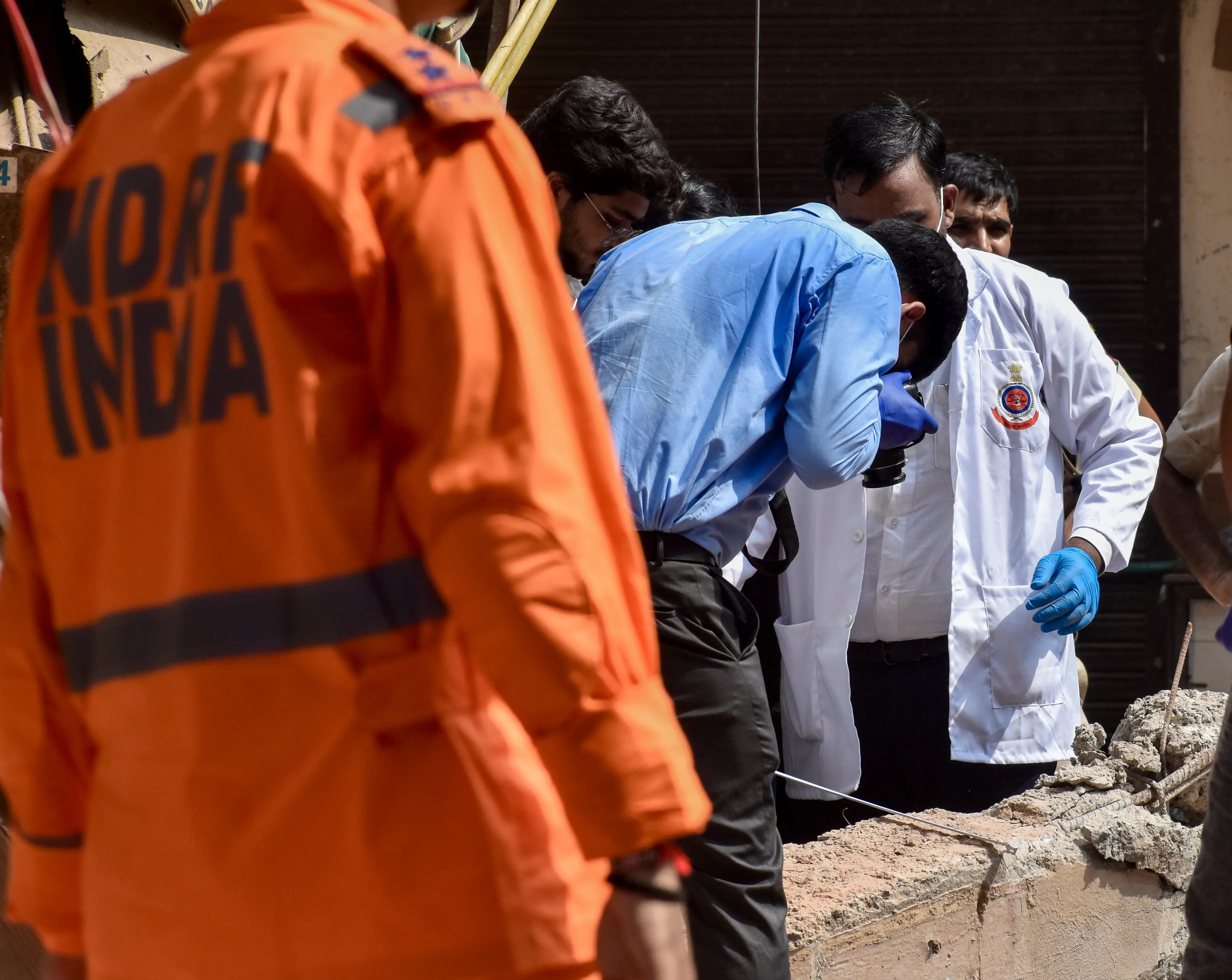
The five-storey building near Delhi University's South Campus collapsed on Sunday, leaving seven people dead and several others injured. The property was being used as a boys' PG accommodation.
A copy of the alleged agreement signed by tenants has now come under scrutiny because of clauses that sought to limit the hostel's responsibility for casualties, injuries and damage to tenants' belongings in certain circumstances.
What did the PG agreement say?
According to the reported copy, one clause stated that the hostel would not be liable for compensation in cases involving personal injury, loss or damage to belongings when the incident resulted from circumstances described as being beyond the PG's control.
The clause reportedly referred to situations including fire, heavy rain, earthquakes, sealing of the premises and other natural calamities.
Another clause stated that the PG authorities were not responsible for casualties or risks faced by tenants.
The wording has attracted attention because the agreement was allegedly used for accommodation in the very building that later collapsed.
However, the existence of such a clause does not by itself establish whether it would be legally enforceable. Its validity and the responsibility of the property owner or operator would depend on the facts of the case and applicable law.
Seven people killed in Satya Niketan collapse
The building collapsed on Sunday in Satya Niketan, an area close to Delhi University's South Campus and known for its large number of student PGs and hostels.
Seven people have died in the tragedy, while several others were rescued or taken to hospital. Rescue teams worked through the rubble as authorities searched for people who might still be trapped.
The building was reportedly more than five decades old and had recently undergone or was undergoing renovation work. Preliminary accounts have pointed to possible water accumulation and work in the basement, although investigations are continuing to establish the exact cause of the collapse.
Building violations also under scrutiny
The PG agreement is only one part of the wider investigation.
The collapsed structure had previously attracted attention over its construction and use. Officials said the building was an unauthorised G+4 structure in a resettlement colony where permission had reportedly been granted only for a G+1 structure.
Local residents also alleged that repair work was being carried out in the basement and that water had accumulated there after days of rain. Civic officials said they could not confirm the nature of any such work until the debris was removed.
The incident has therefore raised questions about construction approvals, structural safety, building maintenance and the conversion of residential properties into accommodation for large numbers of students.
Delhi PG safety comes under fresh scrutiny
The tragedy has also brought the broader regulation of private PGs and hostels into focus.
Many students, particularly those studying away from their home cities, rely on private PGs because institutional hostel capacity is limited. The safety of these properties therefore becomes a significant concern when residential buildings are converted into high-occupancy accommodation.
The Delhi High Court has also raised concerns over the safety of students living in PGs and private hostels. The court has sought information about the regulatory framework and directed the MCD to conduct an audit of PGs and hostels.
Why the agreement matters
The alleged agreement has become significant because it highlights the difference between contractual terms and the broader responsibility of property owners and operators to provide safe accommodation.
A clause attempting to exclude liability cannot, on its own, settle questions about whether a building was structurally safe, whether construction rules were followed or whether required safety standards were met.
Those questions are now central to the investigation into the Satya Niketan collapse.
The tragedy has consequently widened from a single building collapse into a larger debate over how Delhi regulates PGs, how old residential structures are monitored, and who should be held accountable when students are housed in potentially unsafe buildings.
The PG agreement is likely to become an important part of the public debate, but it should not be presented as proof that the hostel had legally escaped responsibility. The key questions remain whether the building complied with approved plans, whether structural and safety requirements were met, whether renovation work affected the structure and whether authorities adequately monitored the property.
The tragedy has also exposed a wider problem: students often depend on private accommodation near universities, while the supply of institutional hostel rooms may not meet demand. The High Court's scrutiny of PG safety and the MCD's proposed audits could therefore lead to broader regulatory action.