Sarojini Naidu birth anniversary: Remembering the 'Nightingale of India'
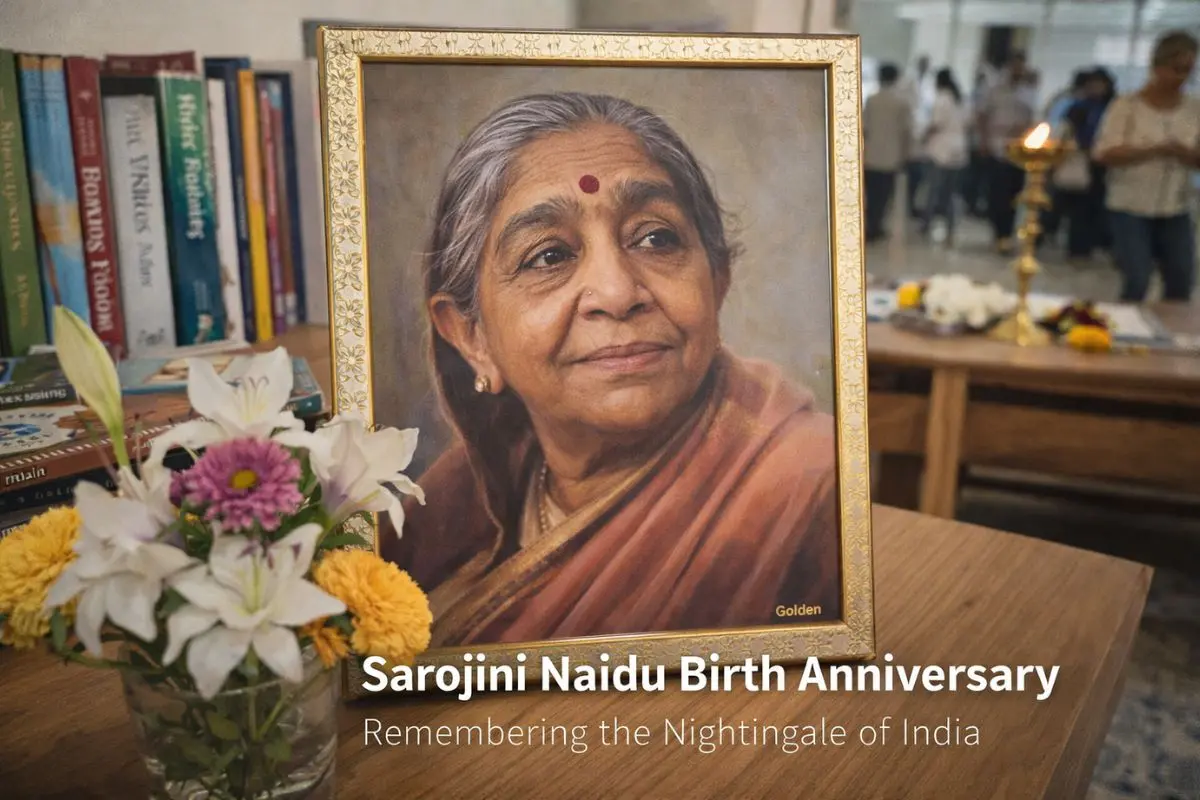
On Sarojini Naidu’s birth anniversary, India remembers a woman whose voice flowed seamlessly between poetry and politics. Known as the “Nightingale of India,” Naidu was not only a gifted poet but also one of the most compelling voices of India’s freedom struggle. Her life was a rare blend of lyrical beauty, sharp wit, and unyielding courage.
Born on February 13, 1879, in Hyderabad, Naidu showed extraordinary brilliance from an early age. A child prodigy, she reportedly wrote a 1,300-line poem titled The Lady of the Lake at just 13, stunning her family and teachers alike. Her academic talent took her to London and later Cambridge, where she polished her literary craft and found her voice as a poet.
From poetic genius to political awakening
Sarojini Naidu’s early years were shaped by literature, but destiny nudged her toward nationalism. Her encounter with Gopal Krishna Gokhale and later Mahatma Gandhi transformed her path. Gandhi’s ideals deeply resonated with her, leading her to step beyond the world of poetry into the arena of activism.
Naidu became one of the most charismatic orators of the freedom movement. Her speeches were powerful yet poetic, capable of stirring crowds and unsettling colonial authorities. She actively participated in the Non-Cooperation Movement and the Civil Disobedience Movement, enduring imprisonment multiple times.
One of the most defining moments of her political career came during the Salt March in 1930. After Gandhi’s arrest, Naidu took charge of leading the protest at the Dharasana Salt Works. Despite brutal police action, she urged satyagrahis to remain non-violent, a testament to her leadership and resolve.
A leader with wit, warmth, and defiance
Naidu was revered not just for her courage but also for her humour and warmth. She famously teased Gandhi, calling him “Mickey Mouse” and joking about the high cost of keeping him poor. Her wit humanised the giants of the freedom movement and revealed her own vibrant personality.
In 1925, she created history by becoming the first Indian woman to preside over the Indian National Congress. Later, after Independence, she became the first woman Governor of an Indian state, serving as the Governor of the United Provinces (now Uttar Pradesh).
Despite her towering political role, Naidu never abandoned poetry. Her works, including 'The Golden Threshold' and 'The Broken Wing', celebrated India’s landscapes, people, and spirit. Her verses carried both romantic beauty and patriotic pride.
Naidu passed away on March 2, 1949, but her legacy continues to resonate. On her birth anniversary, she is remembered as more than a poet or politician — she remains a symbol of India’s intellectual brilliance, fearless resistance, and the power of a voice that refused to be silenced.