Deputy Chairman to head Rajya Sabha after Dhankhar’s resignation; new VP to be elected within 6 months
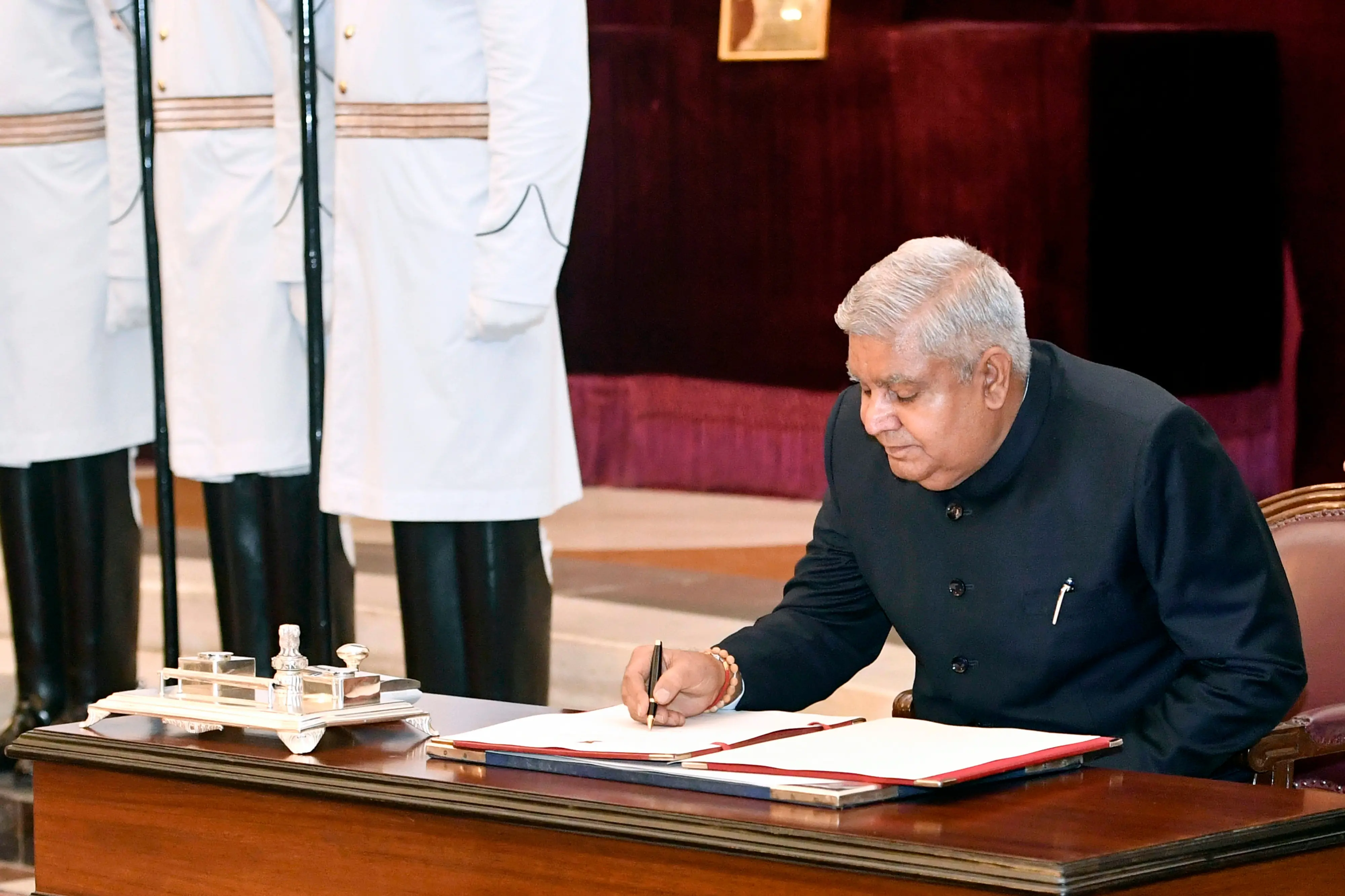
New Delhi: The sudden resignation of Vice President Jagdeep Dhankhar has once again brought focus to India's constitutional safeguards that ensure continuity in parliamentary operations. While mid-term resignations from the Vice Presidency are unusual, the Indian Constitution provides a clear and structured response to such events.
Formal exit accepted by the president
Dhankhar’s resignation, effective immediately, was formally accepted by the President under Article 67(a), which permits the Vice President to step down voluntarily. Since the Vice President also serves as the ex officio Chairman of the Rajya Sabha, his departure raises questions about who will now lead the Upper House.
No threat of constitutional crisis
Legal experts, however, are confident that there will be no disruption to parliamentary functioning. “With immediate effect, Dhankhar’s resignation has been accepted, and the constitutional provisions come into play,” said Virag Gupta, a Supreme Court advocate and constitutional scholar. “Even before this, many Vice Presidents have resigned. In their absence, the Deputy Chairman of the Rajya Sabha assumes their responsibilities, especially since the Vice President serves as the ex officio Chairman of the Upper House.”
Deputy Chairman to preside over the Rajya Sabha
This seamless transition is supported by well-established procedures. Gupta noted that the Deputy Chairman’s post in the Rajya Sabha is currently filled, ensuring there is no leadership vacuum. This stands in contrast to the Lok Sabha, where the Deputy Speaker's seat has remained vacant for a prolonged period.
Legislative business to proceed without disruption
The Vice President's role, while not executive, is vital for the day-to-day functioning of the Rajya Sabha. In his absence, the Deputy Chairman will oversee sessions and maintain procedural order. These responsibilities are not assumed informally; they are mandated by constitutional rules designed to prevent any legislative breakdown.
When will the new Vice President be elected?
According to constitutional guidelines, a new Vice President must be elected within six months of the resignation. Until then, the Deputy Chairman will carry out all relevant duties, maintaining the flow of parliamentary work and upholding institutional norms.
IANS inputs