Indian Railways reports 58% drop in signalling failures after major safety upgrades
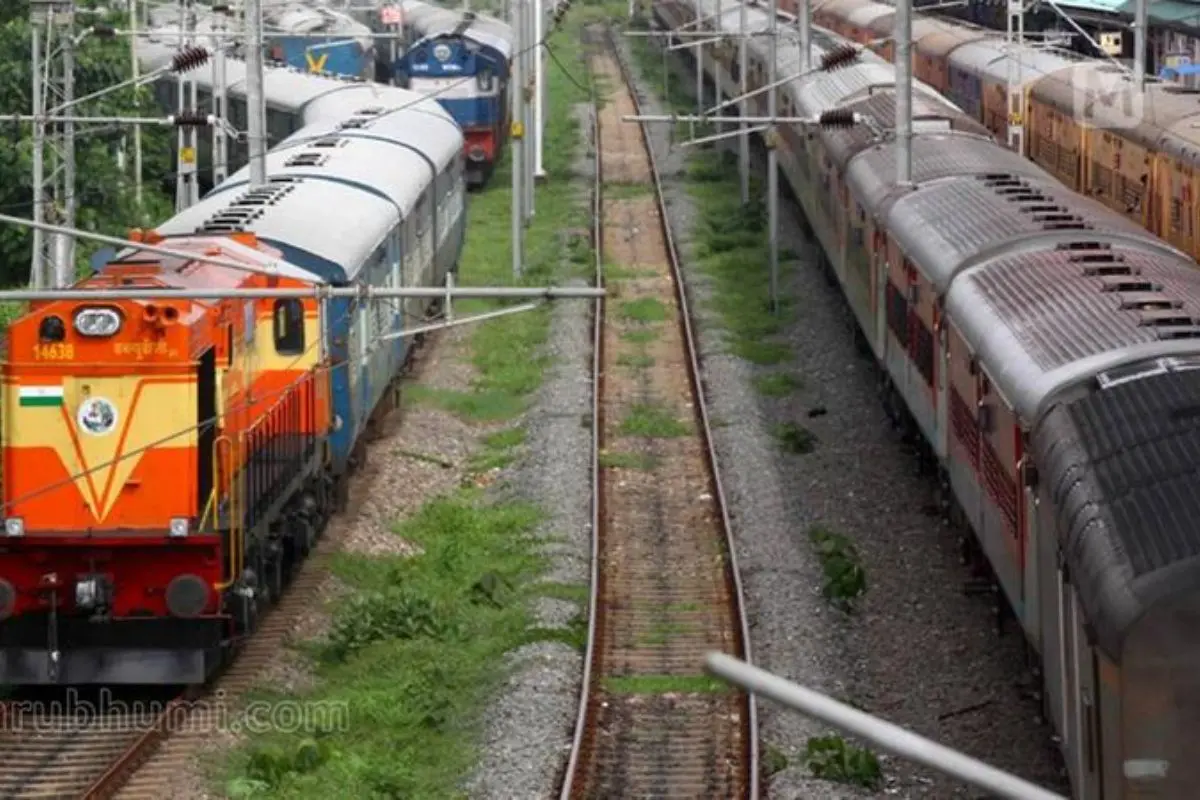
Indian Railways’ sustained push to upgrade its ageing signalling and safety systems has led to a significant improvement in operational reliability, with signalling failures dropping by about 58% over the last 11 years. The reduction forms a key part of a broader safety overhaul that has also coincided with a marked decline in train accidents, the government informed Parliament on Friday.
In a written reply in the Rajya Sabha, Railways, Information & Broadcasting and Electronics & Information Technology Minister Ashwini Vaishnaw detailed a series of modernisation efforts that have strengthened both infrastructure and worker safety across the network.
Major overhaul of signalling infrastructure
The Railways has rolled out electronic interlocking technology—replacing legacy mechanical systems—at 6,660 stations as of 31 December. These installations centralise the control of points and signals to reduce human error and enhance reliability.
Safety at level crossings has also been upgraded, with 10,097 gates now integrated into interlocking systems. Track circuiting, which electrically verifies the presence of a train on a track section, has been completed at 6,665 stations.
To ensure trains are verified as having fully arrived before another is allowed into the block section, axle counters—particularly Block Proving Axle Counters (BPAC)—have been deployed on 6,142 block sections. Automatic Block Signalling, which boosts line capacity on existing tracks, has been put in place on 6,625 route kilometres.
Redundancy has been built into key systems through dual detection mechanisms, multiple transmission channels and backup power arrangements. Interlocked level crossings now feature power-operated lifting barriers with sliding booms to minimise operational failures.
Rolling block system and stricter maintenance protocols
Maintenance of signalling assets is now undertaken under the “Rolling Block” system, introduced through a notification in November 2024. Under this regime, integrated repair and replacement work is planned up to 52 weeks ahead and implemented on a rolling basis.
The Railways has also reinforced mandatory processes including correspondence checks, completion drawings and strict protocols for disconnecting and reconnecting signalling and telecommunication equipment. Staff receive regular counselling and training to prevent procedural lapses.
Focused safety measures for track workforce
Indian Railways has simultaneously enhanced protection for track maintainers—one of its most vulnerable frontline teams. Workers have been equipped with high-visibility jackets, helmets with lights, protective footwear, gloves and weather-specific gear. Lightweight tools and battery- or hydraulically-operated equipment have been introduced to reduce physical strain during routine tasks.
Mechanised systems, including tamping and ballast cleaning machines and multi-utility rail vehicles, have been deployed to minimise manual labour in strenuous operations such as lifting tracks or grinding and drilling rails.
Training programmes on machine handling, first aid and track safety rules are conducted regularly at Zonal Training Centres, while seminars under the ‘Personal Safety First’ initiative reinforce safe working practices.
The Railways has also expanded welfare facilities, including rest huts, toilet amenities at manned crossings, insulated water bottles and family accommodation. Flexible rosters are allowed in extreme weather, and workers receive risk and hardship allowances based on the nature of their duties.
A VHF-based Approaching Train Warning System—providing alerts when a signal ahead turns green for an incoming train—is being rolled out across the network. About 340 block sections are already covered. As a result of these interventions, fatalities among track staff have fallen by 66% since 2013–14.
Compensation framework for staff and passengers
Railway employees who lose their lives in the line of duty receive an ex-gratia payment of ₹25 lakh, a rate effective since January 2016.
For passengers, ex-gratia relief is provided immediately after an accident or untoward incident. Over the last three financial years (2022–23 to 2024–25), the Railways has disbursed ₹30.75 crore in such payments to the families of those killed in train accidents.
Compensation awarded by the Railway Claims Tribunal (RCT), which is over and above ex-gratia relief, amounted to ₹23.53 crore over the same period. Payments are released within 30 days of receiving the RCT's order, regardless of the year in which the accident occurred.
(With ANI inputs)