‘If Chanakya were alive…’: Priyanka Gandhi stuns House with sharp swipe at Amit Shah
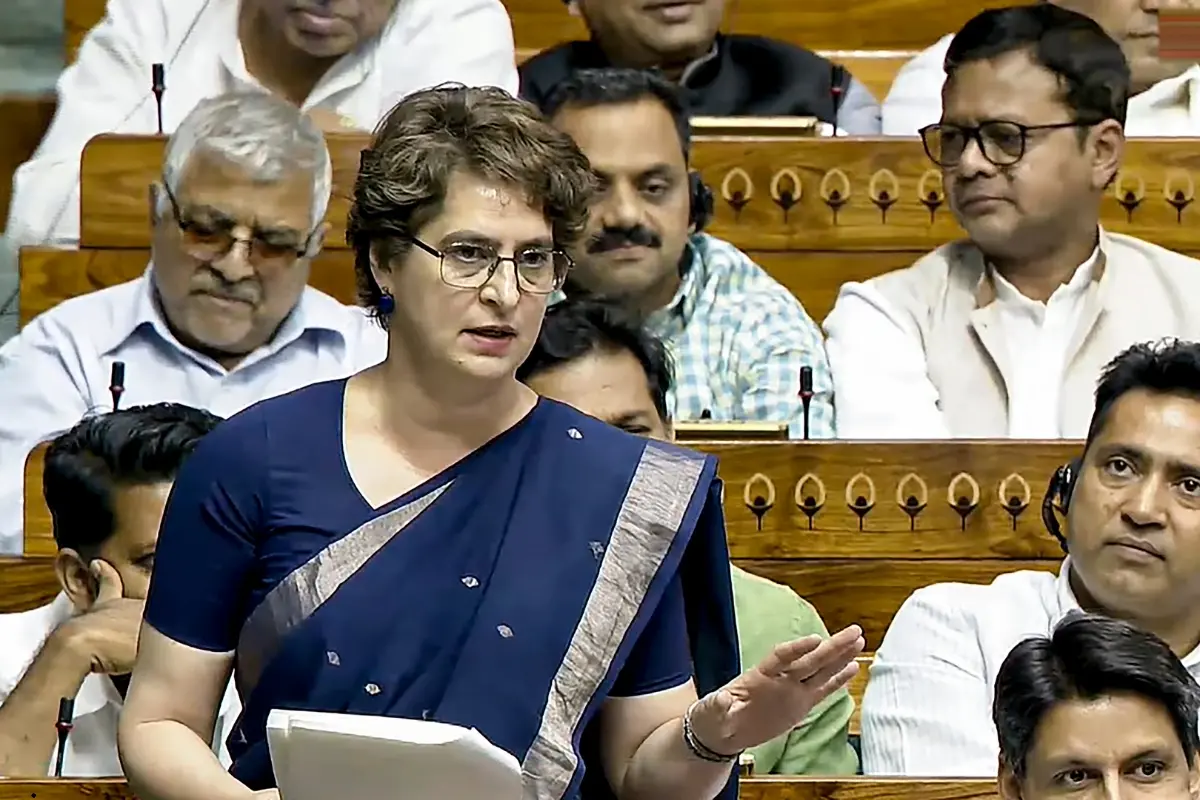
New Delhi: Congress MP Priyanka Gandhi Vadra used a Chanakya reference during her speech on the women’s reservation bill, leading to a light moment in the House.
Her remark came during an exchange with Union Home Minister Amit Shah and prompted reactions, including visible amusement among some members. She said that if Chanakya were alive today, he would have been “shocked” by the political approach surrounding the legislation. She said: “Today, if Chanakya had been alive, he also would have been shocked by your cunningness.”
Opposition questions intent behind the bill
Priyanka Gandhi said the Opposition supports women’s reservation in principle, but argued that the real issue lies in the intent and framing of the bill. She claimed the proposal reflects political strategy rather than purely constitutional reform, adding that it “smells of politics” and could be aimed at electoral advantage.
Criticism of government narrative
The Congress leader also challenged the government’s presentation of the bill, saying it did not fully reflect earlier positions on women’s reservation. She referred to past communications, including a 2019 letter from Rahul Gandhi urging implementation of the quota, to argue that the issue has seen delays across governments. She also raised concerns that wider representation issues, including caste-based considerations, should not be ignored in the debate. In a pointed remark, she said, “Women quickly recognise men who repeatedly try to mislead them,” while criticising the government’s handling of the legislation.
The debate is centred on the Nari Shakti Vandan Adhiniyam and related constitutional amendments discussed during the special Parliament session. While there is broad agreement on the principle of increasing women’s representation, differences remain over delimitation changes, implementation timelines, and the political implications of the proposed reforms.
The exchange reflects the wider divide in Parliament, where consensus on women’s reservation contrasts with sharp disagreement over the structure of electoral changes. As discussions continue, the bill remains one of the most politically significant proposals of the session, with implications for representation and electoral balance.