PM Modi’s first Japan visit in 7 years: What’s on the agenda? Bullet train project and more
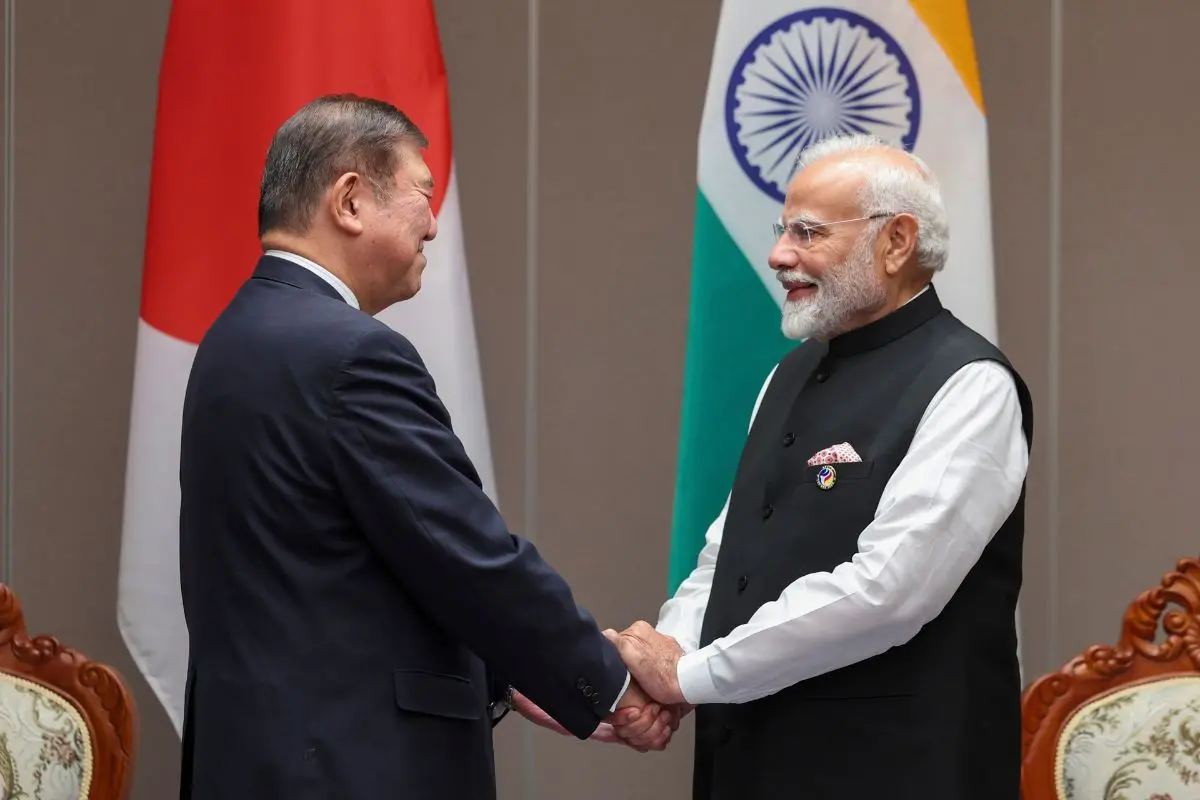
New Delhi: Prime Minister Narendra Modi will tonight embark on a two-day official visit to Japan beginning 29 August for the 15th India-Japan Annual Summit with Japanese Prime Minister Shigeru Ishiba. This marks Modi's first standalone visit to Japan in nearly seven years and his first annual summit with his Japanese counterpart.
“This will be PM Modi's first annual summit with his Japanese counterpart, and is first standalone visit to Japan in nearly seven years. He last visited for the annual summit in 2018,” Foreign Secretary Vikram Misri told reporters in New Delhi.
Modi is scheduled to leave for Tokyo from New Delhi around midnight on 28 August and will be in Japan on 29 and 30 August. The visit, according to Misri, will be “fully dedicated to the bilateral agenda between the two countries.” This will also be PM Modi’s eighth visit to Japan since taking office in 2014.
"The annual summit between India and Japan represents the highest level dialogue mechanism that exists between the two countries and it drives the agenda of the India-Japan special strategic and global partnership," the foreign secretary said.
Modi and Ishiba last met on the sidelines of the G7 Summit in Kananaskis, Canada, in June 2025. “India and Japan are two countries that share values, trust and strategic outlook on several issues. They are Asia's two leading democracies and amongst the world's top five economies," Misri said.
What are the key areas of focus?
Misri said the India-Japan Annual Summit will allow both leaders to conduct an in-depth review of bilateral ties across multiple sectors, including trade and investment, defence and security, and science and technology.
The summit will also serve as a platform to assess the progress made in recent years and to “launch several new initiatives to build greater resilience in the relationship and respond to emerging opportunities and challenges.”
PM Modi is also expected to participate in a business leaders’ forum involving key Indian and Japanese industry representatives.
Quad and regional security
The two prime ministers are expected to discuss the Quad group and security in the Indo-Pacific. India and Japan are members of the Quad, alongside the United States and Australia.
Misri reiterated India’s commitment to the Quad during a press briefing: “India attaches a high value to the Quad group,” which is seen as a strategic counterweight to China in the Indo-Pacific.
However, relations within the grouping have been strained following President Donald Trump’s decision to impose up to 50 per cent tariffs on Indian imports. The move, linked to India’s Russian oil purchases and its closed agricultural sector, has complicated New Delhi’s ties with Washington and raised questions about India’s upcoming hosting of the Quad summit later this year.
Despite the tensions, Misri confirmed, “India is still in talks with the US over the tariffs and is keen to continue expanding its cooperation with the Quad countries.”
Bullet trains in India soon?
On the technology front, Modi and Ishiba are expected to tour the Tokyo Electron Factory, a key player in Japan’s electronics and semiconductor industry.
The visit will also take the two leaders to Miyagi Prefecture on 30 August to inspect the Tohoku Shinkansen plant in Sendai. An agreement is expected on the introduction of Japanese E-10 coaches for the Mumbai-Ahmedabad High Speed Rail -- popularly known as the Bullet Train project – to be transferred to India in 2030.
On 26 August, Modi attended an event in Gujarat marking the start of EV production by Japan’s Suzuki Motor, which announced a $8 billion investment in India.
Modi is expected to fly to Tianjin, China, after concluding the Japan visit to attend the Shanghai Cooperation Organisation (SCO) summit -- his first visit to China in more than seven years.