Payal Mehta dies at 46: Who was the journalist mourned by Modi, Rajnath Singh and other leaders?
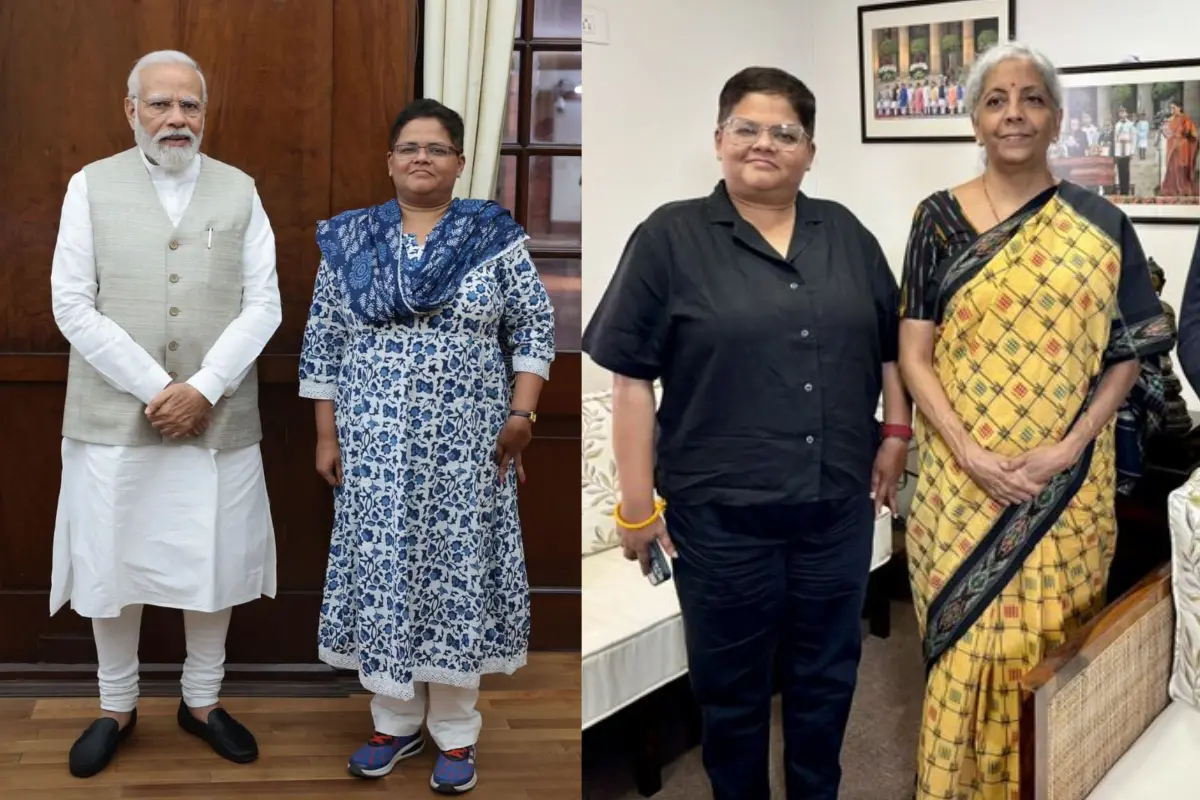
Senior journalist Payal Mehta, an Assistant Editor with CNN-News18 and a familiar face on the Parliament beat, died at the age of 46, prompting public condolences from several senior political leaders.
Her career was closely connected with coverage of Parliament, political parties, elections, government policy and national affairs.
Who was Payal Mehta?
Payal Mehta was a New Delhi-based political journalist who worked as an Assistant Editor at CNN-News18. Journalist databases identify her as a verified CNN-News18 journalist, while her published work shows a long-running focus on Indian politics, Parliament, government decisions and elections.
Her byline appears across political stories dating back several years. She also contributed to ANI reports, including stories involving the BJP, Parliament and senior political leaders. Her earlier work included reporting on the 2022 presidential election, BJP organisational activity and other national political developments.
Her professional association with political reporting explains why many of the people who interacted with her regularly in Parliament and during political events knew her personally.
ALSO READ | Sabu M Jacob alleges multi-bank fraud, licence violations against Anto Augustine
Why were so many ministers mourning her?
The prominent political figures who paid tribute to Mehta were people she had covered professionally over the years.
Prime Minister Narendra Modi described her as a hardworking journalist who remained connected with developments on the ground and said she brought a deep understanding of national issues to her reporting. Modi also referred to her kindness and warmth in her interactions.
Defence Minister Rajnath Singh specifically remembered her work on the Parliament beat. In his tribute, he said Mehta would be present from early morning until late at night during Parliament sessions, following proceedings and carrying out her reporting work.
Smriti Irani also described her as warm and professional, while saying that Mehta's questions were pointed and purposeful.
Kiren Rijiju said Mehta had been a regular presence in Parliament and described her as a professional journalist. JP Nadda, who had also been a subject of Mehta's political reporting, joined the condolences.
Her reporting record
Mehta's published work shows that her coverage went well beyond routine Parliament proceedings.
Her recent stories included a September 15 report on the government's task force examining the possibility of bringing Formula One back to India in 2028 and developing a wider motorsports ecosystem.
Her earlier reporting covered BJP organisational matters, national elections, government policy and political negotiations. For example, her ANI byline appeared on reports concerning the 2022 presidential election and the BJP's campaign and organisational activities.
She also worked on stories involving senior leaders from different parties. Her reporting included political developments involving Andhra Pradesh, Telangana and other states, demonstrating that her work was not confined to one politician or one geographical region.
She was a familiar face in the Parliament press corps
The repeated references by political leaders to Mehta's presence during Parliament sessions are significant. Parliament reporting is a specialised beat requiring journalists to track proceedings, question political leaders, attend briefings and follow developments throughout the day.
Rajnath Singh's tribute specifically recalled her long hours during Parliament sessions. That description is consistent with the professional profile visible in her published work, which includes a substantial volume of political and parliamentary reporting.
Her work was also not limited to reporting statements from politicians. Her published stories covered government decisions, elections, public policy and political developments.
ALSO READ | Bigg Boss 20: Salman Khan lies down on stage after chest pain; here’s what happened
What was her connection with Chandrababu Naidu?
Andhra Pradesh Chief Minister N. Chandrababu Naidu also expressed grief over Mehta's death and recalled his interactions with her in Parliament.
According to the account provided by Naidu, Mehta had visited Andhra Pradesh several times for ground reporting and would approach him in Parliament to share updates when they met.
Her recent work before her death
Mehta continued to publish stories shortly before her death.
Her September 15 CNN-News18 report concerned a government task force examining the feasibility of bringing Formula One back to India in 2028. Her recent work also included reporting on government intervention involving Meta and child-safety matters and preparations surrounding the BRICS Summit in New Delhi, according to the material surrounding her death. Her professional profile confirms her September 15 Formula One report.
What is known about her death?
Reports published on September 20, 2026, said Mehta died at the age of 46 in Mumbai after developing uneasiness late on Saturday night. She was reportedly taken to a hospital at around 2am, where doctors found no pulse.
The cause of death had not been officially established in the information available at the time of reporting. It is therefore important not to attribute her death to a specific medical condition without an official statement.
Journalist Sheela Bhatt also described the circumstances in a social-media post, saying Mehta had developed uneasiness during a visit to Mumbai and was taken to hospital during the night.