Passport row: Did India rewrite citizenship rules overnight? Government sources respond
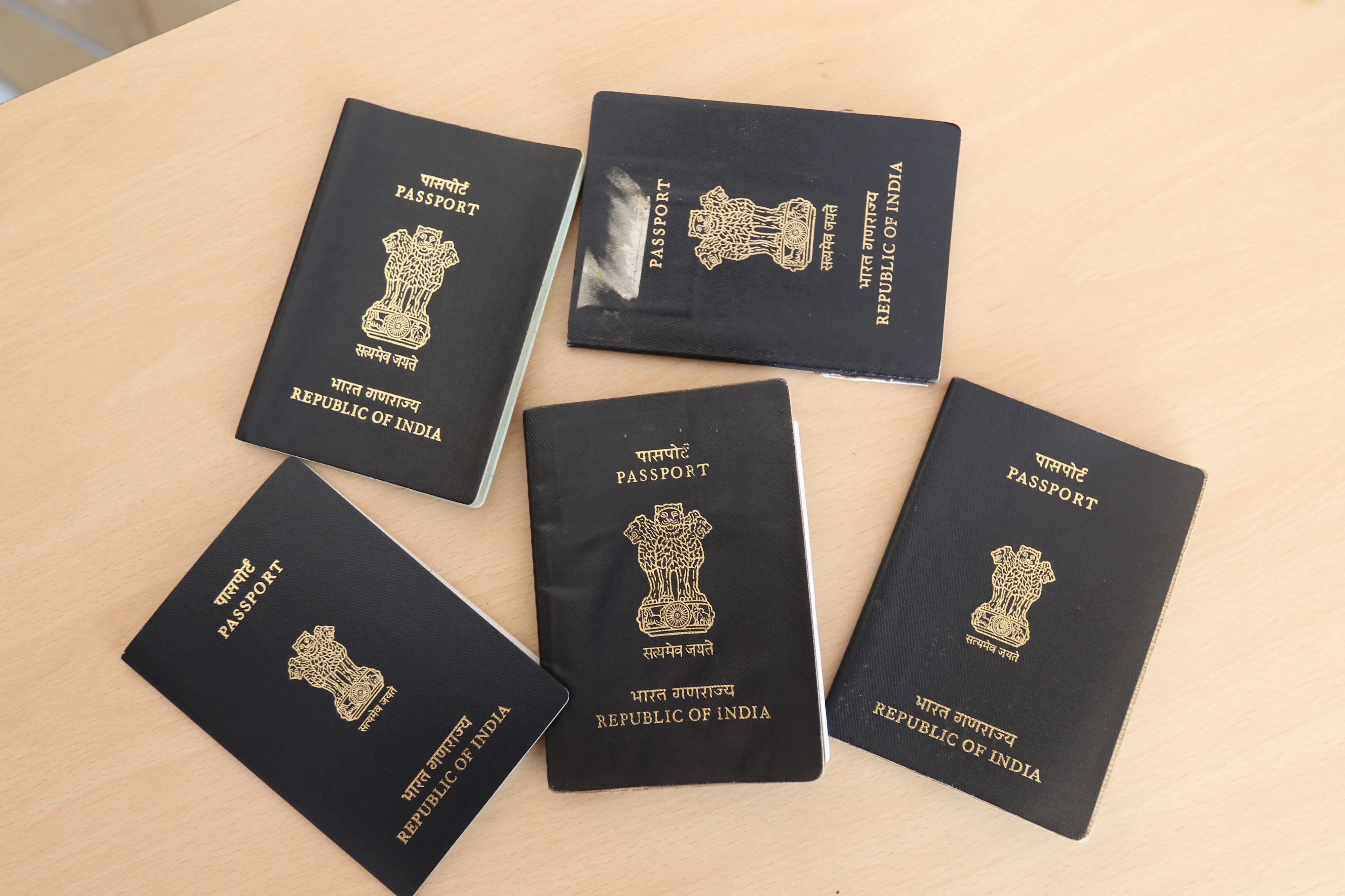
Union Government sources on Thursday stepped in to quell a burgeoning political storm, asserting that an Indian passport has never served as conclusive proof of citizenship.
The clarification follows a contentious Ministry of External Affairs (MEA) briefing on Wednesday which sparked nationwide debate by categorising the document primarily as a tool for travel. Sources maintained that this is not a policy shift by the current administration, stating firmly that "it was not decided yesterday that the passport is not a proof of citizenship" and noting that no such decision has been taken in the last 12 years.
They pointed to the Passports Act, 1967, as the statutory foundation for this stance. Under Section 20 of the Act, the Central Government possesses the legal authority to issue travel documents even to individuals who are not Indian citizens, provided it is deemed to be in the "public interest". The statute explicitly reads: "Notwithstanding anything contained in the foregoing provisions relating to issue of a passport or travel document, the Central Government may issue, or cause to be issued, a passport or travel document to a person who is not a citizen of India if that Government is of the opinion that it is necessary so to do in the public interest."
Because the law itself allows non-citizens to hold such documents, sources argued that possession alone cannot, by definition, be treated as a definitive certificate of citizenship.
Judicial precedent and the 2013 Bombay High Court ruling
The government's position is further anchored in judicial history. Official sources highlighted that judgments of the Bombay High Court in 2013 had already made this distinction clear, ruling that a passport does not automatically establish the holder's citizenship. This judicial view aligns with observations by the Supreme Court, which has previously noted that even an Aadhaar card — the country's ubiquitous identity document — is merely a document of identity and not conclusive proof of citizenship.
Political backlash and the definition of national identity
Wednesday's MEA remarks had triggered sharp rebukes from the Opposition. Rajya Sabha MP Kapil Sibal questioned the practical implications of the government's logic on X, asking, "Which document then is proof of citizenship?"
He expressed grave fears that such ambiguity could lead to administrative overreach, where local officials might doubt a person's status. "BLO can doubt my citizenship Deprive me of my vote. Result BJP wins the election. Over to Supreme Court!" he added.
The backlash was not confined to Sibal. TMC leader Mahua Moitra took a swipe at the administration, suggesting that the criteria for citizenship seemed to have shifted towards political and religious affiliation.
"It would seem that the only proof of Indian citizenship today is to be both Hindu and a BJP voter. Nothing else will do," she remarked on X.
Meanwhile, veteran lyricist Javed Akhtar described the MEA's distinction as "absurd". He questioned the logic of the ministry's stance, asking: "So are they providing this travel document to some people with out being totally convinced that this person is an Indian citizen ?? . It is absurd".
In response to the outcry, BJP leader Amit Malviya dismissed the controversy as a reaction from the "'kagaz nahin dikhayenge' brigade". He argued that the MEA had merely reiterated a "settled legal position" rather than announcing a new rule.
According to Malviya, while a passport is an "important identity and travel document" that can support a claim, citizenship flows from the Constitution and the Citizenship Act, 1955. He maintained that the outrage was directed at a legal reality that has long been settled by both statute and the courts.
Statutory framework and the Citizenship Act
Under the current legal framework, citizenship is determined by the Citizenship Rules, 2009, which are rooted in the Citizenship Act, 1955. A 2019 explainer from the Press Information Bureau (PIB) detailed five methods of acquiring Indian citizenship: birth, descent, registration, naturalisation and incorporation of territory. While the PIB noted that citizenship could be proved through documents relating to the date and place of birth, it also acknowledged that "a decision is yet to be taken on such acceptable documents".
Ultimately, government sources and supporters contend that citizenship in India is established through a cumulative "combination of records". These include birth certificates, parental citizenship records, school records, land and residence records, and electoral roll entries. They insist that the current row overlooks a statutory reality that has remained unchanged for decades, asserting that a passport remains a piece of evidence rather than a final conclusion on a person's national status.