Panduranga Hegde wins inaugural MP Veerendra Kumar Memorial National Thought Leadership Award
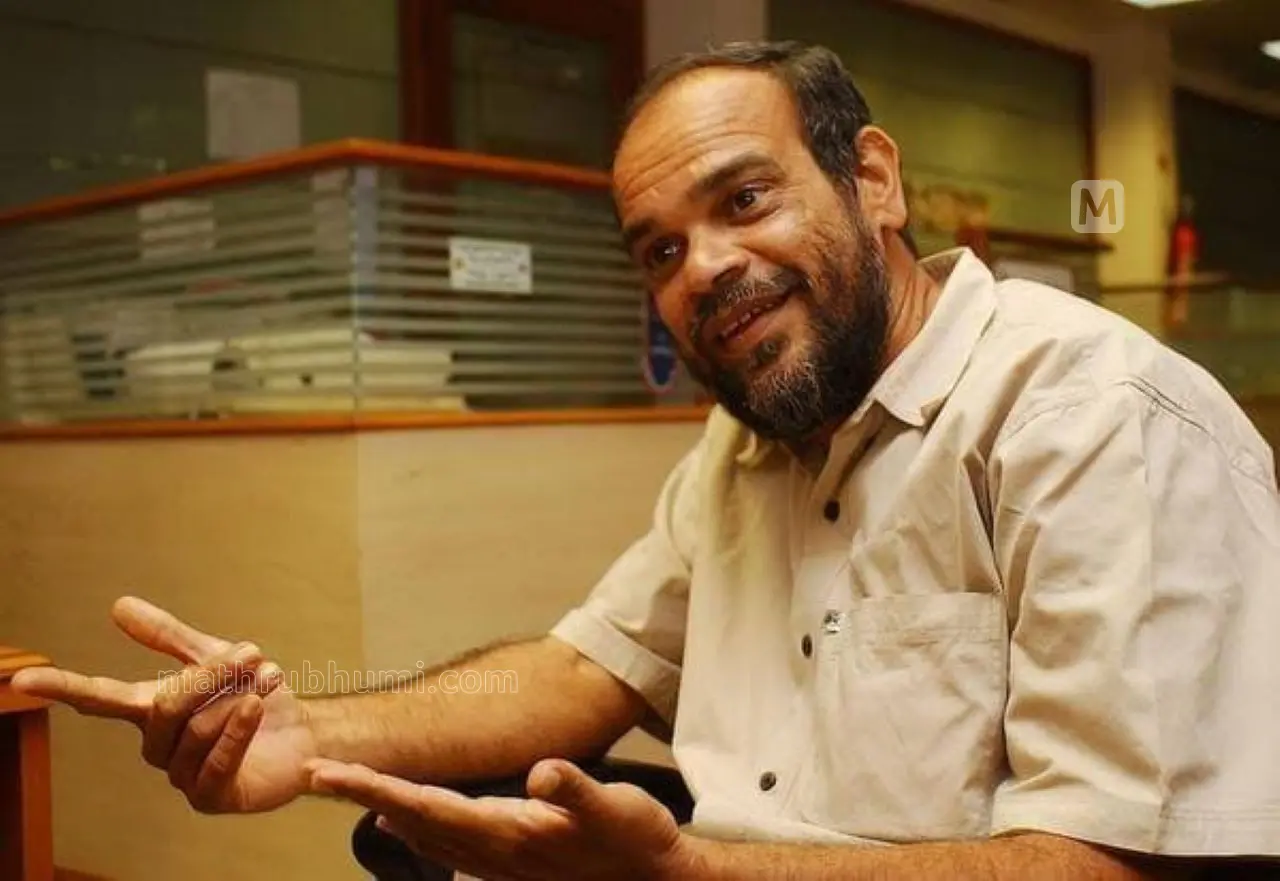
Thiruvananthapuram: Environmentalist and Appiko Movement founder Panduranga Hegde has been named the inaugural recipient of the 'MP Veerendra Kumar Memorial National Thought Leadership Award', instituted in memory of the late political leader, writer and Mathrubhumi Chairman and Managing Director, MP Veerendra Kumar.
The award carries a citation, plaque, and a cash prize of ₹5 lakh. The award will be presented on May 28, commemorating the death anniversary of Veerendra Kumar.
A jury comprising Prof. MK Sanu, politician Jairam Ramesh, and environmentalist Vandana Shiva selected Hegde for his contributions to the environment, philosophy, literature, politics, and human rights.
It was Panduranga Hegde’s deep love and respect for nature that brought him close to environmental conservation. For him, environmental activism was not a symbolic pursuit—it became his life’s journey. And this journey was not always easy. He faced both victories and setbacks and endured challenges, and yet, the path remained deeply fulfilling.
The Appiko Movement was born as a protest in Uttara Kannada against the felling of trees for establishing teak plantations. When contractors arrived to cut trees, villagers, under Hegde’s leadership, hugged the trees to protect them. The word Appiko means “to hug” in Kannada. The movement eventually compelled the government to cancel 30 such deforestation projects. During this period, Hegde also reached Wayanad as part of protests against eucalyptus plantations.
Born in the Uttara Kannada district, Hegde graduated from Karnataka University and worked as a chartered accountant in Delhi. However, he gave up his career to dedicate himself fully to environmental protection. While studying at the Delhi School of Social Work, he came into contact with Sunderlal Bahuguna, the founder of the Chipko Movement. Inspired by Bahuguna and others like Amritadevi Bishnoi, Hegde began engaging actively in forest and nature conservation.
After completing his training in Delhi, he spent four years living among and working with rural communities in Damoh, Madhya Pradesh. Later, he returned to his native Sirsi in Uttara Kannada and launched tireless efforts against deforestation. He worked to preserve the lives and traditions of forest dwellers and indigenous communities living near forests.
Through campaigns on beekeeping, organic farming, and preserving indigenous seed varieties, Hegde raised awareness among local people. In Uttara Kannada, he helped conserve around 160 traditional rice varieties and 80 jackfruit types, encouraging farmers to resume their cultivation. Through honey festivals, he motivated a new generation of farmers to raise native bee species. He also focused on integrating the traditional knowledge of tribal communities into conservation strategies.
He was awarded a fellowship by Ashoka, a U.S.-based organisation that supports social entrepreneurs. He authored the book “Chipko and Appiko: How the People Save the Trees” and visited Mathrubhumi in November 2016.
He also raised concerns about the potential dangers of the Kaiga nuclear power plant and the environmental threats posed by large dams in Karnataka. He shared these concerns with local communities. As an active participant in the Save Western Ghats campaign, he has spent years studying and documenting the biodiversity of the Western Ghats.
In an interview with Mathrubhumi, he once said:
“The Western Ghats is a biodiversity region stretching from Maharashtra to Kanyakumari. An elephant or a tiger that lives here doesn’t know the borders of states. They come out of the forests only when their habitat is affected—and that’s when they pose a threat to humans. Not everyone needs to be an environmental activist, but even small steps to protect nature count. When you stop throwing plastic, when you conserve every drop of water—you are already among those who protect the environment.”