Operation Urja Suraksha: How India is securing oil flows through Strait of Hormuz
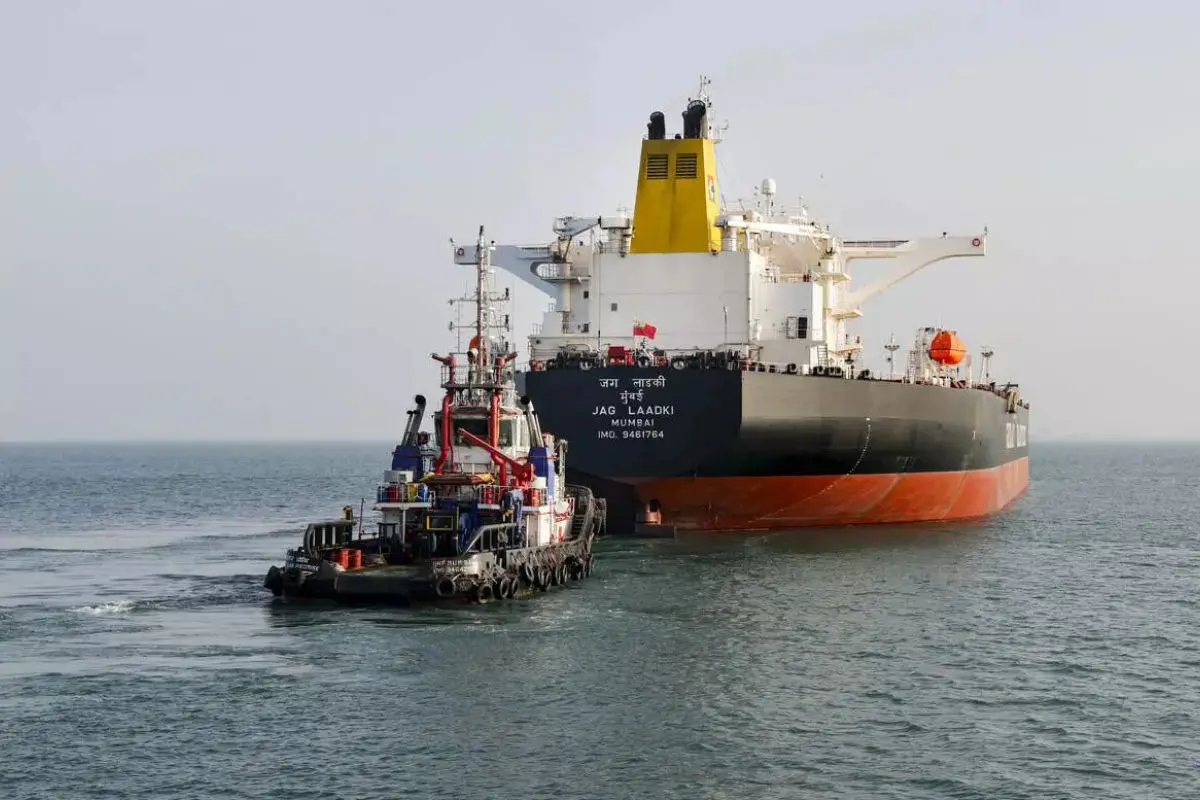
As tensions escalate across West Asia and concerns grow over the safety of key maritime corridors, India has quietly activated a high-stakes naval mission to protect its energy lifeline.
Under Operation Urja Suraksha, the Indian Navy is ensuring that crude oil shipments continue to move safely through the strategically crucial Strait of Hormuz, one of the world’s most sensitive and heavily trafficked chokepoints.
The narrow waterway, through which nearly a fifth of global oil trade passes daily, has come under increased scrutiny following regional instability and reported threats to commercial shipping.
For India, which imports over 80 per cent of its crude oil needs, a significant portion from the Gulf, any disruption here could have immediate economic consequences.
To counter this, Indian naval forces have adopted a proactive and layered strategy.
Indian-flagged merchant vessels are being actively guided through the Strait, rather than simply escorted.
Naval command centres maintain real-time communication with ship captains, offering route-specific advisories based on the latest intelligence inputs and maritime assessments.
Officials say more than five frontline warships, including destroyers and stealth frigates, have been deployed in and around the Strait as part of the operation.
These vessels are equipped with advanced radar systems, electronic surveillance capabilities, and anti-mine measures, allowing them to detect and respond to potential threats quickly.
Once ships successfully transit the Strait of Hormuz, naval escorts often continue into the Gulf of Oman, creating a multi-layered security corridor.
This extended presence ensures that vessels remain protected even after exiting the most sensitive zone, reducing risks from possible follow-on threats.
The urgency of such measures has grown amid reports, including those attributed to US intelligence, suggesting the possible deployment of underwater mines in parts of the Strait.
While these claims remain difficult to independently verify, they underscore the unpredictable nature of the region and the risks faced by commercial shipping.
For tanker crews, navigating the Hormuz route has become increasingly complex. The passage is narrow, crowded, and geopolitically volatile.
Even minor navigational errors or miscalculations can have serious consequences. This is where the Indian Navy’s hydrographic expertise becomes critical.
Hydrographic charts, detailed maps of the seabed, form the backbone of safe navigation in such waters.
These charts indicate depth variations, underwater hazards, and shifting seabed patterns.
The Indian Navy’s hydrographic teams continuously update and refine these charts using specialised survey vessels and advanced mapping technology.
India’s hydrographic capabilities extend beyond its own maritime boundaries. Over the years, New Delhi has partnered with several countries in the Indian Ocean Region to map their coastal and offshore waters.
These efforts have strengthened maritime safety and enhanced India’s strategic partnerships, while also ensuring safer sea lanes for global shipping.
Diplomatic coordination has also played a key role. India has secured necessary clearances from Iran to allow its vessels to pass through the Strait, even as restrictions impact broader global shipping movement.
This balance of diplomacy and defence has helped India maintain continuity in its energy imports.
Operation Urja Suraksha reflects a broader shift in India’s maritime doctrine, from reactive security to proactive protection of critical supply chains.
As geopolitical uncertainties persist, the Navy’s presence in the region serves not only as a safeguard for oil shipments but also as a signal of India’s growing role as a net security provider in the Indian Ocean.
Amid rising tensions and evolving threats, this combination of precision navigation, strategic deployment, and constant coordination is ensuring that India’s energy arteries remain open, steady, secure, and uninterrupted.