Operation Sindoor targeted Muridke, Lashkar's terror nursery
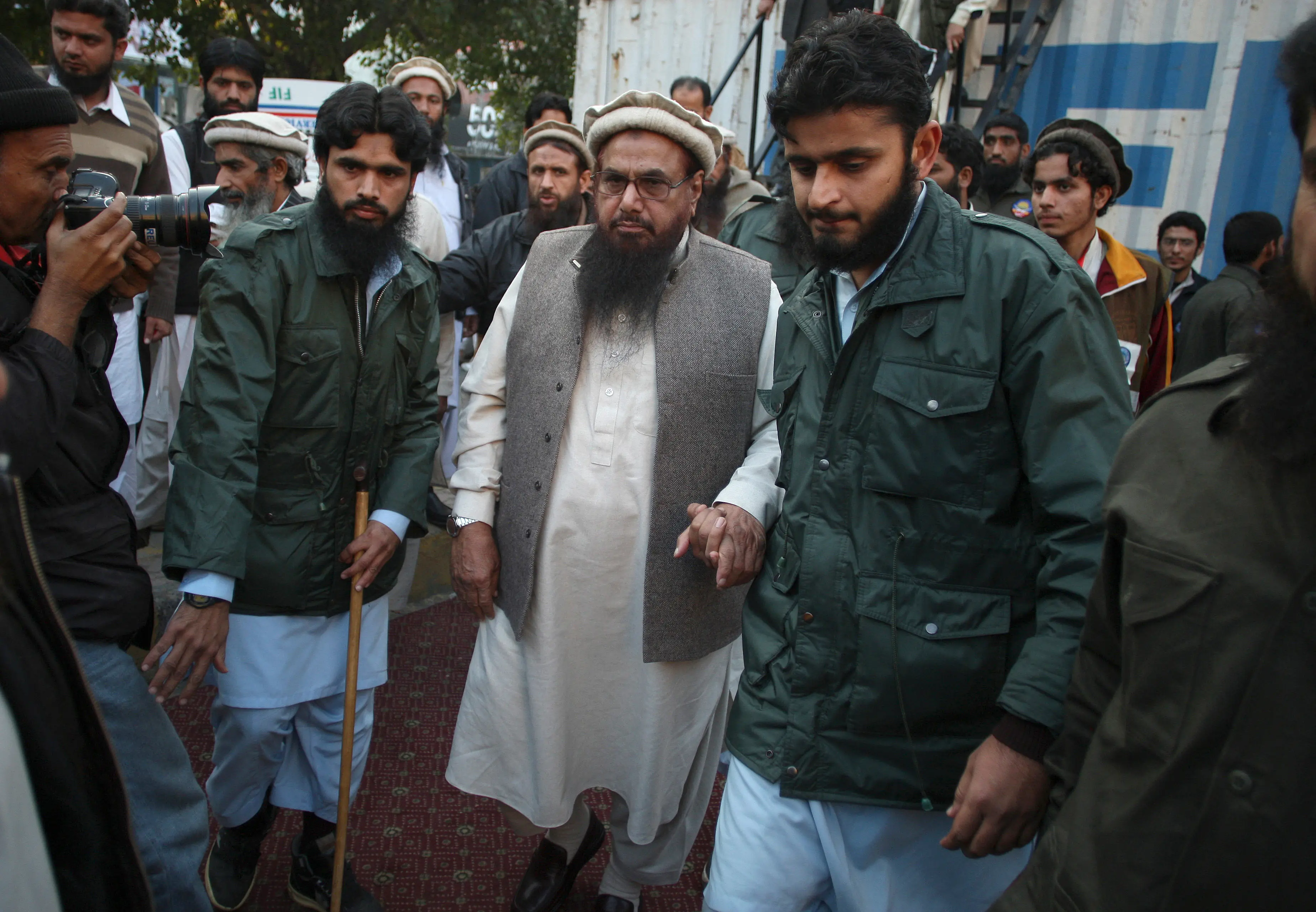
'Operation Sindoor', the calculated response by the Indian armed forces to the Pahalgam terror attack, included a significant strike on Markaz Taiba in Muridke in Pakistan's Punjab province. This location is notorious for housing the headquarters of the Lashkar-e-Taiba (LeT) and is notoriously regarded as the "terror nursery" of Pakistan.
The LeT, led by Hafiz Saeed, is the terror organization believed to be responsible for the deadly April 22 attack in Baisaran, near Pahalgam in Jammu and Kashmir, which claimed the lives of 26 people, predominantly tourists.
Markaz Taiba: Epicentre of LeT Operations
Markaz Taiba, an 82-acre sprawling complex located in Nangal Sahdan, Muridke in Pakistan's Punjab, served as the central "alma mater" and the most critical training hub for the Lashkar-e-Taiba (LeT), a globally recognized terrorist organization. Established in 2000, this facility functions as a comprehensive ecosystem dedicated to the creation and indoctrination of jihadists.
Markaz Taiba is far more than just a training camp; it's a self-sustaining compound featuring a madrassa for foundational indoctrination, a market catering to the needs of its inhabitants, residential zones housing terror operatives and their families, various sports amenities, a functioning fish farm, and even agricultural land. This infrastructure supports the LeT's long-term objectives and operational self-reliance.
The heart of the complex lies in its extensive arms and physical training facilities, complemented by dedicated centers for "dawa'h" – the propagation of LeT's radical ideology – and the intense indoctrination of recruits, drawn both domestically and internationally.
Markaz shaped next generation of jihadis
Within Markaz Taiba operates the Sufa Academy, a key institution focused on the rigorous religious indoctrination of male cadres. Mirroring this, a separate Sufa education center caters to women, indicating LeT's broader strategy of involving both genders in their extremist agenda. Sources describe Markaz Taiba as a fertile "mushrooming ground" for radicalizing students, systematically brainwashing them to embrace armed jihad, effectively operating as a "terror factory."
The sheer volume of individuals passing through Markaz Taiba highlights its critical role in LeT's operational pipeline. Annually, approximately 1000 students enroll in diverse training courses offered at the facility, ensuring a consistent stream of newly indoctrinated and trained terror operatives for the organization.
Beyond basic training, Markaz Taiba also functions as a strategic command and control center. LeT/JuD conducts regular training sessions for its entire leadership within the secure confines of this facility, ensuring ideological alignment and operational coordination.
The influence of Markaz Taiba even extended to Al-Qaeda, with intelligence indicating that Osama Bin Laden himself provided significant financial support -- Rs 10 million -- for the construction of a mosque and guest house within the complex in 2000.
Direct link to the Mumbai terror attacks
Disturbingly, Markaz Taiba played a direct and pivotal role in the planning and execution of the 2008 Mumbai terror attacks. Under the direction of Pakistan's Inter-Services Intelligence (ISI), all the perpetrators, including the captured Ajmal Kasab, underwent crucial "Daura-e-Ribbat" (intelligence training) at this very location.
Furthermore, key conspirators David Coleman Headley and Tahawwur Hussain Rana visited Muridke alongside other co-conspirators on the instructions of Zaki-ur-Rehman Lakhvi, underscoring the facility's central role in orchestrating this horrific attack.
Markaz Taiba serves as the residential base for prominent LeT ideologues such as Amir Hamza, Abdul Rehman Abid, and Zafar Iqbal. High-ranking LeT commanders Khubaib, Isa, and Qasim are also frequent visitors to this strategic hub.
Adding to its significance, LeT's top leadership, including the notorious Hafiz Saeed and Zaki Ur Rehman Lakhvi, maintain residences within the Markaz Taiba complex. Their regular presence ensures direct supervision of the radicalization activities and strategic planning emanating from this "fountainhead" of LeT terrorism.
Notably, Markaz Taiba is the primary centre for the conversion ("Dawa'h") of individuals from other Islamic sects to the Ahle Hadith ideology adhered to by LeT. It is here that the overarching strategy for LeT, including the religious justification for "Ghazwat-ul-Hind" (the battle for India), is formulated and disseminated.
Wider operation targets Jaish-e-Mohammed base
In addition to Muridke, India's 'Operation Sindoor' also targeted Bahawalpur in Pakistan's Punjab province, as well as Kotli and Muzaffarabad in Pakistan-occupied Kashmir. The selection of Bahawalpur is also strategically significant, as it serves as the main base of the Jaish-e-Mohammed (JeM), another prominent terror group. The JeM's chief, Masood Azhar, is widely considered the mastermind behind the 2008 Mumbai terror attacks.
Sources indicate that Kotli and Bahawalpur were also considered potential targets for Indian retaliation following the Pulwama terror attack in 2019, which ultimately saw strikes on terror bases in Balakot. The inclusion of these locations in 'Operation Sindoor' underscores India's comprehensive approach to dismantling key terror infrastructures operating from Pakistani soil.