13 bodies found in UP after Nepal floods: DNA tests underway to identify victims
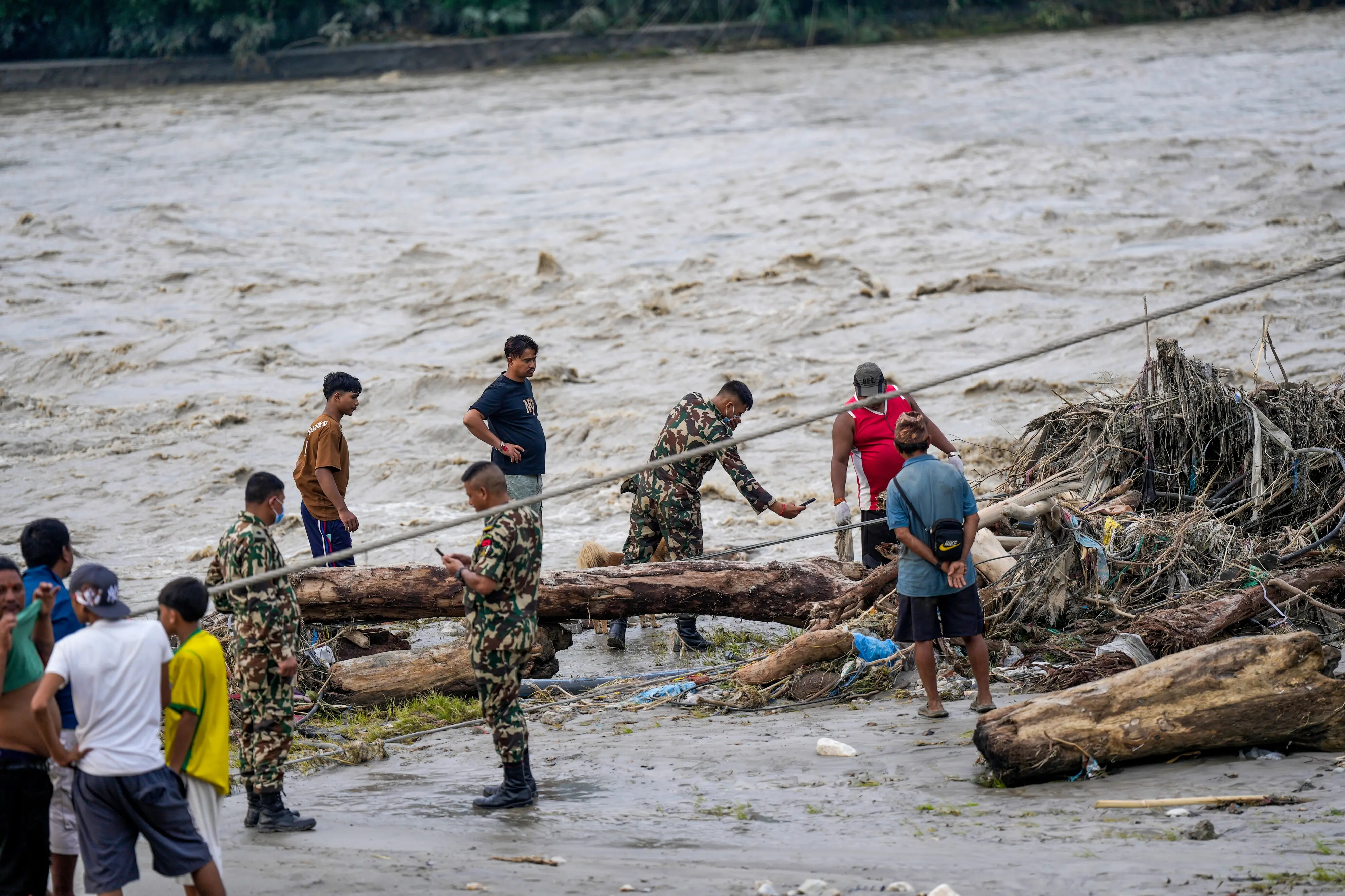
Lucknow: The human cost of Nepal’s devastating floods is now being felt downstream in Uttar Pradesh, where 13 bodies have been recovered from the Narayani-Gandak river system and authorities are working to identify the victims.
The aftermath of the devastating floods and landslides in Nepal has crossed into Uttar Pradesh, with floodwaters carrying human remains downstream through the Narayani-Gandak river system.
Officials said 13 bodies have so far been recovered in Kushinagar, comprising six men and seven women. Teams from the district administration and State Disaster Response Force (SDRF) are monitoring the river and retrieving bodies whenever they are spotted.
Animal carcasses have also been found floating downstream from Nepal, underlining the scale of the destruction caused by the floods.
Six of the recovered bodies in Kushinagar have been preserved in deep freezers at the mortuary of Kushinagar Medical College, while seven have been sent to the All India Institute of Medical Sciences (AIIMS) in Gorakhpur.
The identities of the victims have not yet been established.
Authorities begin identification process
Kushinagar in-charge District Magistrate Vandita Srivastava said the bodies were being preserved according to protocol. Post-mortem examinations and other required procedures will be completed before the remains are handed over to the Nepal administration.
The Uttar Pradesh administration is sharing information about the recovered bodies with the Nepal government through the Ministry of External Affairs (MEA).
The objective is to help Nepal authorities match the remains with missing-person reports and eventually reunite the victims with their families.
Four more bodies recovered in Maharajganj
A similar operation is underway in neighbouring Maharajganj district, which shares a border with Nepal.
Four unidentified bodies recovered from the Narayani-Gandak river were handed over to the Nepal administration after post-mortem examinations.
The bodies of three women and one man were recovered on August 27 and kept at the district hospital mortuary after their identities could not be established.
DNA samples were collected from all four bodies during the post-mortem process. The samples will be shared with Nepalese authorities to assist with identification.
Additional District Magistrate Prashant Kumar said the necessary legal and administrative procedures had been completed before the remains were handed over to Nepal Police.
How did the bodies reach Uttar Pradesh?
Maharajganj authorities began recovering bodies from the Gandak river on August 27.
An SSB rescue team monitoring the river spotted three bodies, including two women, and retrieved them using a motorboat. Another body was recovered subsequently.
Authorities have maintained close contact with Nepal to determine whether the victims were among people reported missing after the floods and landslides.
The border districts have remained on alert because rivers receiving water from Nepal can carry debris, animals and human remains downstream into Indian territory.
Nepal faces a massive death and missing-person crisis
The disaster has caused widespread destruction across Nepal, with authorities reporting a death toll of 903 and 4,247 people still missing as of Monday.
The disaster has also severely damaged infrastructure, including hydropower projects, roads, bridges, schools and healthcare facilities.
The scale of the destruction has raised concerns about how Nepal will rebuild without recreating infrastructure in areas vulnerable to future floods and landslides.
The floods have also struck Nepal's hydropower sector, with around 700 megawatts of generating capacity reportedly taken offline, equivalent to about 10 per cent of the country's power capacity.
Up to 900 workers from a dozen hydropower projects are reportedly unaccounted for, with some believed to be trapped inside tunnels.
Several projects in Rasuwa, Nuwakot and Dhading were damaged or destroyed.
The disaster has therefore created not only a humanitarian crisis but also a major infrastructure and energy challenge for Nepal.
Why the Himalayan disaster is raising climate concerns
Climate experts have warned that the Hindu Kush Himalaya is particularly vulnerable to the effects of rising temperatures.
Glacial ice loss, unstable slopes, glacial lakes and increasingly erratic rainfall can increase the risks of floods, landslides and debris flows.
Nepal's dependence on hydropower makes the issue particularly important. Many projects are located along steep river corridors, where land is limited but exposure to floods and landslides can be high.
Experts say rebuilding will need to focus on disaster resilience, better early-warning systems, safer locations and alternative routes and power sources rather than simply replacing destroyed infrastructure.
Why the recovery operation matters in India
For Uttar Pradesh, the disaster has created a cross-border humanitarian and administrative challenge.
The bodies reaching Kushinagar and Maharajganj may belong to people reported missing in Nepal. Preserving remains, collecting DNA and sharing information with Nepalese authorities can therefore help families determine what happened to their relatives.
The operation also highlights how disasters in the Himalayan region can quickly affect communities and authorities across national borders through shared river systems.
The recovery of bodies in UP is a direct reminder that the consequences of a major flood do not stop at an international boundary. The Narayani-Gandak river system connects Nepal with the Indian plains, allowing floodwaters and debris to travel downstream.
The immediate priority is identification and dignified handover of the remains. DNA matching could become particularly important because many victims may be impossible to identify visually after being carried through floodwaters.
The wider disaster is also forcing questions about Nepal's infrastructure planning. The destruction of hydropower projects, roads and bridges shows how vulnerable critical infrastructure can be when it is concentrated in narrow Himalayan valleys.
For India, the disaster reinforces the importance of cross-border coordination on river monitoring, early warnings, rescue operations and information sharing. For Nepal, the scale of the destruction raises a longer-term question: whether reconstruction should simply restore what was lost or build infrastructure capable of withstanding increasingly severe climate-related hazards.