Nepal flood crisis: Prithvi Highway collapses as Trishuli River erosion triggers landslide
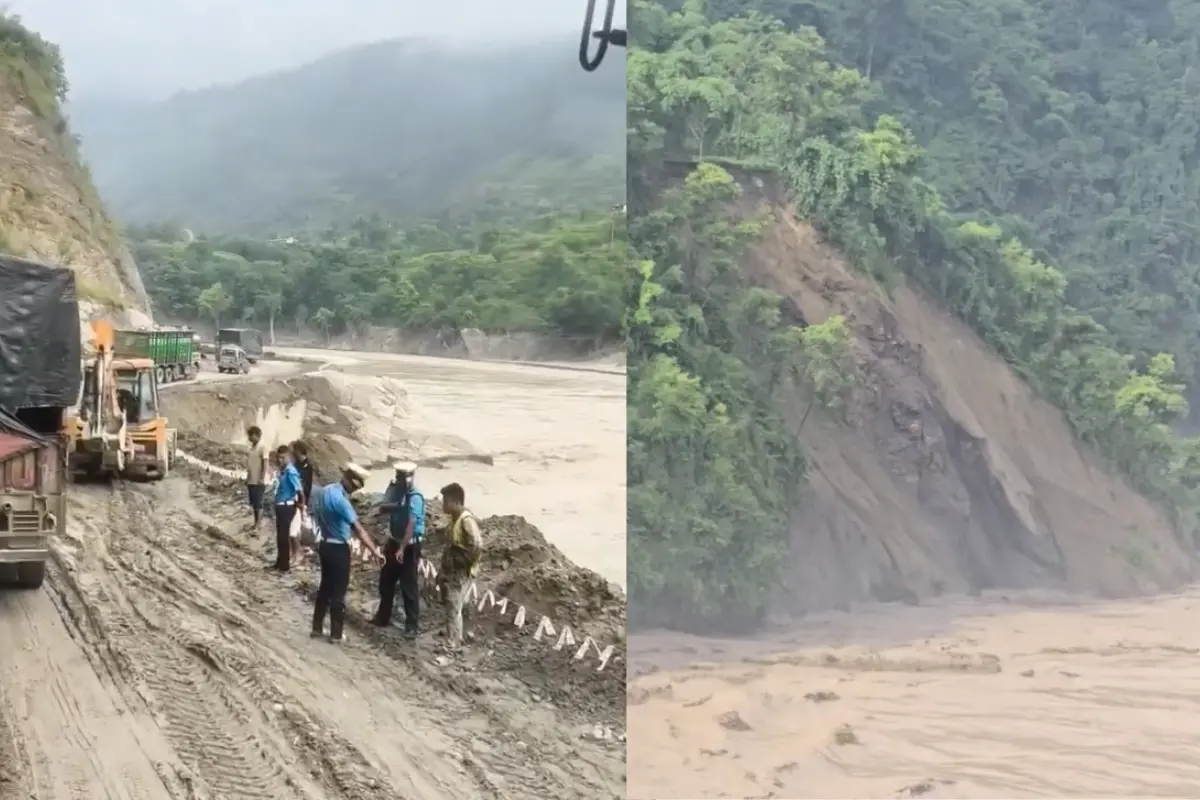
Kathmandu: Nepal's Prithvi Highway was blocked in Dhading on Sunday after erosion from the swollen Trishuli River caused a landslide and road collapse, as rescue teams continued searching for people missing after devastating flash floods across the country.
Traffic on Nepal's Prithvi Highway was disrupted after a section of the road collapsed in the Krishnabhir area of Dhading.
The collapse was triggered by erosion from the swollen Trishuli River, whose rising water level and strong currents weakened the road and its retaining wall.
The highway has been blocked in both directions, bringing traffic to a halt.
Authorities have stopped vehicles travelling towards the affected section, including traffic from Kathmandu, because the damaged road remains unstable.
Pedestrians also barred from damaged stretch
Police have warned that the affected section is unsafe even for people travelling on foot.
DSP Prakash Dahal of the District Police Office in Dhading said the road had caved in up to its middle and that pedestrian movement had also been prohibited.
The damaged stretch continued to subside, increasing the risk of further collapse.
Authorities are therefore keeping both vehicular and pedestrian traffic away from the area until the route can be assessed and made safe.
Nepal flood death toll crosses 700
The highway disruption comes as Nepal continues to deal with the aftermath of devastating flash floods that struck the country's northern and central regions on August 26.
Floodwaters travelled downstream through the Bhotekoshi and Trishuli river systems, leaving widespread destruction.
The death toll had crossed 700 by Sunday, while around 2,500 people were still reported missing, according to the information cited in the PTI report.
Intermittent rainfall and renewed concerns over rising river levels have complicated rescue and recovery operations.
Families have been gathering at hospitals to search for missing relatives as rescuers continue looking through mud, debris and collapsed structures.
Five-year-old survivor separated from mother
Among the survivors is five-year-old Ishara Tamang, who was rescued from floodwaters in Khalte village in Rasuwa district near the Nepal-Tibet border.
Ishara was reportedly trapped in a net after being swept away by the floodwaters.
After regaining consciousness in a Kathmandu hospital, she was able to tell medical staff her name and that her father was in Kathmandu.
Her mother, however, remained missing.
Ishara's account has added to the growing number of personal stories emerging from the disaster, as families continue searching for relatives who were swept away or buried under debris.
Child rescued from collapsed security post
In another rescue operation in Timure, an Armed Police Force team searching the remains of a collapsed security post heard a child's cries.
Rescuers dug through the debris and pulled out a six-year-old girl alive.
The girl was taken to a border outpost, although bad weather prevented her immediate evacuation to a hospital.
The rescue was another example of survivors being found days after the floods struck.
Girl rescued after two days reunited with parents
Another five-year-old girl, identified as Manisha, was rescued alive after being trapped under rubble for two days near Syabrubesi in Rasuwa.
According to the BBC report cited by PTI, rescuers initially believed they had heard a cat beneath the debris. After clearing the rubble, they discovered Manisha trapped underneath.
It reportedly took around two hours to free her.
She was initially barely responsive, while bad weather prevented an immediate helicopter evacuation. Rescuers took her to a security force camp, where she received water and later boiled rice water after regaining consciousness.
She was flown to Kathmandu on Saturday and admitted to a hospital's paediatric emergency department. By Sunday, she was reported to be recovering and had been reunited with her parents.
Survivors describe destruction in Timure
The devastation has also left many survivors separated from family members.
Businessman Nischal Tripathi was in Timure when floodwaters and mud surged through the settlement.
According to reports, Tripathi was on the fifth floor of a building when he felt it shake. He ran downstairs and jumped from around the second floor before reaching the mountainside.
He and others then moved into a forest, where they spent the night on noodles and biscuits before reaching a goat shed.
Around 150 to 200 people, along with Nepali Army personnel, were reportedly gathered there.
Tripathi said several people remained unaccounted for, including his brother, members of his team and truck drivers.
He described the destruction in Timure as extensive, saying that only a small number of houses appeared to have survived.
Flood survivor loses home, shops and access to medicines
The disaster has also destroyed homes, businesses and essential belongings.
Rekha Devi Gosain of Trishuli Bazaar lost her home and four shops when the flood struck, according to The Kathmandu Post report cited by PTI.
Her vehicle, motorcycle and other belongings were also swept away.
Gosain was also unable to save medicines she regularly takes for chronic conditions. Her son told the newspaper that she had gone several days without her regular medicines because they were unavailable at the hospital where she was staying.
The incident highlights another challenge facing survivors: access to essential healthcare and medicines after roads, homes and local infrastructure have been destroyed.
Search for missing people continues
While some survivors have been rescued from floodwaters and collapsed structures, thousands of families remain uncertain about the whereabouts of their relatives.
People have been gathering at hospitals with photographs and details of missing family members, checking lists and waiting for information from rescue teams.
Rescuers continue to search through mud and debris while authorities monitor river levels and weather conditions.
The continuing erosion along the Trishuli River also poses an additional threat to transport infrastructure, as demonstrated by the collapse on the Prithvi Highway.
Detailed timeline
- August 26: Flash floods struck areas of northern and central Nepal, with floodwaters moving downstream through the Bhotekoshi and Trishuli river systems.
- August 28: Manisha was reportedly found alive beneath rubble near Syabrubesi in Rasuwa after being trapped for two days.
- August 29: Manisha was flown to Kathmandu for medical treatment after initially being rescued and treated at a security force camp.
- August 30: The death toll from the floods crossed 700, while around 2,500 people remained missing. A section of the Prithvi Highway in Dhading also collapsed after erosion from the swollen Trishuli River.
- August 30: Rescue teams continued searching for missing people while families gathered at hospitals seeking information about relatives.
The Prithvi Highway collapse shows how the impact of the Nepal floods extends beyond the immediate loss of life and destruction of homes. River erosion is now threatening critical transport links, potentially making rescue operations, movement of relief supplies and access to affected communities more difficult.
The Trishuli River system has been particularly significant in the disaster because floodwaters travelled downstream through the network, affecting settlements and infrastructure along the route.
The scale of the missing-persons crisis also remains a major challenge. Hospitals and rescue centres have become important points for families seeking information, while rescuers are working through unstable debris and difficult weather conditions.
The stories of children rescued alive from floodwaters and rubble have provided some hope amid the wider disaster, but the continuing search for thousands of missing people and the risk of further river rises mean the emergency remains ongoing.