‘Not charity’: Nepal seeks compensation from India after deadly floods - what international law says
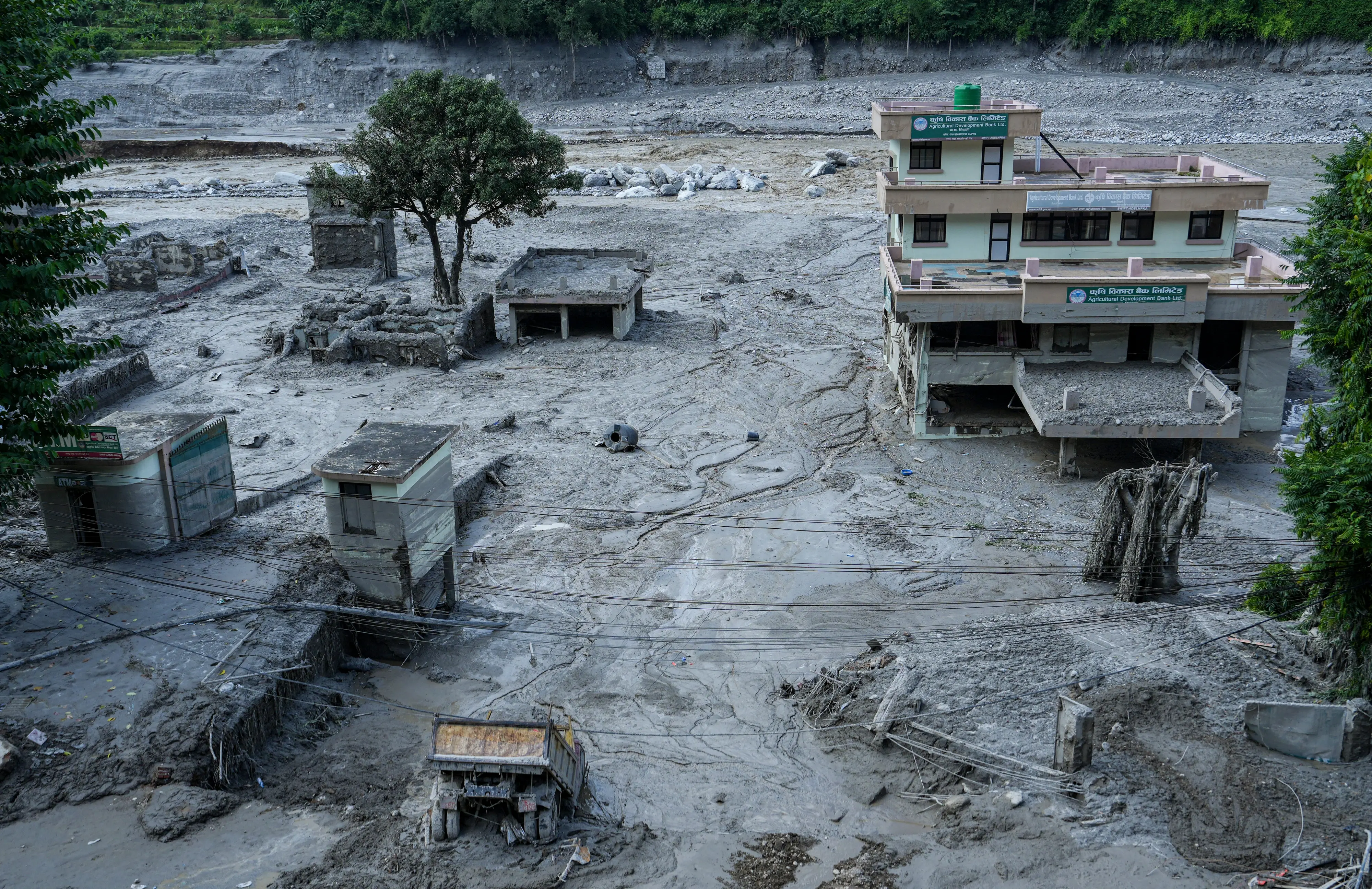
Nepal has shifted its diplomatic demand from conventional disaster aid to “climate justice and compensation” after catastrophic floods triggered by a high-altitude glacial collapse killed more than 1,100 people and left thousands missing.
Kathmandu has named China, the United States and India among major greenhouse-gas emitters it says have a responsibility towards climate-vulnerable countries.
What is Nepal asking for?
Nepal Foreign Minister Shisir Khanal said the country wants to move away from viewing post-disaster assistance simply as aid. He described the demand as one of “legal and moral liability”, arguing that Nepal has contributed very little to global greenhouse-gas emissions while facing severe consequences from a warming climate.
The immediate backdrop is the August 26 disaster in the Bhotekoshi river system. An ice-and-rock collapse caused a massive debris flow and sudden rise in downstream water levels, devastating settlements and infrastructure along the Nepal-Tibet region. Scientists say climate change is making high-altitude areas increasingly unstable, although establishing the precise contribution of warming to any individual collapse can be difficult.
Nepal says its vulnerability is particularly acute because its economy, communities and infrastructure are exposed to glacier-related hazards, extreme rainfall, landslides and floods.
Why has Nepal named India, China and the US?
Khanal identified China, the US and India as the world's three largest greenhouse-gas emitters and argued that major emitters have a historical responsibility towards vulnerable countries such as Nepal.
The argument is based on the wider climate-justice debate: countries that have contributed relatively little to global warming can nevertheless face disproportionate losses from climate-related disasters.
However, Nepal's political and diplomatic argument should not be confused with an established legal claim that automatically makes each named country liable for the specific flood.
Is India legally bound to compensate Nepal?
No. Nepal's demand does not by itself create a legal obligation for India to make direct bilateral compensation payments.
The international climate regime recognises the concept of loss and damage and provides mechanisms for financial support to vulnerable developing countries. But this does not amount to a system under which a country can automatically establish that another individual country caused a particular flood and must therefore pay compensation.
The distinction is important because Nepal is simultaneously making a broader diplomatic argument about responsibility and pursuing support through international climate-finance mechanisms.
India has itself consistently argued for climate equity, including recognition of historical emissions and differences in countries' development needs. Therefore, New Delhi's position on climate finance cannot simply be equated with accepting legal liability for a specific disaster in Nepal.
What is the Loss and Damage Fund?
The Fund for responding to Loss and Damage was created under the UN climate process to help particularly vulnerable developing countries respond to economic and non-economic losses associated with climate change.
Nepal has formally approached the fund's board seeking urgent financial assistance following the Bhotekoshi disaster. The move gives Kathmandu an international mechanism through which it can seek financial support without relying solely on bilateral humanitarian assistance.
This is significant because loss and damage finance is different from a conventional compensation lawsuit between two countries.
Why this matters for India
India is in a particularly complicated position.
It is one of the world's largest annual greenhouse-gas emitters because of the size of its economy and population. At the same time, India's per-capita emissions remain substantially below those of many developed economies, and New Delhi has traditionally argued that climate responsibilities must take account of historical emissions, equity and development requirements.
India also has close geographical and economic links with Nepal. Himalayan climate risks affect both countries through shared river systems, agriculture, hydropower, water security and disaster exposure.
That means Nepal's demand could create a difficult diplomatic balancing act: India can support climate finance and disaster assistance without accepting that it has a legally established obligation to compensate Nepal for this particular flood.
Aid vs climate justice: what has changed?
Nepal's language marks a significant diplomatic shift.
Traditional approach:
Disaster → international appeals → humanitarian aid → reconstruction assistance.
Nepal's new framing:
Climate-driven vulnerability → responsibility of major emitters → loss and damage → climate justice and compensation.
Khanal has explicitly described this change as a move from “aid” to “justice and compensation”.
The distinction gives Nepal a stronger political argument when approaching international institutions, particularly as Himalayan countries face increasingly severe glacier-related risks.
What happens if India, China or the US do not pay?
Nepal cannot simply impose a compensation bill on these countries.
Its more realistic avenues are diplomatic pressure, international climate-finance mechanisms and negotiations over loss-and-damage funding. Kathmandu can also use international forums such as the UN General Assembly to highlight the vulnerability of Himalayan countries and push major emitters for greater financial commitments. Nepal's government is considering using the UNGA platform to seek international support following the disaster.
Analysis: Nepal's compensation demand explained
Nepal's move is important less because it immediately creates a legal bill for India, China or the US and more because it reflects the changing politics of climate finance.
For years, vulnerable developing countries have argued that climate funding should not be treated simply as voluntary charity. Their position is that countries facing severe climate losses despite making relatively small contributions to global warming deserve predictable international support.
The Bhotekoshi disaster has given Nepal a powerful example for that argument. The catastrophe destroyed homes, roads, bridges and hydropower infrastructure while exposing the growing risks facing communities in the Himalayan region. The UN has also warned that glacial-flood risks in the Himalayas are escalating as warming destabilises high-altitude environments.
At the same time, “climate justice” does not automatically mean legal liability for a particular country or disaster. Determining causation between global emissions and one specific glacier collapse is scientifically complex, while international climate agreements do not establish a straightforward bilateral compensation mechanism for individual disasters.
For India, therefore, the issue is likely to remain both diplomatic and climate-policy driven rather than a straightforward legal compensation claim.