NEET overhaul gathers pace; SC judges to inspect NTA, Nilekani report expected
New Delhi: The Centre informed the Supreme Court on Friday, September 18, that the high-powered task force headed by Infosys co-founder Nandan Nilekani has held extensive consultations on reforms to the country’s examination system.
The Supreme Court’s review of the NEET system is set to move closer to the ground, with Justices PS Narasimha and Alok Aradhe planning to inspect the newly upgraded NTA facility as the Centre expects the Nandan Nilekani-led panel’s interim reform report by month-end.
The panel’s interim report is expected by the end of September and could provide recommendations on changes to the conduct, security and administration of NEET and other major competitive examinations.
The task force was set up after concerns surrounding examination irregularities and security, including the controversy over the NEET-UG 2026 paper leak. Its work covers broader structural reforms to public examinations.
Why NEET reforms are being considered
The reform exercise follows a prolonged dispute over the integrity and security of high-stakes entrance examinations.
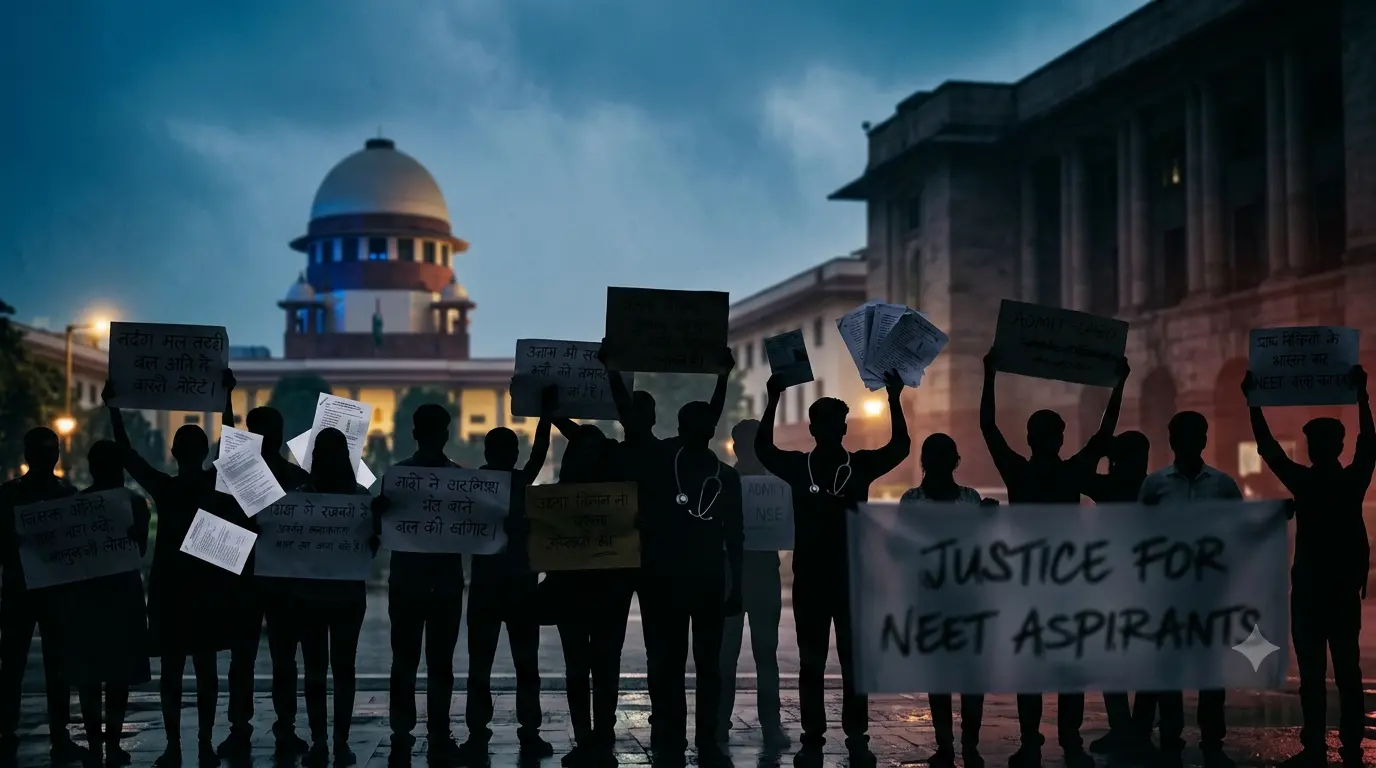
The NEET controversy triggered protests by students and other groups, with allegations relating to question-paper security and the conduct of the examination. The agitation eventually expanded into a wider confrontation between protesters and authorities.
The protests also included demands for the resignation of then Union Education Minister Dharmendra Pradhan. Pradhan resigned as Education Minister on July 25 amid the agitation over alleged irregularities in competitive examinations, including NEET. He later said that he had personally offered to step down.
CJP-led protests and Supreme Court intervention
The student agitation was led in large part by the Cockroach Janta Party (CJP), which organised protests in Delhi and other parts of the country over the examination controversy.
The Supreme Court subsequently became involved in proceedings concerning both the protests and allegations of police excesses.
In September, the court used its powers under Article 142 to quash FIRs connected with specified protests held between July 20 and July 25. It also directed the Centre to formulate a pan-India policy for compensation to families of students who died by suicide in connection with the NEET-UG 2026 examination.
The Supreme Court is separately overseeing a five-member high-powered committee examining allegations of police excesses against student protesters and violence involving police during the agitation. On September 16, the court declined requests to reconstitute the committee and directed it to continue its work.
What could change in NEET?
The Nilekani panel is examining structural changes to the examination system.
One issue under consideration is whether NEET should eventually move from its existing pen-and-paper format to computer-based testing. The Centre has previously told the Supreme Court that no final decision has been taken on the format and that the matter would depend on the task force’s recommendations.
A two-stage examination model, similar to the structure used for JEE, has also been discussed.
Another proposal is to conduct NEET twice a year, potentially allowing candidates to use their better score. Other suggestions focus on examination-centre security and stronger safeguards for question papers.
These proposals remain under consideration and are not confirmed changes to NEET.
Focus on question-paper security
The reform exercise is also looking at how examination papers are prepared, printed, transported and distributed.
Suggestions submitted to the panel include tighter cybersecurity measures, encrypted transfers of question papers, CCTV monitoring at printing facilities and greater control over examination logistics.
The objective is to reduce vulnerabilities at different stages of the examination process rather than relying only on security arrangements at the examination centre.
Earlier exam reform recommendations
The Nilekani-led exercise is also linked to recommendations made by an earlier committee headed by former ISRO chairman K Radhakrishnan.
The Supreme Court has sought details from the Centre on the implementation of examination-reform recommendations, with the Nilekani panel examining how the broader system can be strengthened.
The proposed changes could affect not only NEET but also the way other major national-level public examinations are designed and administered.
What happens next?
The immediate deadline is the end of September, when the Centre expects the Nilekani panel to submit its interim report.
The report will not automatically change the NEET examination system. The government will first have to consider the recommendations and decide which measures can be implemented and through what process.
For students preparing for future NEET attempts, major proposals such as computer-based testing, a two-stage examination or twice-yearly NEET should therefore not be treated as confirmed changes at this stage.