Bharat Bandh on February 12: All you need to know about tomorrow’s strike
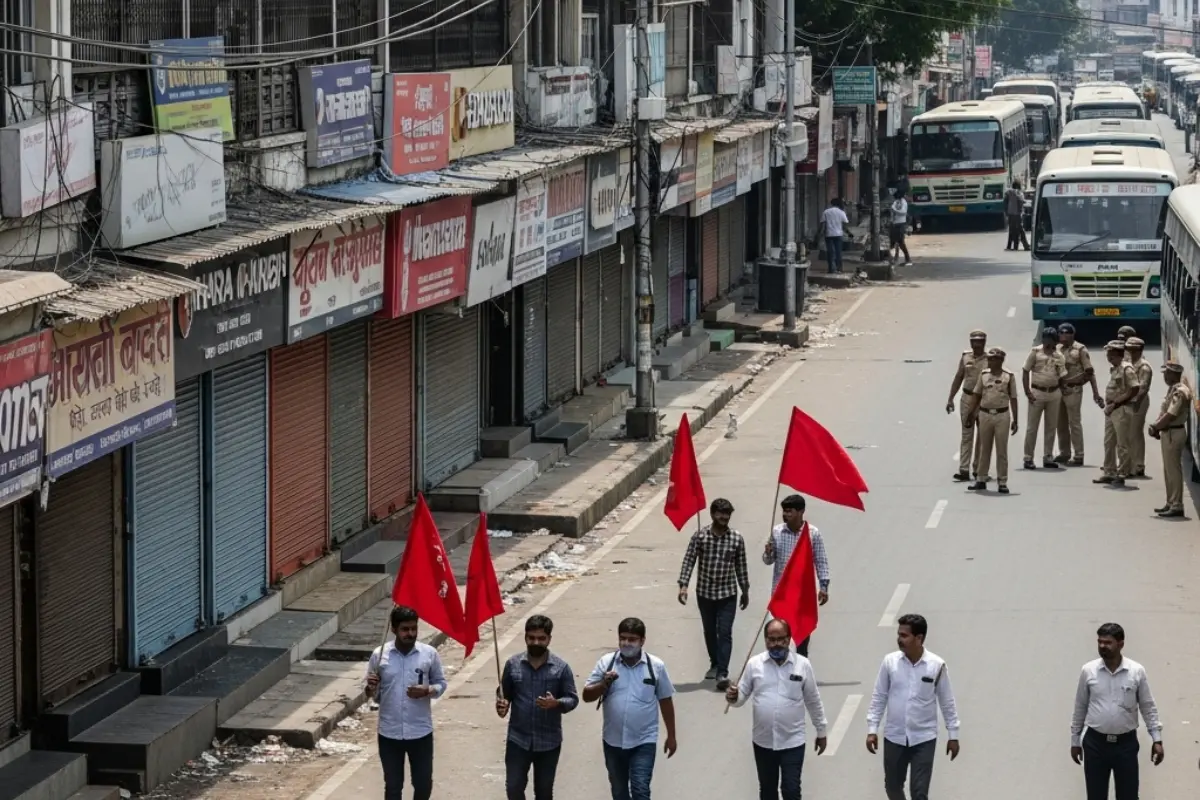
Over 10 central trade unions have called for a nationwide general strike on Thursday, February 12, 2026, protesting against the Centre’s labour, farm and economic policies. The strike is expected to disrupt public banking, transport services and government offices in several states, depending on local participation.
Why has the Bharat Bandh been called?
A joint platform of trade unions — including INTUC, AITUC, HMS, CITU, AIUTUC, TUCC, SEWA, AICCTU, LPF and UTUC — has announced the strike. The Samyukt Kisan Morcha (SKM) has extended support.
According to AITUC General Secretary Amarjeet Kaur, “Not less than 30 crore workers will participate in the strike on February 12,” and the agitation is likely to affect more than 600 districts nationwide.
The unions are demanding:
- Scrapping of the four new Labour Codes and related rules notified in November 2025
- Withdrawal of the Draft Seed Bill
- Withdrawal of the Electricity Amendment Bill
- Withdrawal of the Sustainable Harnessing and Advancement of Nuclear Energy for Transforming India (SHANTI) Act
- Restoration of MGNREGA
- Scrapping of the Viksit Bharat – Guarantee for Rozgar and Ajeevika Mission (Gramin) Act, 2025
- Opposition to the proposed India-US trade deal
- The unions have described the Centre’s policies as “anti-worker, anti-farmer and pro-corporate”.
What is likely to be affected?
- Banking services:
Employee bodies such as the All India Bank Employees’ Association (AIBEA), All India Bank Officers’ Association (AIBOA) and Bank Employees Federation of India (BEFI) have joined the strike call. Public sector banks including SBI, Bank of Baroda and PNB have warned of possible service disruptions.
- Transport services:
State-run buses may face disruptions in several regions due to protests and road blockades. Markets and commercial establishments could remain closed in areas where participation is high.
- Government offices and PSUs:
Government departments, public sector undertakings and industrial units may see reduced operations.
- Core sectors:
Coal, steel and manufacturing units may also be affected, depending on local mobilisation.
Kaur claimed that Odisha and Assam could witness a complete shutdown, while other states are expected to see significant participation.
What is likely to remain open?
- Hospitals and emergency services
- Ambulance and essential healthcare services
- Airports, though travellers may face traffic delays
- Metro services (subject to local administration decisions)
- Private offices and IT companies, depending on region
- Essential supplies such as milk and pharmacies
Will schools and colleges remain closed?
There has been no nationwide order for closure of schools and colleges. However, in some states such as Kerala, institutions may remain closed if teachers’ and student organisations participate. Decisions will be taken at the state or local level.
The February 12 Bharat Bandh is expected to test the scale of coordinated action by trade unions and farmers’ groups, with participation claims suggesting one of the largest mobilisations in recent years.