TN BJP chief’s ‘ask mother’ remark on CM Vijay; complaint filed with DGP
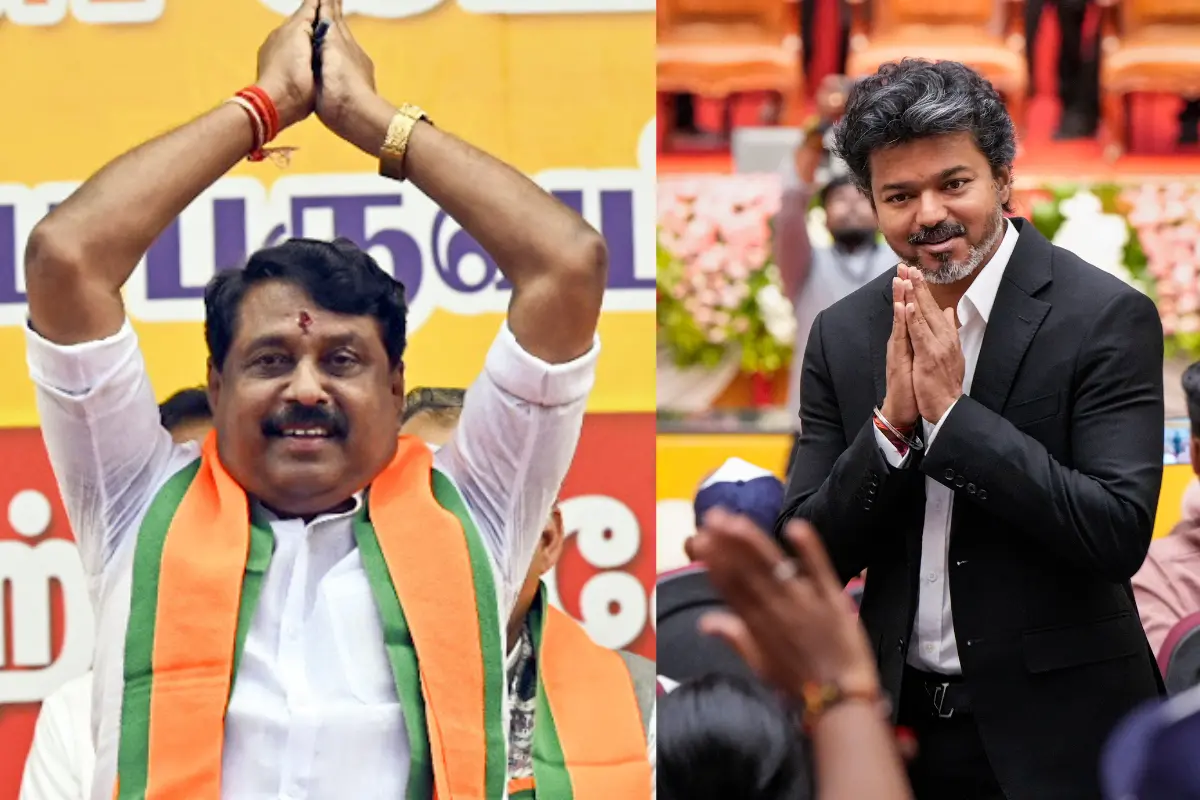
A political controversy has erupted in Tamil Nadu after BJP state president Nainar Nagendran made a remark involving Chief Minister C Joseph Vijay’s mother while responding to Vijay’s earlier jibe at DMK leader Udhayanidhi Stalin.
A complaint has also reportedly been filed with the Tamil Nadu DGP seeking action against Nagendran.
What did Nainar Nagendran say?
Nagendran criticised Vijay over his earlier comments about Udhayanidhi Stalin and his father, former Chief Minister and DMK president MK Stalin.
While responding to Vijay’s “where is your father?” jibe, Nagendran reportedly said that the question of a person’s father could be answered by asking their mother. The remark was widely interpreted as a personal reference to Vijay’s mother, Shoba Chandrasekar.
The comment triggered criticism from TVK and several political figures, who described it as inappropriate and below the standards expected from a senior political leader.
Complaint filed with Tamil Nadu DGP
A complaint has reportedly been submitted to the Tamil Nadu Director General of Police against Nagendran over the remark.
The complaint seeks legal action over what it describes as the BJP leader’s “ask your mother” comment concerning Vijay.
The complaint follows growing criticism of Nagendran’s remarks and adds a potential legal dimension to the political dispute.
Nagendran says his remarks were misinterpreted
Following the backlash, Nagendran sought to clarify his position.
He said he had not targeted anyone or made the comment with an ulterior motive. His clarification came as opposition to the statement grew.
The controversy has nevertheless continued, with critics arguing that personal references involving family members cross the boundaries of political debate.
Annamalai also criticises Nagendran
Former Tamil Nadu BJP president K Annamalai publicly criticised Nagendran over the remarks.
Annamalai said political differences were acceptable but argued that insulting or targeting family members was not. He described such comments as part of an outdated style of politics and said they should not be presented as an example to younger generations.
He also criticised the wider use of language that he said vulgarises Tamil Nadu’s political discourse.
TVK hits back
Vijay’s Tamilaga Vettri Kazhagam condemned Nagendran’s remarks as derogatory and inappropriate for a person holding a senior political position.
Tamil Nadu School Education Minister Rajmohan also criticised Nagendran, saying a leader holding such office should maintain the dignity associated with the position.
The controversy has therefore drawn criticism from both TVK and sections of Nagendran’s own party.
How did the controversy begin?
The latest dispute is linked to a political exchange between Vijay and the DMK leadership.
In June, Vijay, speaking in the Tamil Nadu Assembly, mocked Udhayanidhi Stalin by asking where his father, MK Stalin, was.
The remark referred to MK Stalin’s defeat in the 2026 Tamil Nadu Assembly election. Stalin, who had represented Kolathur for decades, lost the seat to a TVK candidate and was consequently not part of the new Assembly. Udhayanidhi Stalin, who retained his Chepauk-Thiruvallikeni seat, became Leader of the Opposition.
Vijay used a satirical story about someone searching for a child’s father during his Assembly speech. The comments were widely interpreted as a reference to MK Stalin’s absence from the House.
MK Stalin responded to Vijay
MK Stalin responded to the “where is your father?” remark by saying that he remained in the “hearts of the people” even though he was not in the Assembly.
The exchange also triggered speculation about whether Stalin could return to the legislature through a future by-election. Senior DMK leaders subsequently indicated that a return to the Assembly remained possible.
Udhayanidhi and MK Stalin later stepped up their criticism of the Vijay government, accusing it of focusing on political rhetoric rather than governance.
Nagendran and Vijay have clashed before
The latest controversy is not the first time Nagendran has faced criticism over comments involving Vijay.
In February 2026, Nagendran triggered another political row after making a personal remark linking Vijay with actor Trisha Krishnan. Trisha described the comment as “distasteful” and “inappropriate”, while Nagendran later apologised and said he had deviated from his usual position of avoiding personal comments.
The earlier episode adds context to the latest controversy surrounding the BJP state chief’s comments about Vijay.
The latest row comes amid an increasingly confrontational political environment in Tamil Nadu following the 2026 Assembly election.
Vijay’s TVK won the election and formed the government, while the DMK moved into opposition. Udhayanidhi Stalin became Leader of the Opposition after his father lost his Assembly seat.
The exchanges between Vijay, Udhayanidhi, the DMK leadership and BJP leaders have increasingly included personal references, adding to concerns among political figures about the tone of public debate.
Why the latest row matters
The controversy highlights the increasingly personal nature of political exchanges in Tamil Nadu following the 2026 election.
Vijay’s original “where is your father?” remark was directed at Udhayanidhi Stalin in the context of MK Stalin’s electoral defeat and absence from the Assembly. Nagendran’s response took the exchange into a more personal area by invoking Vijay’s mother, triggering criticism from TVK, Annamalai and others.
The complaint to the DGP could now shift the controversy beyond political criticism and into the legal arena. Whether any action follows will depend on the contents of the complaint, the applicable law and the authorities’ assessment of the remarks.
The episode also comes months after Nagendran faced another backlash over personal comments involving Vijay and Trisha, for which he later apologised.
For Tamil Nadu politics, the dispute reflects a broader challenge: political parties are increasingly using sharp personal attacks alongside policy criticism, raising questions about the standards of public discourse and the boundaries between political satire, criticism and personal remarks.