‘Don’t call it same-sex marriage’: RSS chief Mohan Bhagwat’s LGBTQIA+ proposal explained
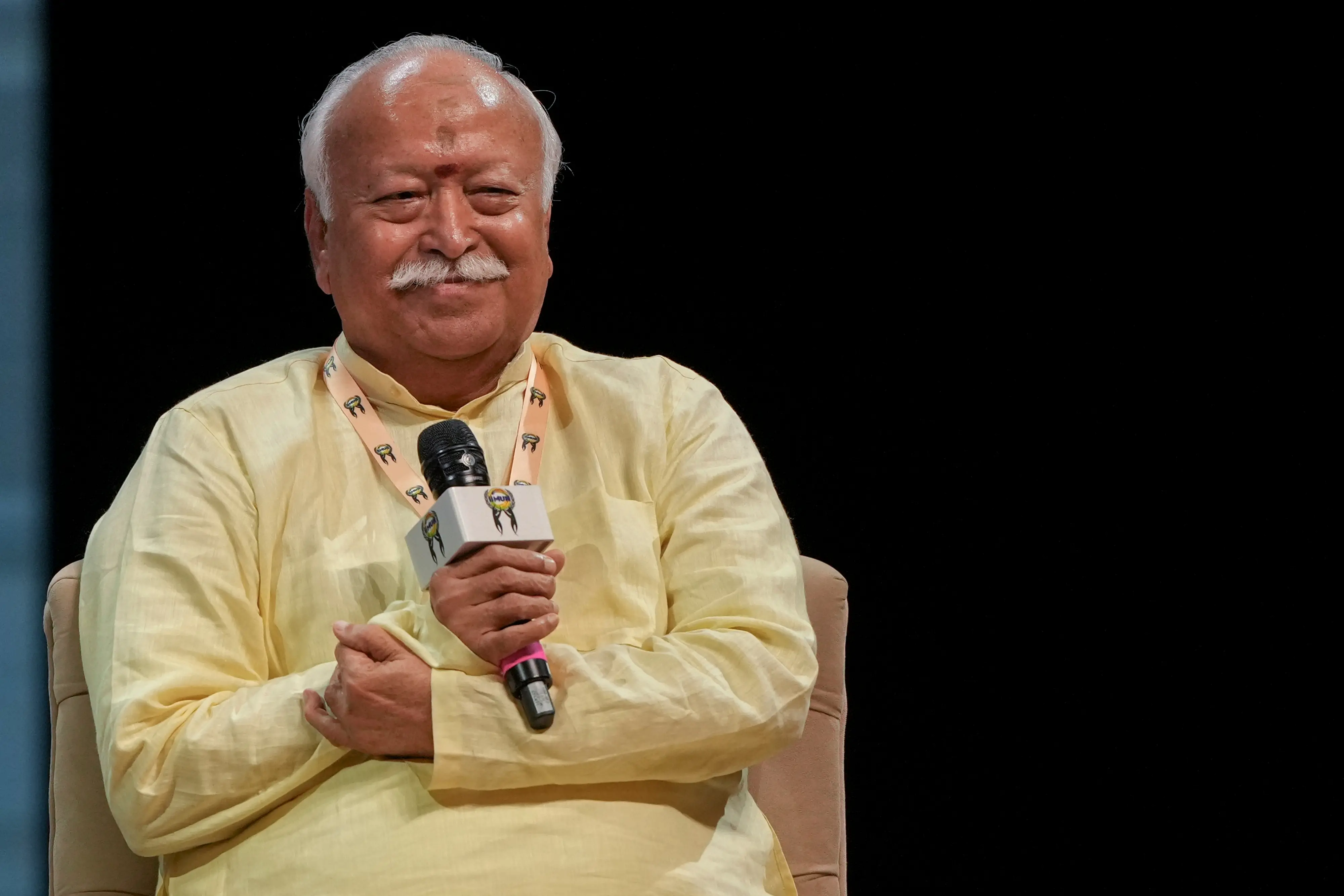
Mumbai: RSS chief Mohan Bhagwat addressed several social and political issues during an event in Mumbai, including same-sex couples, women’s participation, national security and relations with neighbouring countries.
His comments came amid ongoing debates around LGBTQIA+ rights, social reforms and the role of cultural organisations in shaping public discussions in India.
What did Mohan Bhagwat say about same-sex couples?
Bhagwat said members of the LGBTQIA+ community are part of society and should be accommodated through an appropriate legal framework.
“LGBTQ or whatever, they're all part of the society to which we belong. And in our society, there is a tradition of accommodating them,” Bhagwat said.
However, he said marriage, according to traditional Indian understanding, is linked to family and social responsibilities rather than only the relationship between two individuals.
“Marriage is not, in our tradition, vivaah. That is not a convenience created so that two people should live together. It is an institution which is created by marriage. Family. Family is the unit of society,” he said.
Bhagwat argued that changes to the existing marriage system should happen only after wider social preparation.
“We have to prepare the society first, because laws don't dictate society; society dictates the laws,” he said.
Instead of recognising same-sex marriage within the existing marriage framework, Bhagwat suggested creating a separate system to address the needs of same-sex couples.
“Same-sex marriage -- don't say that. How same-sex companions can live together, you have to devise some system. You can form a law for that. Society will accept that,” he said.
How does this align with the RSS’s ideological position?
The RSS has traditionally viewed family, cultural traditions and social institutions as important foundations of society.
Bhagwat’s remarks reflect the organisation’s position that social changes should develop through wider acceptance rather than only through legal reforms.
The RSS has previously maintained that LGBTQIA+ individuals are part of society, while also distinguishing between accepting individuals and changing traditional definitions of institutions such as marriage.
Supporters’ view: A move towards accommodation
Supporters of Bhagwat’s remarks point to his statement that LGBTQIA+ people should not be excluded from society.
They view his comments as an attempt to acknowledge changing social realities while maintaining the RSS’s emphasis on traditional family structures.
Some supporters argue that creating a legal framework for same-sex couples could provide recognition and protection without changing the traditional understanding of marriage.
Critics’ view: Questions over equal rights
Critics argue that a separate legal framework may not provide the same status and rights as marriage recognition.
LGBTQIA+ rights advocates have argued that marriage recognition affects several legal protections, including inheritance rights, medical decision-making and social security benefits.
They say separate arrangements could create a distinction between heterosexual and same-sex couples.
Government and legal context
The remarks come after the Supreme Court’s 2023 decision on same-sex marriage.
The court did not recognise same-sex marriage under existing laws and said decisions on changing marriage-related legislation would have to be taken by Parliament.
During the hearings, the government had argued that legal recognition of same-sex marriage required wider legislative consideration.
Bhagwat on women’s role: What he said
Bhagwat said women are equal and complementary partners in society and nation-building.
“Role of women is not only in Bharatiya society, everywhere in the world, but we also take it that it is equal and complementary to each other,” he said.
He added that women should receive opportunities and training similar to men.
“Everything they can do and everything they should be trained for,” Bhagwat said.
RSS and women’s participation debate
Bhagwat also addressed questions about why the RSS functions as a male organisation while the Rashtra Sevika Samiti works separately for women.
He said the structure was influenced by social conditions when the RSS was founded.
“When RSS started, if we had started the organisation with women also, we wouldn't have thrived. Times were like that,” he said.
Bhagwat said the Rashtra Sevika Samiti works independently while cooperating with the RSS.
He also said women involved in public life participate in the RSS’s decision-making process through the Akhil Bharatiya Pratinidhi Sabha.
“In the apex body of RSS, Akhil Bharatiya Pratinidhi Sabha, all the women working in the public field are also invited into the process of decision-making,” he said.
On government, military and conflicts
Bhagwat said citizens should support the government and armed forces during conflicts.
“In times of conflict, we have to go with whatever our Govt does. But states, politics and international borders are also there — that is also the fight of life. So, during conflict, we are with our Govt and our Military,” he said. He said national security situations require unity and that political differences should not weaken the country’s response.
The RSS has traditionally promoted the idea of cultural nationalism, focusing on national identity, social unity and civilisational values.
Bhagwat’s comments reflected the RSS view that national interests should take priority during external challenges.
At the same time, he said political conflicts should not result in permanent hostility between ordinary citizens. “Permanent hatred and permanent enmity are not the solution,” Bhagwat said.
On India’s relations with Pakistan and China
Bhagwat said historical and cultural links between people remain despite political conflicts.
“China's people say that for 2,000 years, Bharat gave them some values; and Pakistan was Bharat, 100 years ago. This should not be forgotten,” he said.
He argued that disagreements between governments are temporary and should eventually be addressed through dialogue. “Because states, politics, international borders are also there — that is also the fight of life. But humanity is one,” Bhagwat said.
Bhagwat’s comments are likely to be viewed differently across political and social groups. Supporters may see the remarks as an attempt to balance traditional social values with changing realities.
Critics may argue that questions involving equal rights require legal recognition rather than separate accommodation. The broader debate remains about whether social reforms should primarily come through legal changes or through gradual acceptance within society.