‘Undeclared President's rule’: Mamata launches scathing attack on Centre, EC ahead of Bengal polls
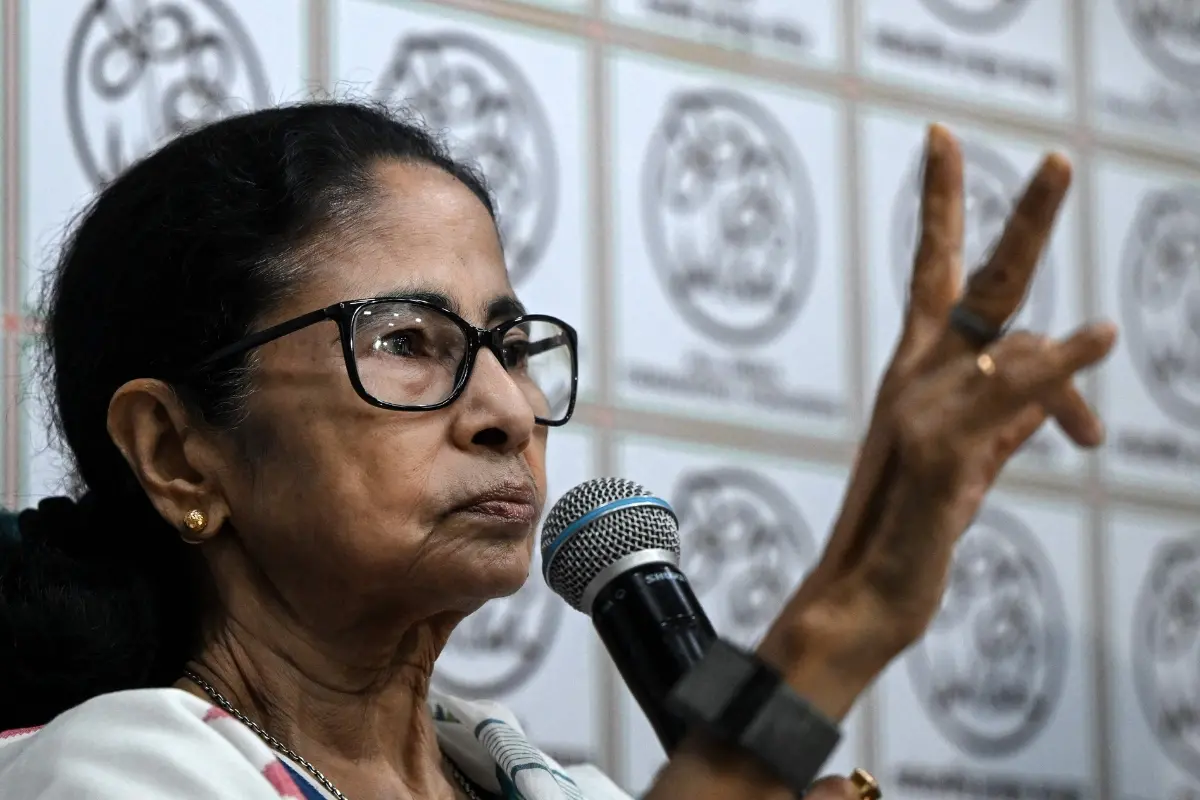
Kolkata: West Bengal Chief Minister Mamata Banerjee launched a scathing offensive against Prime Minister Narendra Modi and the BJP-led central government on Friday, alleging "unprecedented" administrative overreach and the imposition of an "undeclared President's Rule" ahead of the state’s assembly elections.
Unveiling the Trinamool Congress (TMC) manifesto in Kolkata, Banerjee claimed that external forces are attempting to smuggle weaponry and illicit funds across the state's borders to incite communal disharmony. She argued these efforts are designed to destabilise the region and justify indirect central control.
"My appeal to the people of Bengal: remain united and vigilant," Banerjee said. "Do not let fear stop you, and do not accept bribes or inducements. Forces from across the border are trying to bring money, arms, and unrest to create riots in our state. They aim to destabilise Bengal and impose indirect control through President's Rule."
Constitutional Concerns
The Chief Minister characterised the current governance climate as a subversion of democratic norms. She asserted that the scale of recent administrative reshuffles by the Election Commission of India (ECI) has disrupted essential services and undermined the state's autonomy.
"All of this gives the impression of an undeclared form of central control, almost like a President's Rule without officially declaring it," Banerjee remarked. "This raises serious questions about governance and fairness, especially during elections."
Banerjee specifically criticised the reassignment of several Principal Secretaries to roles as election observers in unfamiliar territories, questioning how such officials could be held accountable for ground realities they do not understand. She pointed to the shifting of the Principal Secretary of the Food Department during a period of potential shortages as a primary example of systemic disruption.
Policy and Identity Politics
Targeting federal policies, Banerjee cited the National Register of Citizens (NRC) and the prospect of future delimitation as primary drivers of public anxiety. She accused the central government of highly centralised decision-making and failing to protect the interests of women.
"We reject politics that divide people—Hindus, Muslims, Sikhs, Christians, all are equal in our Bengal," the Chief Minister said. "This government at the centre has failed women and is pushing one-sided policies that harm the people."
Legal and Electoral Escalation
The rhetoric follows a formal letter sent by Banerjee on Thursday to Chief Election Commissioner Gyanesh Kumar. In the correspondence, she alleged the ECI has "crossed all boundaries of decency and constitutional propriety" and acted with a clear bias since the commencement of the "Special Intensive Revision" of voter rolls.
Banerjee confirmed she has petitioned the Supreme Court of India to intervene, stating that the poll body’s refusal to address her grievances necessitated judicial action to protect fundamental democratic rights.
West Bengal's 294 constituencies are scheduled to vote in two phases on April 23 and April 29, with the final counting of ballots set for May 4.
With inputs from ANI