‘Like a doctor, investigators apply rule of elimination’: Ex-AAIB chief explains how Air India crash probe is done
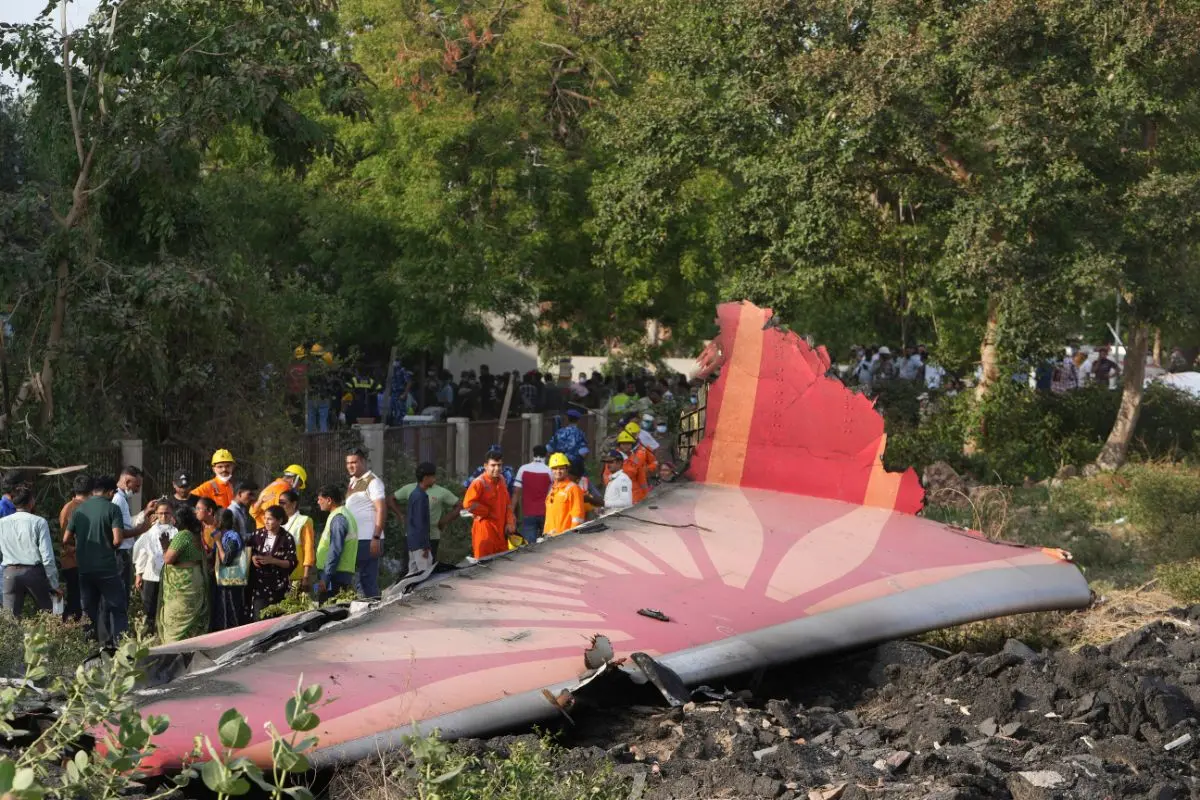
Stitching together evidence in the Air India Dreamliner crash in Ahmedabad will be a tedious process and the investigation is likely to take considerable time, according to Group Captain (Retd) Aurobindo Handa, former Director General of the Aircraft Accident Investigation Bureau (AAIB).
“In all probability and in fairness, the investigation is likely to be a long drawn process,” Handa told PTI in an exclusive interview. “The aircraft has been very badly damaged by fire and stitching together the evidences will be a tedious process.”
Handa, who also served as the Chairman of the Accident Investigation Group (AIG) of the ICAO-APAC Region, oversaw over 100 investigations during his tenure at AAIB, including the August 2020 Kozhikode crash.
Annex 13 requires timely completion—but fire damage complicates task
Responding to a question about the likely duration of the probe, Handa said, “Annex 13 of the International Civil Aviation Organization (ICAO) as well as AAIB Rules mandate that any investigation should preferably be completed in less than a year.”
He added that Indian investigators strive to finish quickly to enable corrective action through the Directorate General of Civil Aviation (DGCA). However, in this case, “corroborating and stitching together the evidences would be a tedious process.”
Determining probable cause a step-by-step elimination process
On how causes are determined, Handa explained that the process involves “deep and detailed examination of meaningful evidences.” Investigators first analyse data from the recorders to narrow down potential systems or sub-systems that may have malfunctioned.
“Step by step, each of the suspected causes for the accident are examined deeply and the unlikely causes are ruled out,” he said. “It is akin to a physician going through pathological reports, X-Ray/MRI or other test reports before coming to a conclusion.”
Objective is root cause—not blame
Handa stressed that “the aim of the investigation is to find out the most probable root cause but not to apportion blame or liability.” This is in line with ICAO’s Annex 13 and India’s AAIB Rules 2012.
Established global and local frameworks guide probe
He said ICAO’s Manual of Accident Investigation (DOC 9756) is followed globally. “Based on DOC 9756 and its own experiences, AAIB has prepared a document known as 'Procedure Manual' which contains the investigation process/procedures to be followed in India,” Handa added.
First responders save lives, AAIB secures site and evidence
When asked about initial steps post-crash, Handa explained that “the immediate focus of the ‘first responders’ such as airport staff, CISF, NDRF and local police is to save lives.”
Upon AAIB’s arrival, “it starts coordinating with the ‘first responders’ for the remaining work,” including cordoning off the area, preserving evidence, and retrieving recorders.
AAIB teams are divided into sub-groups to examine debris categorised as flight recorders, airframe, propulsion, avionics, and controls. The top priority is to recover the Cockpit Voice Recorder (CVR) and Digital Flight Data Recorder (DFDR).
From raw data to meaningful conclusions
“Once the retrieval is affected, the next step is ‘milking of raw data’ from these recorders,” he said. These are then converted to “engineering parameters,” and further into graphs and charts for interpretation.
India equipped for technical analysis, with OEM help if needed
India is “quite well equipped to analyse recorders,” Handa said, adding that AAIB, DGCA, and airlines have their own recorder labs.
If required, AAIB may consult institutions like NAL Bengaluru, HAL Korwa, and the LCA Project, or even send the recorders to their Original Equipment Manufacturer (OEM) if data integrity is at risk.
“Aircraft manufacturers do not manufacture recorders and these are outsourced from other companies like Honeywell,” he noted.