Legal storm brews over AI171 crash as families set to sue Boeing and Air India in US & UK
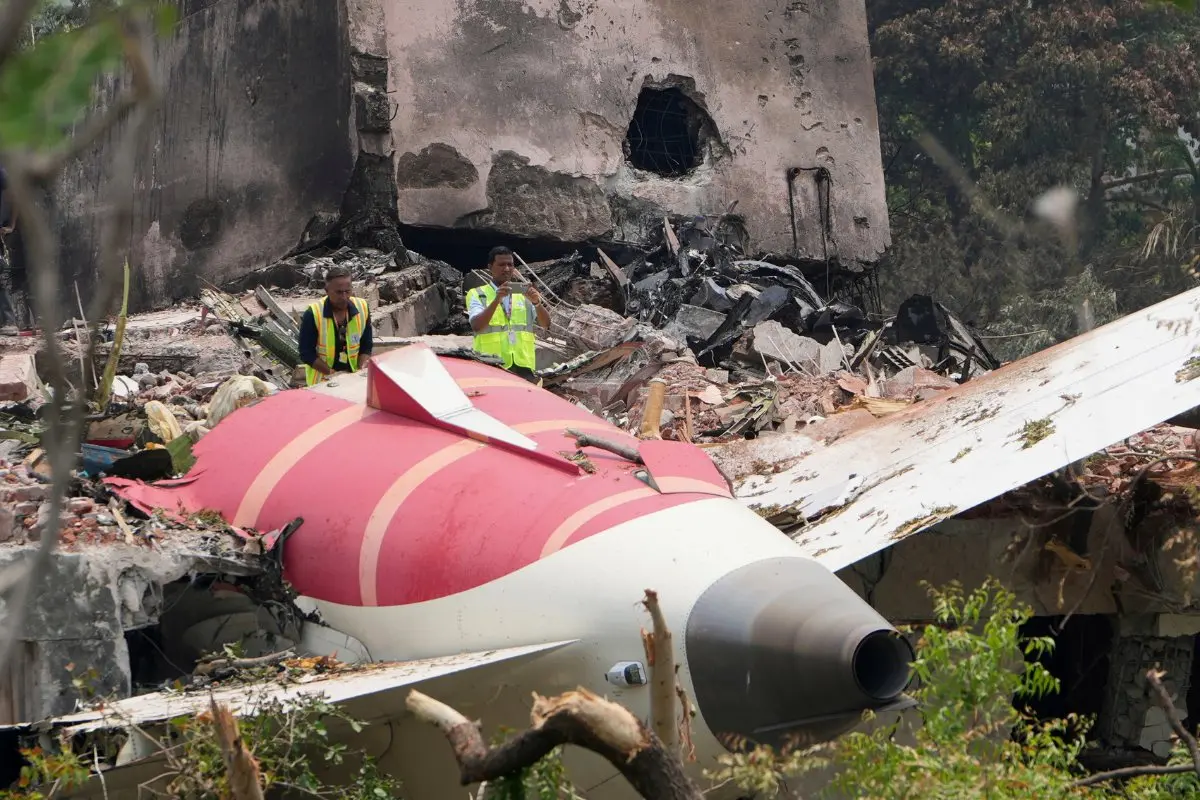
In a significant legal development following the tragic Air India AI171 crash in Ahmedabad, a coordinated transcontinental legal action is taking shape. Prominent UK-based Keystone Law and US-based Wisner Law Firm have initiated efforts to file multiple lawsuits against Boeing and Air India, working closely with the bereaved families to seek justice and fair compensation under international aviation law.
According to a report by The Economic Times, the two law firms are preparing separate lawsuits, one targeting Boeing in a US federal court and the other against Air India in the High Court of London. These lawsuits are expected to be filed independently of any assistance being offered by Tata Sons, the parent company of Air India, including financial compensation via insurers.
“Our international legal team has been in talks with the families of those who died in the crash over the past week. We are reviewing all the evidence and may proceed with legal action in both the US and UK,” said James Healy-Pratt, aviation lawyer and partner at Keystone Law, who is leading the UK legal effort alongside barrister Owen Hanna.
Wisner Law, the US aviation litigation firm involved in several high-profile aircraft accident cases, including the 2020 Air India Express Kozhikode crash, will represent victims' families in US jurisdictions.
The legal teams are currently examining the initial settlement offers made by Tata AIG, Air India’s insurer, and reviewing the airline’s obligations under the Montreal Convention, which mandates advance compensation to victims’ families.
The firms are also evaluating the extent of manufacturer liability, particularly Boeing’s role in the operational or technical failure of the 787 Dreamliner, which crashed shortly after takeoff from Ahmedabad on June 12, killing all on board.
“This isn’t just about compensation, it is about accountability, transparency, and closure,” said a legal source familiar with the discussions between victim families and law firms.
Up to $4 billion in Insurance coverage may be tapped
According to legal and industry sources, Air India and Boeing collectively hold up to $4 billion in aviation accident liability insurance. Air India alone has a $1.5 billion cover, which could be used to settle court-ordered payouts, especially in foreign jurisdictions like the US and UK.
Legal experts say families are increasingly looking to file cases in countries with more robust legal protections and higher compensation ceilings.
While US and UK courts may offer a wider scope for compensation, legal experts also caution that such international cases often face jurisdictional hurdles, delay risks, and conflicts of law, particularly when involving multi-national defendants and foreign accident sites.
Legal teams will need to prove:
•Boeing’s design, manufacturing, or system failure
•Air India’s operational or maintenance oversight
•The choice of legal forum is appropriate and not arbitrary
For now, the focus remains on gathering forensic evidence, maintenance records, flight data, crew history, and communications logs. Once the legal groundwork is complete, lawsuits are expected to be filed by late Q3 or early Q4 of 2025, potentially opening the door to one of the most high-profile aviation litigations in recent Indian civil aviation history.
Some families, especially of victims with dual nationality or foreign residency, are reportedly preparing to file independently of any Tata Sons initiatives, while others are in negotiations with Air India for expedited settlements.
The tragedy of the AI171 crash is fast evolving from a technical investigation into a global legal battleground, one that could test the limits of international aviation liability, manufacturer responsibility, and the rights of families under global conventions.
While Boeing and Air India both await the outcome of DGCA and court-led inquiries, the court of public opinion and soon that of law may have far-reaching implications for corporate accountability and cross-border justice in aviation.