Rising pollution in Kolkata: City officials announce new controls amidst expert concerns
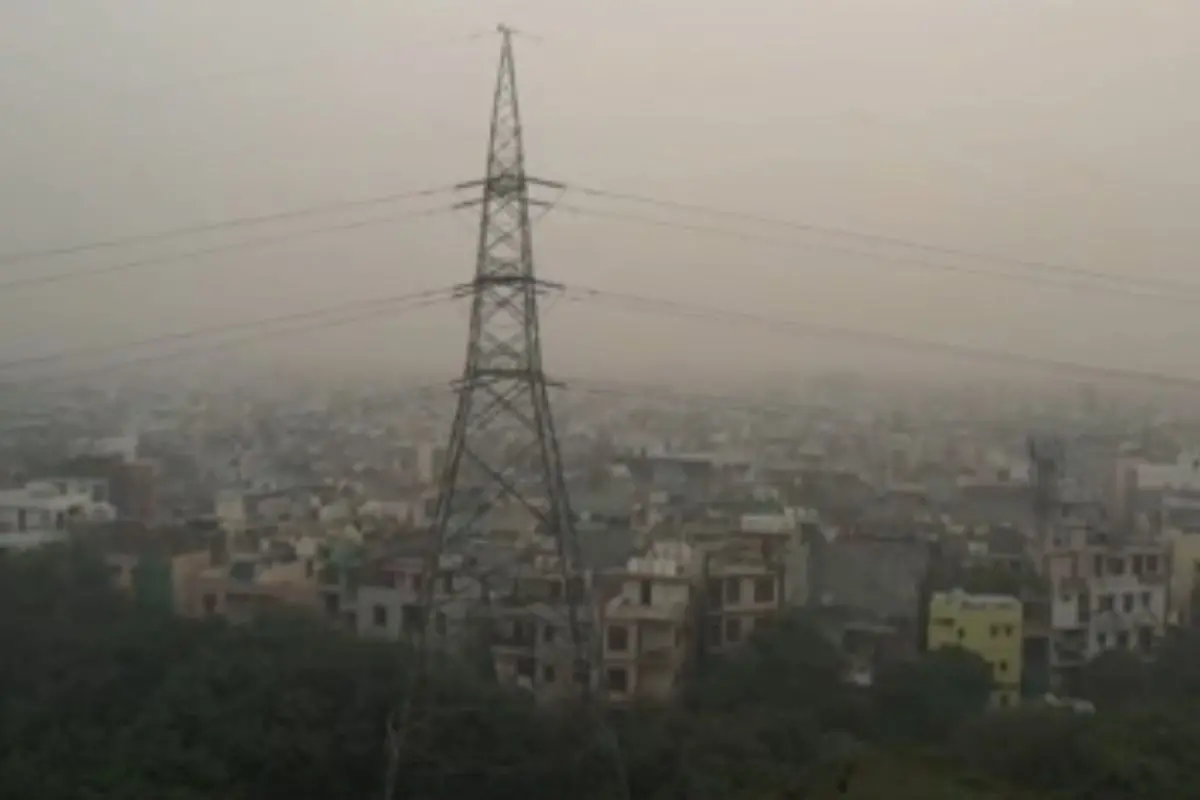
Kolkata: A day after Mayor Firhad Hakim directed police stations and traffic outposts to intensify efforts to curb rising air pollution, environmentalists on Thursday said the measures are inadequate to address the city’s worsening air quality crisis.
The Kolkata Municipal Corporation (KMC) moved to tighten controls after the Calcutta High Court took suo motu cognisance of deteriorating air quality. However, environmental experts said the action was “too little, too late”, noting that pollution levels in the city have remained high for a prolonged period and enforcement has been weak.
On Wednesday, Mayor Hakim chaired a high-level meeting at the civic headquarters, attended by Swapan Samaddar, Member of the Mayor-in-Council for Environment, Debasish Kumar, Member of the Mayor-in-Council for Parks, and Additional Commissioner of Police Shubankar Sinha Sarkar. Representatives from several government and private agencies were present, though no official from the West Bengal Pollution Control Board attended, according to corporation sources.
During the meeting, the Mayor instructed police and traffic authorities to take strict action against waste burning, vehicle emissions, and the burning of dry leaves and wood. He also ordered construction sites to be fenced, additional water sprinkling in dust-prone areas, and stricter controls on the dumping of construction debris and building materials on roads.
Special attention was directed towards dust control during the Rail Vikas Nigam Limited (RVNL) construction near Victoria Memorial. The Mayor said metro construction sites must be covered with green netting and adequately watered, while older vehicles emitting black smoke should be monitored and those failing pollution tests apprehended.
“There is a lack of departmental coordination in clearing construction waste from roads, which needs urgent resolution. To prevent dust pollution, waste must be removed quickly. Construction work without nets will be stopped, and materials cannot be stored in the open,” Hakim said, adding that sprinklers and mist cannons would be deployed across the city, including major roads, for at least 16 hours a day in two shifts.
Speaking to IANS, environmentalist and green technologist Somendra Mohan Ghosh said Kolkata urgently needs a Graded Response Action Plan (GRAP) to address poor Air Quality Index (AQI) levels.
He identified diesel vehicle emissions, waste burning and construction dust as the main contributors to air pollution in the city. In January, six out of seven Continuous Ambient Air Quality Monitoring Stations (CAAQMS) in Kolkata recorded ‘poor’ air quality.
“Kolkata has witnessed severe AQI levels, touching 314 in January 2026. There are only seven CAAQMS, which are insufficient for accurate monitoring. The city needs a denser network of low-cost sensors to cover residential, commercial and industrial areas,” Ghosh said.
He also pointed out that an open garbage vat within 50 metres of Rabindra Sarobar lake is causing severe environmental pollution in the eco-sensitive zone, releasing toxic dust into the air.
“Roadside eateries should use cleaner fuels such as LPG, electric or solar-powered cooking devices. The use of adulterated fuel must be controlled. Diesel vehicles should not be allowed to enter eco-sensitive areas like Victoria Memorial,” he added.
On January 19, a division Bench headed by Calcutta High Court Chief Justice Sujoy Paul took suo motu cognisance of rising pollution levels in West Bengal, particularly in Kolkata, and registered a public interest litigation on the matter. Two other PILs have been linked to the case.
The next hearing is scheduled for January 28, with all parties directed to be present in court.
IANS