MEA confirms Jaishankar-Araghchi talks: India seeks urgent safety guarantees in Strait of Hormuz
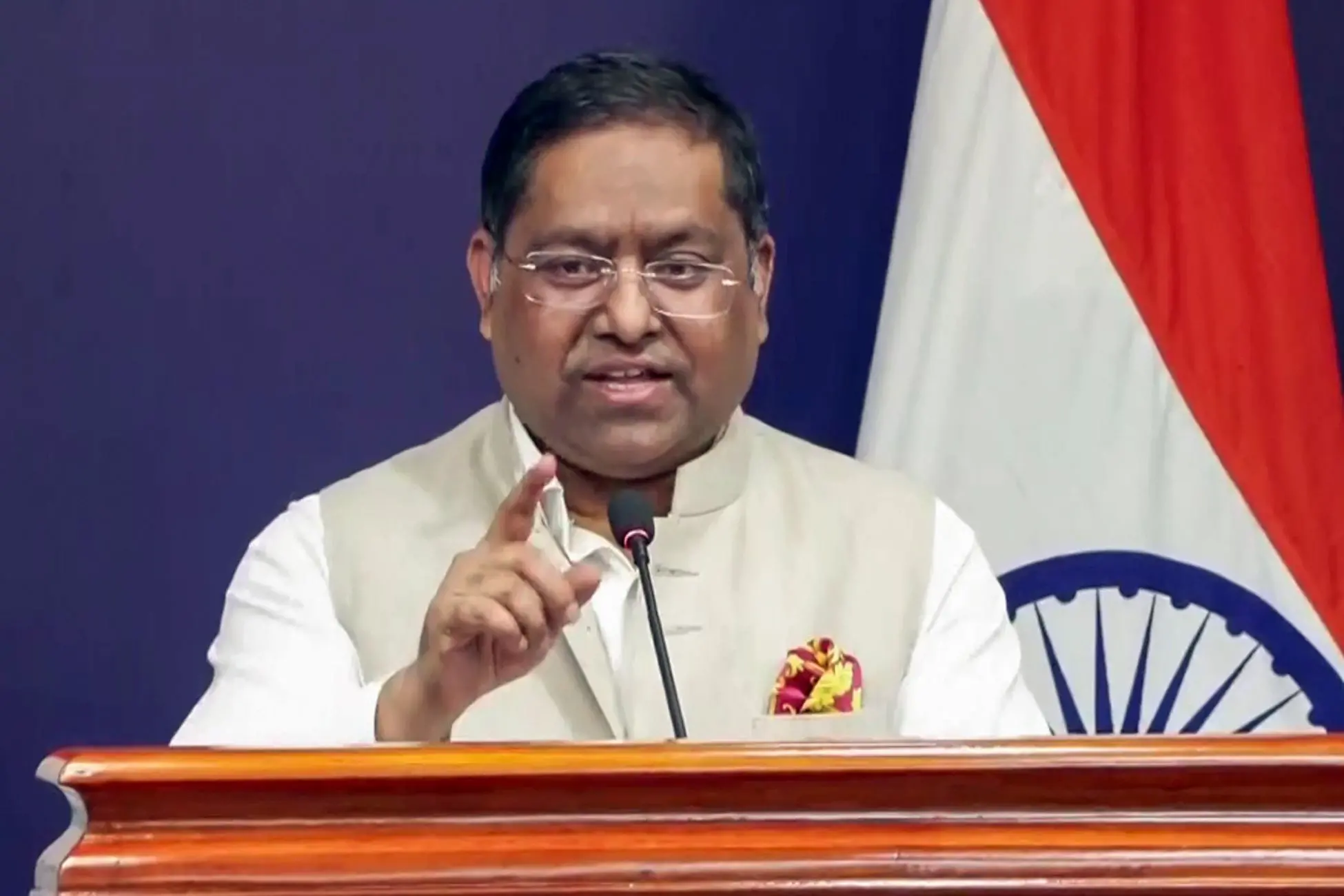
New Delhi: External Affairs Minister S. Jaishankar conducted high-level talks with Iranian Foreign Minister Abbas Araghchi on Thursday to address escalating threats to maritime safety and energy stability, the Ministry of External Affairs announced.
The diplomatic intervention follows a series of military assaults on merchant vessels in the Strait of Hormuz, the primary maritime artery for the global petroleum trade situated between Iran and Oman. Ministry spokesperson Randhir Jaiswal told reporters that the primary objective of the dialogue was to secure the transit of commercial ships and stabilise energy procurement through the volatile region.
"EAM and FM of Iran have had three conversations in the last few days. The last one discussed issues pertaining to safety of shipping and India's energy security. Beyond that, it would be premature for me to say anything," Jaiswal stated.
Repatriation and Safety of Diaspora
The ministry confirmed that approximately 9,000 Indian nationals, including students, mariners, professionals, and religious pilgrims, remain in Iran. Amid the deteriorating security environment, the MEA has initiated a coordinated effort to relocate or repatriate those in high-risk zones.
According to Jaiswal, many students have already successfully returned to India. Others, including students and pilgrims formerly based in the capital, Tehran, have been moved to more secure internal locations.
"We've had about 9,000 Indian nationals who were there or who are there in Iran. These 9,000 Indian nationals comprise students, seafarers, business people, professionals and some pilgrims. Several Indian nationals, mostly students, left the country and reached home. We have shifted several Indian nationals, including students and pilgrims, who were based in Tehran to other safer locations and cities in the country," Jaiswal said.
The government is also facilitating departures via land borders for those seeking to reach India through third countries. "We are assisting Indian nationals who wish to travel to Azerbaijan and Armenia and from there take commercial flights to return home. We are providing help with visas and facilitating land border crossings," Jaiswal added, urging all citizens to adhere strictly to embassy advisories.
Fatal Tanker Attack and Regional Instability
The human cost of the conflict rose on March 11 after an attack on the Safesea Vishnu, a Marshall Islands-flagged, U.S.-owned crude oil tanker near Basra, Iraq. The Indian Embassy in Iraq confirmed Thursday that one Indian crew member was killed in the strike.
The mission detailed in social media updates that "the remaining 15 Indian crew have since been evacuated to a safe place" as hostilities continue to flare across regional waters. The violence has surged following joint U.S.-Israeli military operations that led to the death of Iran’s former Supreme Leader, Ayatollah Khamenei.
The gravity of the situation was further illustrated by footage from Turkey’s Anadolu Agency showing a foreign oil tanker engulfed in fire near Umm Qasr port following a suspected Iranian strike. These events follow a previous assault on the Thai-flagged Mayuree Naree, which was destined for an Indian port when it was hit in the Strait of Hormuz.
India issued a formal denunciation of the tactics being utilised in the conflict. "India deplores the fact that commercial shipping is being made a target of military attacks in the ongoing conflict in West Asia," the MEA stated. The ministry emphasised that "precious lives, including of Indian citizens, have already been lost" while warning that the "intensity and lethality of the attacks only seems to be increasing."
With inputs from ANI