ISRO breakthrough: Satellite data powers lightning prediction across India
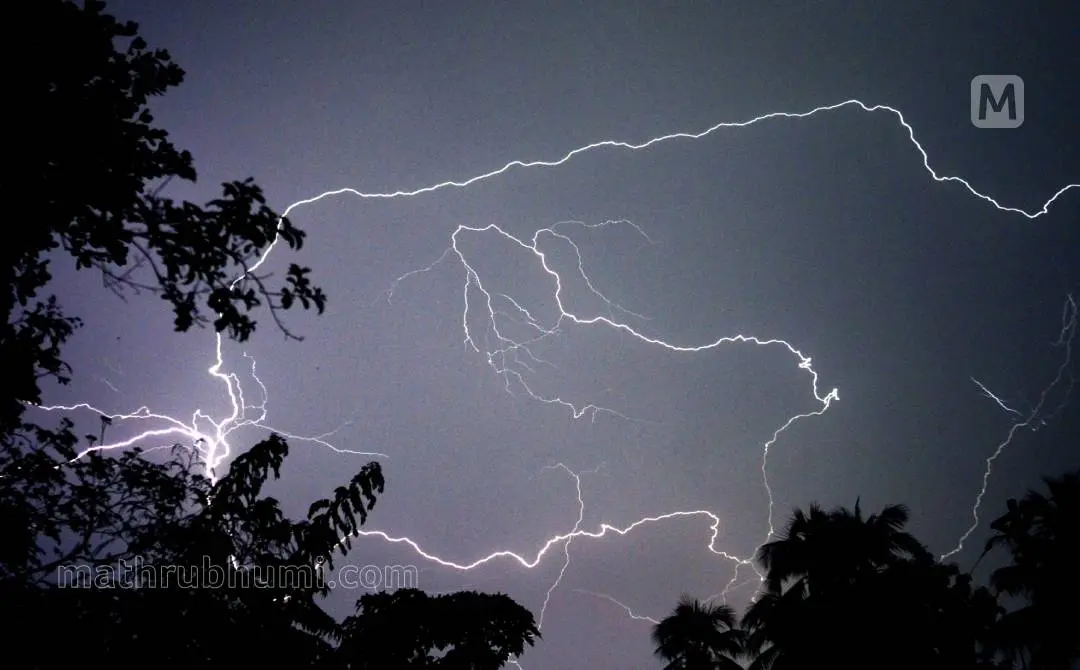
Bengaluru: The Indian Space Research Organisation (ISRO) has made major progress in forecasting lightning events across India by leveraging data from geostationary satellites.
This advancement has been spearheaded by the National Remote Sensing Centre (NRSC) under ISRO, marking a key milestone in real-time weather prediction.
ISRO explained that lightning in the atmosphere results from intricate meteorological interactions driven by convective processes in the troposphere. Factors such as surface radiation, temperature and wind play a crucial role in triggering these phenomena.
In a statement, the space agency revealed, "NRSC/ISRO researchers observed lightning signatures in the Outgoing Longwave Radiation (OLR) data from the INSAT-3D satellite."
A reduction in OLR strength serves as an indicator of potential lightning activity. By utilising near real-time data from the INSAT satellite series, scientists were able to detect and analyse patterns suggestive of lightning occurrences.
To refine the accuracy of lightning detection, ISRO incorporated additional meteorological parameters such as Land Surface Temperature (LST) and wind. This led to the creation of a composite variable designed to enhance predictive capabilities.
"The developed composite variable effectively captures the variations in lightning activity observed by ground-based measurements. It provides a reliable indication of when lightning activity is likely to peak or subside, allowing for improved prediction of lightning occurrence and intensity. This composite variable enables the prediction of lightning occurrences with a lead time of approximately 2.5 hours," ISRO stated.
This development represents a crucial step in improving lightning forecasting in India, potentially aiding disaster management and public safety initiatives.
PTI