Is C-130J Super Hercules the best choice for India’s IAF transport fleet?
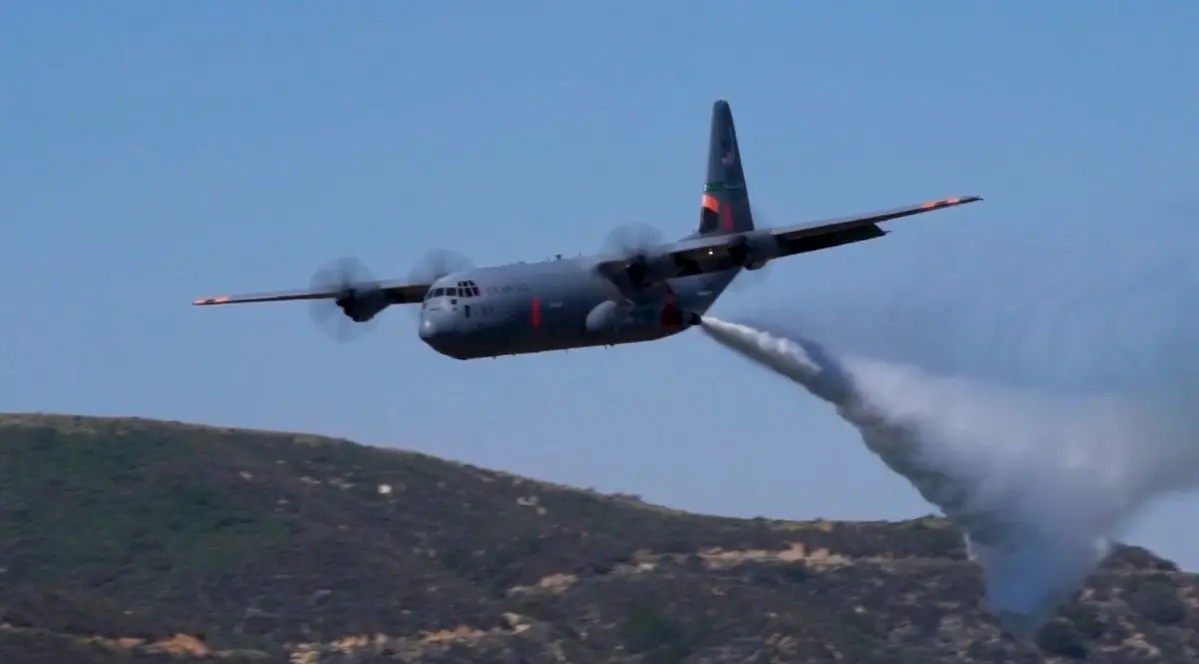
Marietta (US): As India moves to procure up to 80 medium transport aircraft (MTA) to replace its ageing fleet of Soviet-era AN-32 and IL-76 planes, US aerospace giant Lockheed Martin has pitched its C-130J Super Hercules as the “best option” for the Indian Air Force (IAF), emphasizing that the aircraft would provide India with enhanced tactical airlift capabilities within the Quad grouping.
Lockheed Martin has also proposed setting up a major production hub in India, which would be the first such final assembly line outside the US. “India is the only place we're considering a C-130J co-production line outside the US. We would establish that second final assembly line in India to produce C-130Js for the IAF under the MTA programme,” said Robert Toth, Vice President, Air Mobility and Maritime Missions at Lockheed Martin Aeronautics.
The C-130J Super Hercules family has a proven global track record, with more than 560 aircraft delivered, over three million flight hours, and 28 operators in 23 countries. The IAF currently operates 12 C-130Js. Lockheed Martin said the aircraft is capable of performing 20 different mission types, including tactical transport, intelligence, electronic warfare, search and rescue, and special forces support.
Patricia Trish Pagan, Vice President, Air Mobility and Maritime Missions at Lockheed Martin, highlighted the versatility of the C-130J, saying:
“The C-130J Super Hercules reflects proven performance and versatility across 20 unique mission sets. It holds 54 world records. Proven in every challenging operational environment, the C-130J's structural durability is the standard for reliability, safety, and excellence.”
Lockheed Martin has partnered with Tata Advanced Systems for its bid, building on years of collaboration in India. Tata Lockheed Martin Aerostructures Limited (TLMAL) in Hyderabad already produces C-130J empennages and other aerostructure assemblies, which are shipped to the US for final integration. The facility recently delivered its 250th C-130J tail.
The company is also incorporating advanced innovations into the C-130Js, including the Distributed Aperture System (DAS), a spherical sensor suite with six infrared cameras that provides pilots with enhanced situational awareness, missile warnings, and night vision capabilities.
Roderick McLean, Vice President, Sustainment Operations at Lockheed Martin Aeronautics, noted that the MTA programme could bring strategic value to India-US defence cooperation:
“The value the C-130Js provide is not only what it does today, but what it will be able to do in the future through continuous innovation and also allow the IAF to partner with Lockheed Martin to leverage the strength of the company.”
The C-130Js are already operated by the other Quad members, the US, Australia, and Japan, and Lockheed Martin said India acquiring additional aircraft would enhance its tactical airlift edge within the grouping. Toth added:
“Whether supporting NATO, the Quad, or any one of a network of 70 operators, the C-130 and Lockheed Martin have a history of sustained performance in the toughest and most extreme operational environments.”
Lockheed Martin said it has surge production capacity to deliver aircraft to India faster than competitors, citing its current ability to produce up to 36 aircraft a year in Marietta, Georgia, with potential to scale further.
In addition, the proposed India hub could serve as an export facility for other markets, further boosting India’s defence industrial ecosystem. Lockheed Martin highlighted that the C-130J programme would strengthen not just India’s capabilities, but also regional security and global partnerships.
Other contenders for India’s MTA programme include Brazil’s Embraer KC-390 Millennium and Airbus Defence A-400M aircraft, with the Defence Acquisition Council expected to clear the multi-billion-dollar procurement in the coming weeks.