IRIS Lavan still docked at Kochi; non-essential Iranian crew leave India: MEA
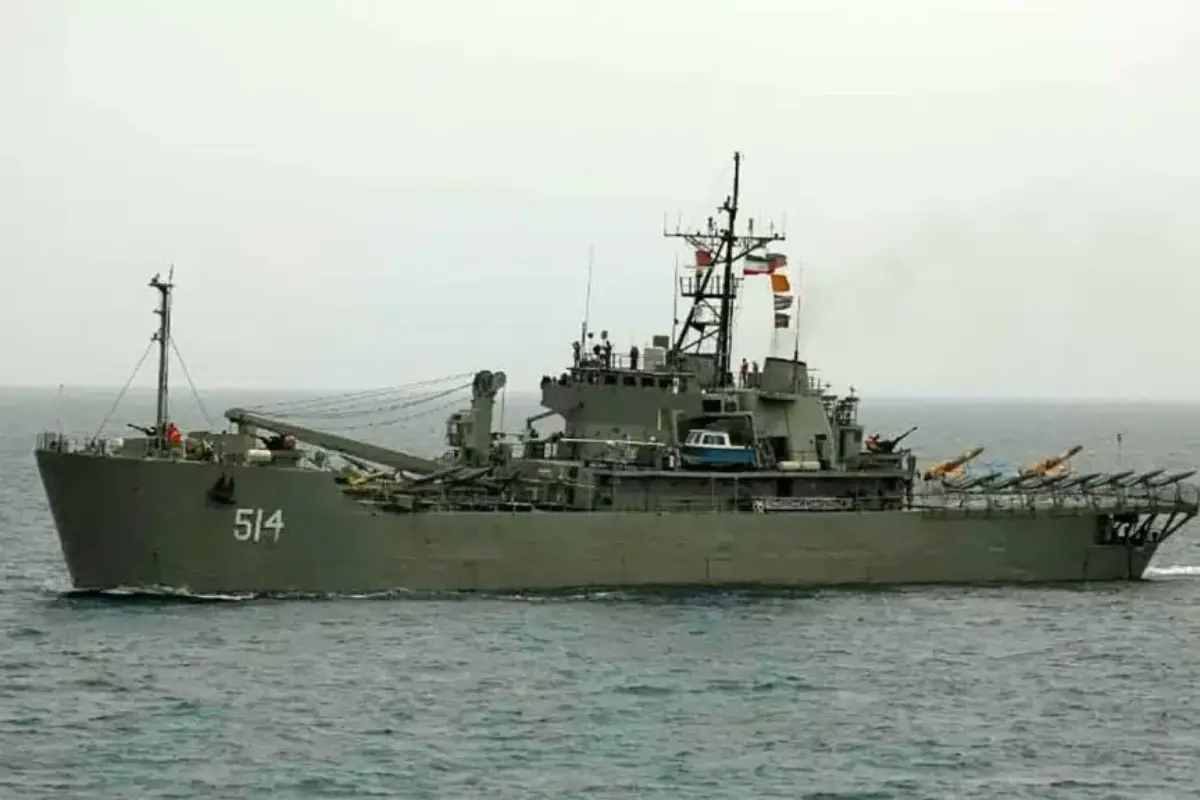
New Delhi: The Ministry of External Affairs on Saturday said the Iranian naval vessel IRIS Lavan remains docked at Kochi Port, while non-essential crew members have left India on a chartered flight arranged by Iranian authorities along with other stranded Iranian nationals.
Addressing an inter-ministerial briefing on developments in West Asia, MEA spokesperson Randhir Jaiswal said the flight departed from Kochi carrying non-essential members of the vessel’s crew as well as several Iranians who had been stranded in India due to widespread flight disruptions caused by the ongoing conflict in the region.
"Owing to the widespread flight disruption, several Iranians were stranded in India. The Iranian authorities arranged chartered flights to take back these stranded nationals," he said.
"The flight took off from Kochi and also included the non-essential members of IRIS Lavan, which remains docked in Kochi," Jaiswal added.
Also read | ‘Fake news’: Trump blasts WSJ over ‘misleading’ KC-135 damage reports in Saudi base strike
The vessel had earlier participated in the International Fleet Review 2026 held from February 15 to 25 and later developed technical issues while in the region.
According to officials, Iranian authorities sought urgent docking assistance for the ship on February 28, and India approved the request on March 1. The vessel subsequently docked at Kochi on March 4.
The request for assistance came days before the sinking of another Iranian naval ship, IRIS Dena, which was struck by a US submarine torpedo about 20 nautical miles west of Galle on March 4.
IRIS Lavan had been operating in the region as part of Iran’s naval presence during the fleet review and the multinational naval exercise MILAN 2026.
Also read | UAE port alert: Iran warns residents in Dubai, Abu Dhabi to evacuate 'immediately’
Speaking on the broader regional developments, Jaiswal said India has consistently called for de-escalation since the outbreak of the conflict.
"Since the outbreak of this conflict, besides calling for de-escalation and addressing all issues through dialogue, India has continually emphasised that one of its priorities is to ensure the unimpeded transit of goods and energy," he said.
He also stressed the need to avoid attacks on civilian infrastructure, including energy facilities, noting that the conflict’s impact is being felt across the world.
Highlighting India’s diplomatic outreach, Jaiswal said New Delhi has been engaging with several key stakeholders, including members of the Gulf Cooperation Council as well as Iran, the United States and Israel, at both political and diplomatic levels to convey concerns regarding energy security.
"In the process, the concerns of shipping lines were also addressed. As a result of multiple contacts, some ships destined for India have been able to cross through the Strait of Hormuz," he said.
Jaiswal added that two Indian vessels, INS Shivalik and INS Nanda Devi, have already crossed the strait and are heading towards Indian ports, while several other ships remain on standby in the Gulf region.
"Several of our ships remain on standby in the Gulf region. We propose to continue to remain in touch and coordinate with all concerned countries for safe and unimpeded transit in an effort to ensure our energy security," he added.
On discussions within the BRICS grouping, Jaiswal said the involvement of some member countries in the conflict has made it difficult to arrive at a unified position.
"Some members of BRICS are directly involved in the current situation in the West Asia region, which has impacted forging a consensus on a common BRICS position on the ongoing conflict," he said.
He noted that India, the current chair of BRICS, has been facilitating discussions among member states through the Sherpa channel, including a virtual BRICS Sherpa meeting held on March 12.
Jaiswal also said India continues to engage diplomatically with global partners over the evolving situation.
"In the last several days, our External Affairs Minister has had conversations with leaders across the world. He also had a conversation with Russian Foreign Minister Sergei Lavrov on the ongoing conflict in West Asia," he said.
The current round of hostilities in West Asia began on February 28, involving fighting between the United States and Israel on one side and Iran on the other. The situation escalated after the killing of Iran’s supreme leader Ali Khamenei in joint military strikes by the US and Israel, prompting retaliatory attacks by Iran on US and Israeli assets in the Gulf region.
The conflict has also disrupted maritime movement after Iran effectively closed the Strait of Hormuz, a crucial passage for global energy supplies, raising concerns about international energy markets and global economic stability.