New Pamban Bridge, a landmark of India’s engineering excellence, all set for inauguration
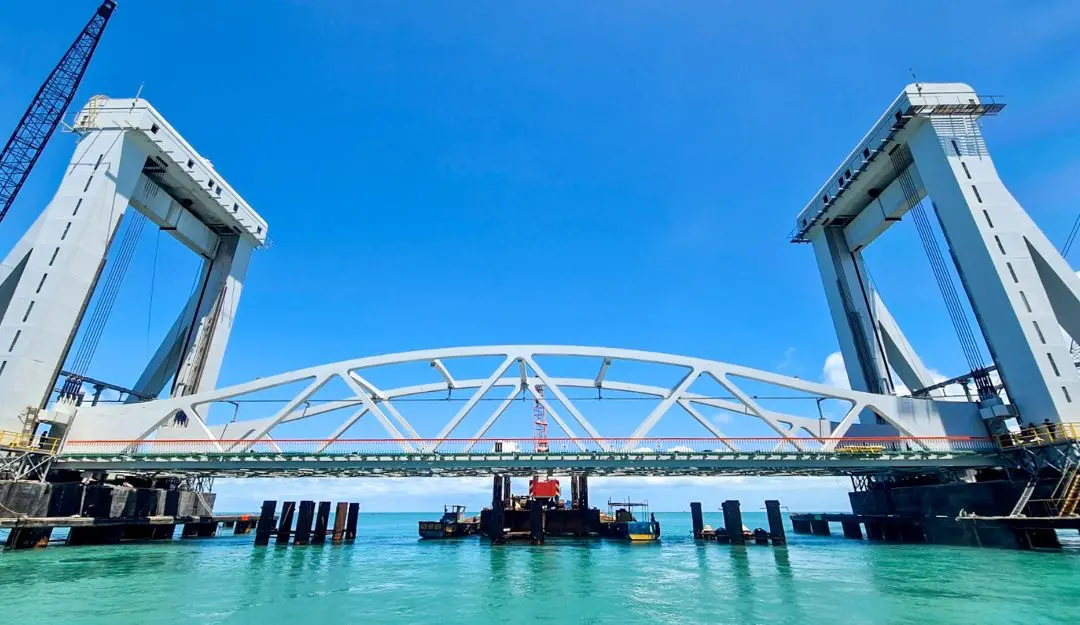
Chennai: The eagerly awaited new Pamban Bridge, India’s first vertical lift sea bridge, is set to be inaugurated by Prime Minister Narendra Modi on April 6. Hailed as a remarkable engineering achievement, the structure represents a remarkable milestone in the country’s infrastructure development, officials said on Thursday.
Extending 2.078 kilometers, the new Pamban Bridge is a sustainable and technologically advanced project that is expected to enhance connectivity between Mandapam railway station (on the mainland) and Rameswaram island. The Southern Railway emphasised that this bridge is more than just a replacement for the century-old British-era structure—it marks a groundbreaking advancement in India’s engineering landscape.
A technological marvel with a vertical lift mechanism
The most distinctive feature of the new Pamban Bridge is its state-of-the-art vertical lift mechanism, making it the first railway sea bridge in the country with such an advanced design. It incorporates a 72-meter-long central span that elevates 22 meters above the water level, enabling the passage of large vessels. During rail operations, the bridge remains securely supported at both ends to ensure maximum stability.
"While the new Pamban Bridge is India's first vertical lift sea bridge, it shares similarities with other globally recognized bridges known for their technological advancements and unique designs. These include the Golden Gate Bridge in the United States, Tower Bridge in London and the Oresund Bridge connecting Denmark and Sweden. Each of these iconic structures, though different in design and functionality, represents a pinnacle of engineering excellence. The new Pamban Bridge stands proudly in their company, combining cutting-edge technology with the challenges posed by India's coastal and seismic conditions," stated Pradeep Gaur, CMD of Rail Vikas Nigam Limited (RVNL), in an official release from Southern Railway.
Challenges in construction and overcoming adversities
Building the new Pamban Bridge was an immensely complex task due to the Palk Strait’s unpredictable weather conditions, including strong winds, turbulent waters and high susceptibility to cyclones and seismic activity. The logistics of transporting heavy construction materials to a remote site added further difficulties, with teams having to strategically utilise tidal patterns to ensure smooth material delivery.
Despite these hurdles, the project was executed with exceptional safety measures, as emphasised by RVNL, "It is a matter of great pride that during the course of work involving more than 1,400 tons of fabrication, launching of lift spans and 99 girders, track and electrification work in the sea, the whole work was absolutely injury-free. This is testimony to RVNL's working methods, safety, health, and sustainable construction."
Faster, stronger and more efficient
Unlike its predecessor, which could only support slow-moving trains at 10 km/h, the new Pamban Bridge is designed to accommodate speeds of up to 160 km/h. However, due to signaling constraints and the existing sharp curvature on the approach routes, trains will run at speeds up to 98 km/h—a major improvement that will reduce travel time and enhance connectivity.
In addition, the bridge can support significantly heavier loads, with an axle load capacity of 25 tonnes, making it future-ready for evolving transportation needs.
Durability and sustainability at the core
Engineered to withstand the saline and corrosive environment of the Palk Strait, the bridge incorporates high-grade stainless steel reinforcement in concrete to ensure longevity and reduced maintenance costs. The polyciloxane painting applied to the bridge extends its initial service life to 35 years, providing a long-term solution to coastal wear and tear.
Another crucial design upgrade includes raising the underside of the girder by three meters, preventing direct exposure to the splash zone and thereby reducing corrosion risks.
With seismic and cyclone resistance, real-time monitoring and automation, the bridge ensures safety and efficiency, while also enhancing tourism, economic growth and employment opportunities in the region.
A legacy rebuilt with modern excellence
The original Pamban Bridge, constructed in 1914, was India’s first sea bridge. Over a century later, years of exposure to harsh coastal conditions and increasing maintenance challenges necessitated a modern replacement.
"The new Pamban Bridge stands as a proud symbol of what India can achieve when innovation, tradition and engineering excellence converge. RVNL remains committed to implementing similar ambitious projects across the country, ensuring that India's infrastructure keeps pace with its aspirations and global standing," the official statement added.
PTI