Indian Army uniform changes: No mandatory swords, 'royal' dropped, Bandi jacket introduced
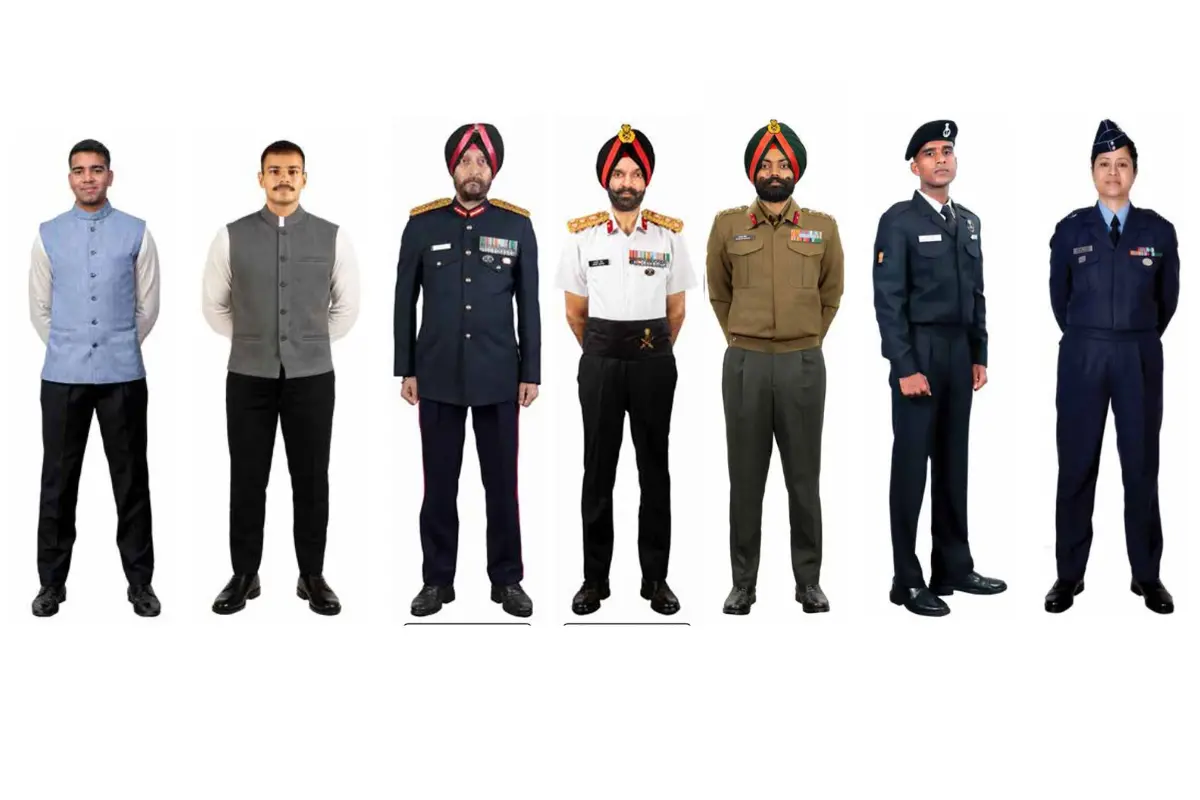
New Delhi: Reviewing officers will no longer carry ceremonial swords, the term "Royal" is being phased out of military terminology, and officers will adopt indigenous Bandi jackets under the Indian Army's new Uniforms Pamphlet 2026, which seeks to remove lingering colonial-era practices from one of India's oldest institutions.
The revised regulations narrow the use of swords to select ceremonial roles, remove British-era dress accoutrements and introduce new standards on appearance and conduct, alongside a phased rollout of winter Battle Jackets.
What's changing under the new Army uniform code?
Among the most notable reforms is the introduction of the Bandi jacket as part of formal civil attire for officers. The closed-neck jacket, to be worn with a full-sleeved shirt, matching trousers and formal footwear, brings an indigenous element into official dress regulations.
The Army has also removed the pouch belt from Mess Dress Nos. 5 and 6 and formally discontinued the use of colonial-era expressions such as "Royal", which had remained embedded in military terminology for decades.
The revised rules significantly narrow the ceremonial use of swords.
Under the revised rules, swords will now be carried only by parade commanders, contingent commanders and specifically designated personnel during major ceremonial occasions such as Republic Day, Independence Day, Army Day parades and Guards of Honour.
Reviewing officers, who traditionally appeared with ceremonial swords, will no longer be required to do so.
The manual says the changes are intended to align military customs with "the nation's sentiments and evolving sovereign identity."
The Army has framed the reforms as part of a broader effort to modernise without erasing institutional traditions.
According to the Uniforms Pamphlet 2026, the changes represent a "progressive review of residual colonial-era vestiges" while preserving the dignity, functionality and enduring customs of the force.
The foreword to the document describes the new edition as a considered move towards synchronising dress regulations with contemporary Indian values through the removal of outdated practices, accoutrements and terminology.
New winter uniform to replace existing dress
The reforms are not limited to ceremonial matters.
The Army has introduced a Battle Jacket as standard winter outerwear for personnel across ranks. The jacket will gradually replace the existing jersey-based winter working dress, known as Dress 3A, through a transition period extending until June 2029.
Stricter rules on appearance and conduct
The updated manual also reinforces standards relating to military bearing.
It prohibits radical hairstyles, unauthorised beards, visible electronic gadgets, tattoos, body piercings and cosmetic make-up while in uniform.
Personnel are also barred from wearing uniform at political rallies, religious gatherings, protest events, weddings, private parties or paid media appearances unless specifically authorised.
With ANI inputs