More solar, more wind, more green power - but India is struggling to use it all: Why
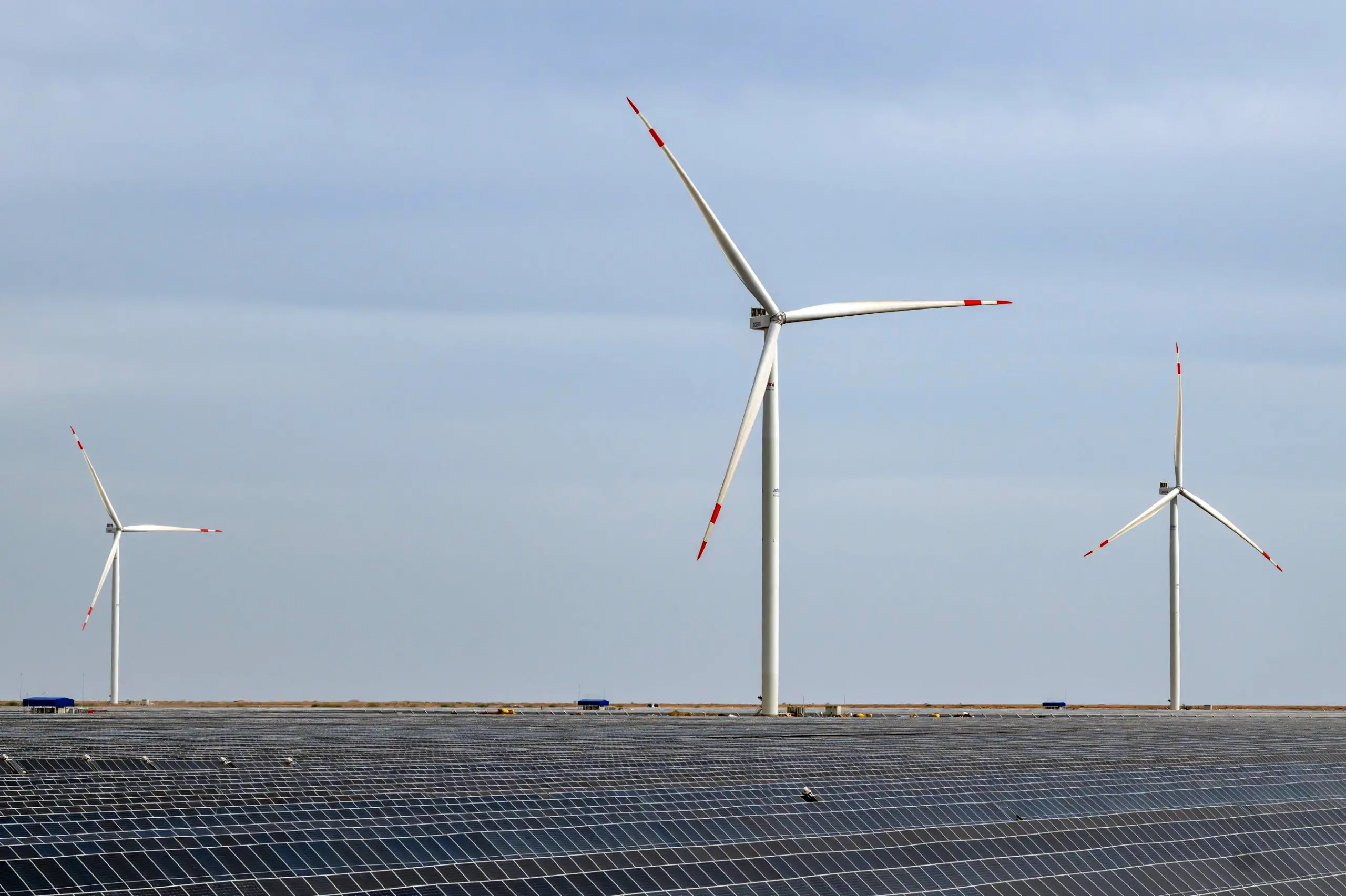
India’s clean-energy transition has accelerated dramatically over the past decade. Renewable sources have expanded from a relatively small part of the electricity system to a major component of the country's installed power capacity.
The BBC report says renewable energy briefly supplied more than half of India’s peak electricity demand on a hot July afternoon this year, marking only the second time such a level had been reached.
The moment was significant because it showed how quickly solar, wind and other non-fossil sources have expanded.
India now has around 300 GW of renewable energy capacity, accounting for about 54% of its total installed capacity of 552 GW, according to the figures cited in the report.
The country had only around 4 GW of installed renewable capacity a decade ago.
However, installed capacity does not mean that all that electricity is available at every moment. Solar generation depends on daylight, while wind output varies with weather conditions. Coal plants, meanwhile, continue to provide a large share of actual electricity generation because they can operate for more hours.
The problem: India cannot always move the power
One of the biggest challenges is the country's transmission network.
Renewable projects have been built faster than the infrastructure needed to carry their electricity from generation centres to consumers.
According to Ember figures cited in the report, transmission constraints accounted for nearly two-thirds of renewable-energy curtailment in the first quarter of 2026, amounting to around 300 GWh.
Curtailment means electricity that could have been generated is reduced or not used because the grid cannot safely absorb or transport it.
The problem is particularly significant because large renewable projects are concentrated in states such as Gujarat and Rajasthan, while electricity demand is spread across the country.
The International Energy Agency has separately identified inadequate transmission infrastructure as a constraint on renewable capacity in India. Its 2025 investment analysis said transmission limitations had impeded around 60 GW of renewable capacity.
Why building the grid is taking longer
There is a fundamental timing problem.
Large solar and wind projects can be developed relatively quickly, while transmission projects often require land acquisition, right-of-way permissions, regulatory approvals and coordination between several agencies.
That means generation capacity can come online before the network needed to evacuate its electricity is ready.
The pace of renewable additions has also accelerated sharply. The report says India added a record 51 GW of renewable capacity last year, compared with an earlier pace of around 10-15 GW a year.
The International Energy Agency has likewise highlighted the need for faster grid expansion to accommodate India's planned increase in non-fossil capacity. India is targeting 500 GW of non-fossil installed capacity by 2030, compared with 267 GW in December 2025, according to the IEA.
Could batteries prevent renewable energy from being wasted?
Energy storage is another missing piece.
Solar power is generally strongest during the daytime, while electricity demand can remain high or increase after sunset. Batteries can store surplus electricity and release it when demand rises.
The IEA has highlighted this issue in India, noting that solar PV capacity has expanded rapidly while electricity demand, particularly for cooling, is increasingly important during evening hours.
The report says some planned storage projects have been delayed or abandoned because of higher battery costs, shortages of raw materials, currency depreciation and increased financing costs.
Without sufficient storage, excess daytime solar generation cannot always be shifted to periods when the electricity is most needed.
Finance is another challenge
India's clean-energy transition requires substantial investment not only in generation but also in transmission, storage and other supporting infrastructure.
The report estimates that India could need $400 billion to $500 billion to achieve its 500 GW renewable-energy target by 2030.
The government’s economic survey has said that a large majority of India's climate-mitigation finance currently comes from domestic sources.
The International Energy Agency also notes that India's cost of capital for grid-scale renewable projects remains significantly higher than in advanced economies, creating challenges for investment.
Lower-cost international finance, guarantees and mechanisms to manage currency risks have therefore been identified by industry representatives as potential ways to attract more private investment.
India's electricity demand is rising
The challenge is becoming more urgent because India needs considerably more electricity.
The IEA expects India's electricity demand to grow by an average 6.4% a year between 2026 and 2030, adding more than 570 TWh to annual consumption over the five-year period. Industry, households, services, agriculture and transport are all expected to contribute to the increase.
Cooling is also becoming increasingly important. The IEA says rising ownership and use of air conditioners will contribute significantly to India's future electricity demand, particularly during periods of extreme heat.
New industries such as data centres and advanced manufacturing could add further demand.
This means India needs to solve two problems at the same time: producing substantially more electricity while ensuring that the grid can deliver it when and where it is required.
What does this mean for India's 2030 target?
India's renewable expansion has changed the country's electricity landscape, but simply adding more solar and wind capacity will not be enough.
The next stage will require simultaneous investment in transmission lines, grid management, batteries and other forms of flexible generation and storage.
The IEA's latest grid analysis similarly warns that electricity generation investment has been advancing faster than grid investment globally, creating congestion and delaying the connection of new generation.
For India, the stakes are particularly high because electricity demand is rising rapidly while the country is trying to reduce the carbon intensity of its power system.
If transmission and storage do not expand at a comparable pace, some of the renewable electricity produced by India's rapidly growing fleet of solar and wind projects could remain unavailable to consumers.
India's green-energy challenge is shifting
India's renewable-energy story is no longer simply about how quickly the country can build solar and wind projects. It is increasingly about whether the rest of the electricity system can keep up.
The country has made substantial progress in expanding non-fossil capacity, but generation, transmission, storage and demand have to develop together. A solar farm that cannot send electricity through a congested transmission corridor cannot contribute fully to meeting national demand.
The challenge is also changing as India's electricity consumption grows. The IEA expects demand to rise strongly through 2030, while cooling, industrial activity, electrification and new high-energy industries add pressure to the system.
That makes the next phase of India's energy transition less about simply adding capacity and more about building a flexible electricity system capable of using that capacity efficiently.