India moves to develop indigenous 20mm aviation gun for Rudra and Prachand combat helicopters
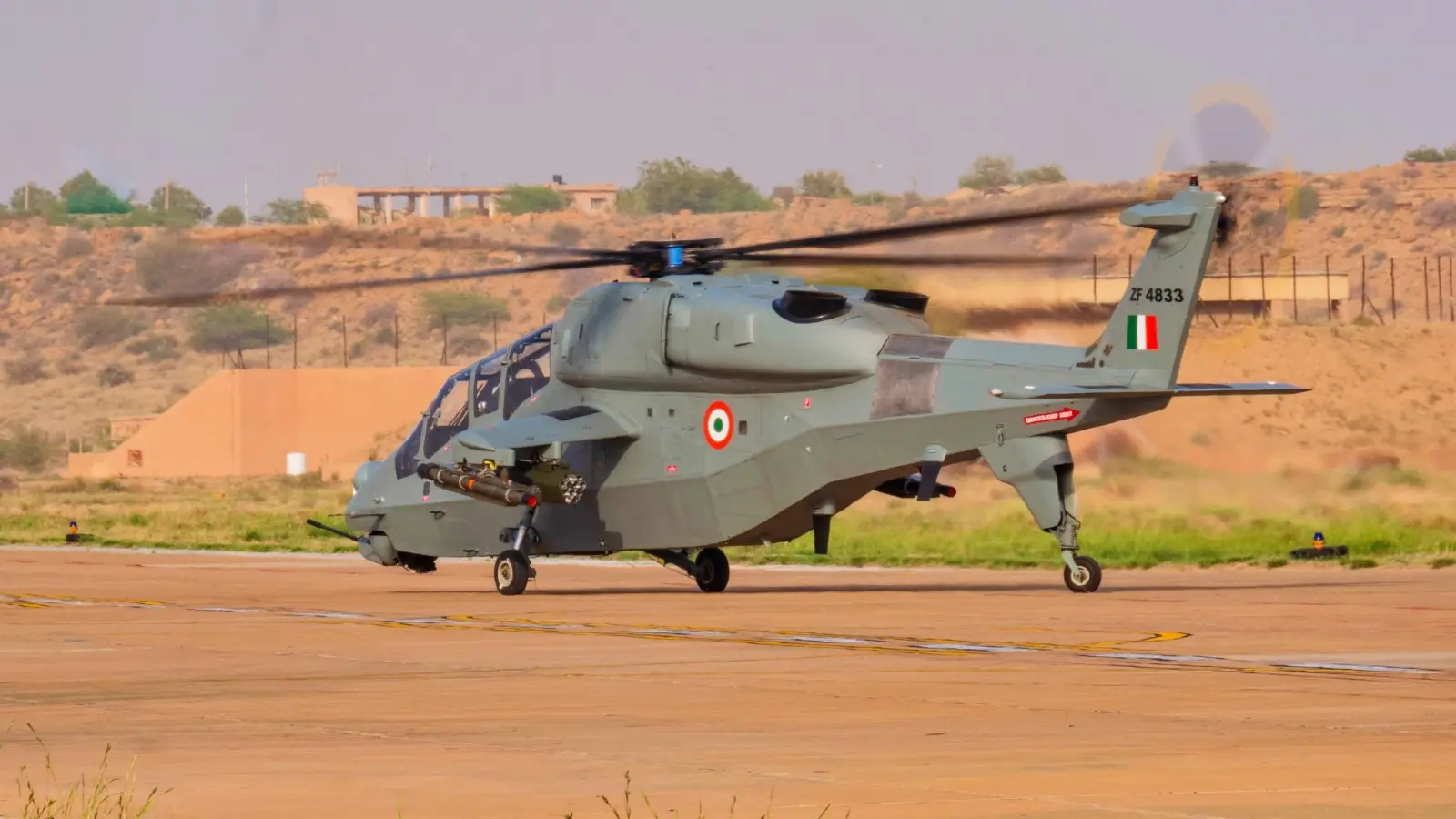
India is taking another step towards building a more self-reliant defence industry, with plans to develop an indigenous 20mm aviation gun and turret system for its Rudra and Prachand combat helicopters.
The Armament Research and Development Establishment (ARDE), a laboratory under the Defence Research and Development Organisation (DRDO), has shortlisted Indian companies SSS Defence and Kalyani Group for the development programme. The initiative aims to reduce dependence on foreign weapon suppliers and increase the domestic content of India's combat helicopter fleet.
The development phase is expected to take around two years. Production orders will be placed after the system completes the required acceptance procedures. The order is expected to be divided between the two companies, with the lowest bidder receiving 60% and the other company receiving 40%.
ARDE and Hindustan Aeronautics Limited (HAL) had signed a memorandum of understanding last year to collaborate on the project.
The programme is significant because it seeks to bring an important part of the helicopter's weapon system under Indian design and manufacturing capabilities. However, the gun is still at the development stage, and its eventual induction will depend on successful testing and acceptance.
What is an aviation gun, and why is it important?
An aviation gun is a weapon designed for installation on an aircraft or helicopter. On a combat helicopter, it is often fitted in a movable turret that allows the crew to aim and fire at suitable targets on the ground.
The planned 20mm gun is intended for two Indian Army and Air Force platforms, namely the Advanced Light Helicopter Mk-IV, known as Rudra, and the Light Combat Helicopter (LCH) Prachand.
Both helicopters are designed to support ground troops and engage ground targets. Their weapons include guns, rockets and missiles, each serving a different purpose depending on the mission.
A gun provides a means of delivering repeated fire, while rockets and missiles offer other engagement options. Having different weapons allows a helicopter to respond to a range of operational requirements.
The gun and its turret are also important from a maintenance perspective. They require suitable spare parts, repairs, testing and technical support throughout their service life. Developing these capabilities domestically could give India greater control over the availability and future improvement of the system.
Also read | Air India brings restaurant-style fine dining to business class at 35,000 feet
Reducing dependence on foreign suppliers
The Prachand currently uses the THL20 20mm turret manufactured by European defence company KNDS. In September, KNDS announced that it would supply 126 newly manufactured THL20 turrets for India's new LCH fleet. The company has also supplied 136 such turrets for Advanced Light Helicopters operated by the Indian Air Force.
These supplies highlight the role foreign manufacturers continue to play in India's helicopter weapons ecosystem.
Developing a domestic alternative could help reduce dependence on imported systems over time. It could also give Indian manufacturers opportunities to build expertise in weapon design, production, testing and long-term support.
However, the strategic benefit will depend on more than simply manufacturing the gun in India. The programme will need to establish reliable production capacity, consistent quality, a dependable supply of components and the ability to support the system throughout its operational life.
The development effort is therefore not just about replacing an imported weapon. It is also about building the industrial capabilities needed to sustain India's combat helicopter fleet.
Why Rudra and Prachand matter
The Rudra is an armed version of the Advanced Light Helicopter, while the Prachand is India's purpose-built Light Combat Helicopter. Both are intended to support military operations using a combination of weapons.
The Rudra can carry a 20mm turret gun, 70mm rocket pods and missiles. The Prachand's weapon suite includes a 20mm gun, rockets and anti-tank guided missiles.
The Army has previously conducted day and night firing trials of the Prachand's turret gun, demonstrating the importance of the gun system to the helicopter's operational role.
For these platforms, domestic weapons development could strengthen the connection between helicopter manufacturing and the wider defence supply chain. It could also create opportunities for Indian companies to contribute to future upgrades and sustainment requirements.
The value of this approach will ultimately depend on whether the indigenous system meets the operational requirements of both services and can be produced and maintained reliably.
Building a wider domestic weapons ecosystem
The aviation gun programme is progressing alongside other efforts to increase domestic content in helicopter weapons.
The HELINA and Dhruvastra anti-tank guided missiles, derived from the Nag missile programme, are intended for Army and Air Force helicopter operations respectively.
In June, Bharat Dynamics Limited received orders worth ₹1,109.37 crore from HAL for HELINA launchers and associated line-replaceable units. A separate order worth ₹238.34 crore covered countermeasure dispensing system line-replaceable units. The contracts are scheduled for execution over 24 to 60 months.
India is also preparing to manufacture 70mm rockets domestically through a collaboration between Kalyani Strategic Systems and Thales Belgium. Announced in September, the partnership combines Thales' technical expertise with Kalyani's manufacturing and testing infrastructure. The first fully assembled rocket produced in India is expected in early 2027.
Together, these programmes cover different parts of the helicopter's weapons ecosystem, from guns and turrets to missiles, rockets and associated equipment.
This broader approach matters because a combat platform's operational availability depends on the performance and supportability of its entire weapons system, not just the helicopter itself.
Also read | Full circle in the sky: IAF Chief AP Singh’s final sortie with the instructor who taught him to fly
The importance of indigenous defence technology
India's move to develop a domestic aviation gun reflects a wider effort to strengthen its defence industrial base and reduce exposure to foreign supply-chain disruptions.
Imported equipment can provide proven technology, but dependence on overseas suppliers can create challenges related to spare parts, repair arrangements, delivery schedules and future upgrades. Domestic development offers an opportunity to address some of these risks, although it also requires sustained investment, rigorous testing and manufacturing discipline.
The project could also help Indian companies develop capabilities that extend beyond a single helicopter programme. Experience in precision engineering, weapon integration, testing and quality assurance can strengthen the country's wider aerospace and defence manufacturing ecosystem.
The next major milestone will be the successful development and qualification of the 20mm gun and turret system. Meeting the planned development timeline will be important, but operational reliability and long-term support will be equally critical.
For India, the real measure of success will be whether the programme delivers a dependable weapon system that can be manufactured, maintained and upgraded domestically. That would represent a meaningful step towards greater self-reliance in military aviation.