India stays away from Trump’s ‘Board of Peace’; what does it mean for Modi’s global influence?
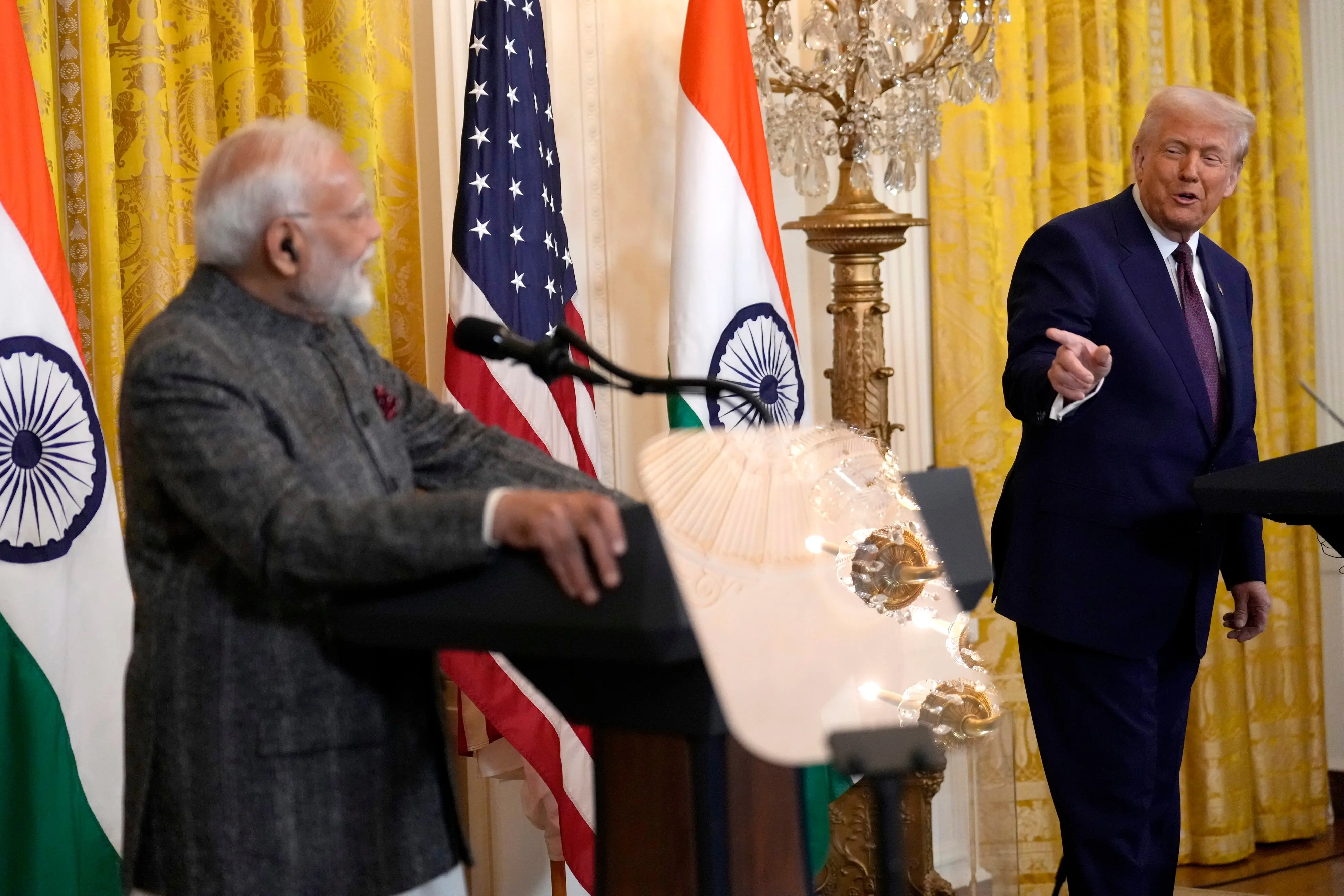
New Delhi: India did not participate in the signing ceremony of US President Trump’s newly announced “Board of Peace” at Davos on January 22, even though Prime Minister Narendra Modi was invited to join the proposed international body. Officials said New Delhi is reviewing the initiative carefully before making a decision, reflecting the sensitive geopolitical and regional considerations involved.
Observers say Modi’s invitation itself highlights India’s global recognition, signalling that Washington sees New Delhi as a key player in shaping Middle East diplomacy. While India stayed away from the ceremony, the invite underscores its rising international stature and the importance of its voice in conflict resolution and global policy initiatives.
India’s absence also points to the delicate balancing act in the region. New Delhi has consistently supported a two-state solution to the Israel–Palestine conflict, advocating peaceful coexistence within recognised borders. Joining a US-led initiative without comprehensive consultation could complicate India’s relationships with Arab nations and Israel, as well as its broader strategic interests in the Middle East.
Also read: Full list of countries backing Trump's ‘Board of Peace’; Europe holds back
Apart from India, major powers including France, the United Kingdom, China, and Germany also skipped the ceremony, while countries such as Russia, Italy, Turkiye, and Ukraine remained non-committal. Countries that joined the Board of Peace include Pakistan, Saudi Arabia, UAE, Egypt, Argentina, and Morocco. Notably, Israel was also absent during the signing, although it may participate later.
The proposed board will consist exclusively of heads of state under Trump’s leadership and is expected to oversee a 20-point plan for Gaza’s reconstruction, demilitarisation, and post-war governance. The White House has already announced a founding executive committee to operationalise the plan, including senior US officials and global figures.
India’s eventual participation or continued absence will be closely watched as a signal of its influence in the region, showing whether New Delhi is willing to actively shape Middle East peace initiatives or continue a strategic, measured approach. In either scenario, Modi’s invitation reflects India’s acknowledged global weight, even if New Delhi exercises caution in sensitive multilateral matters.