Himachal’s glacial lakes are expanding: IIT Mandi flags critical water bodies after Nepal flood
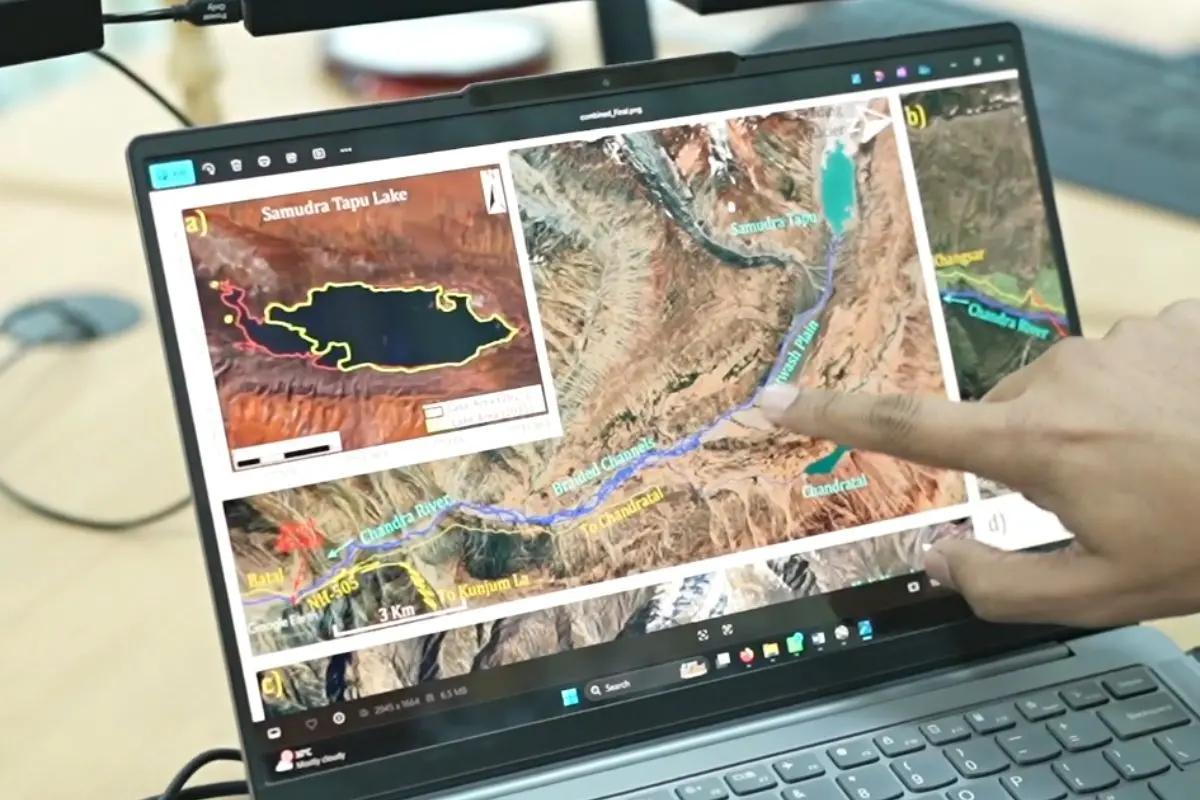
As glacial lakes across Himachal Pradesh continue to expand, researchers at IIT Mandi have identified between nine and 12 lakes that could be classified as critical, raising fresh concerns over the risks posed by rapid glacial melting in the Himalayas.
The warning comes in the backdrop of the devastating August 26 flash flood in Nepal, where scientists have linked the disaster to a possible glacier collapse and landslide. According to IIT Mandi researchers, changes occurring beneath and around Himalayan glaciers, including permafrost melting, could make mountain terrain increasingly unstable.
A study conducted by IIT Mandi examined more than 2,000 glacial lakes in Himachal Pradesh. Researchers found that several lakes have expanded by between 30% and 60% over the past decade.
Four lakes need immediate attention, says NDMA
The National Disaster Management Authority has identified four glacial lakes in Himachal Pradesh that could pose a future threat — Ghepan Lake, Vasuki Lake, Kashang Lake and a lake near Baspa.
However, IIT Mandi's assessment has identified a larger group of potentially critical lakes.
"We conducted research on over 2,000 lakes in the state and studied numerous glaciers. The NDMA has identified four glacial lakes in Himachal Pradesh that could pose a threat in the future: Ghepan Lake, Vasuki Lake, Kashang Lake, and a lake near Baspa. These require immediate attention. However, based on two types of surveys, IIT Mandi has identified between 9 and 12 lakes that could be classified as critical," Dericks P Shukla, founding chairperson and Associate Professor at the School of Civil and Environmental Engineering, IIT Mandi, told ANI.
Among them, Shukla said Ghepan Lake, Yoche and Kali Kund pose the greatest risk to the general public because they are undergoing continuous changes and expanding in size every year.
Vasuki Lake is also changing in size, he said, but the absence of human settlements for several kilometres downstream reduces the immediate risk to people.
What is causing the Himalayan glaciers to melt faster?
According to Shukla, glacial melting is being accelerated by a combination of rising temperatures and increasing human activity in the Himalayas.
He pointed to the growing influx of tourists, which contributes to pollution and dust deposits on glaciers. These deposits can form a dark layer on the ice, allowing it to absorb more energy and accelerate melting.
"There are many aspects to it. The glaciers are melting, and with a rise in tourism, there is carbon and dust deposition. This deposition is enhancing glacial melting," Shukla said.
He also raised concerns about permafrost, permanently frozen ground found in high-altitude Himalayan regions where average temperatures remain below zero degrees Celsius for extended periods.
When permafrost melts, the frozen layer that supports the terrain weakens, causing the land above it to shift and increasing instability in mountainous regions.
"There is permafrost in the Himalayan region, and when it melts, the layer above moves and causes instability in the terrain," he said.
Nepal flood raises fresh questions
IIT Mandi's findings come shortly after the devastating flash flood in Nepal on August 26, which has resulted in 1,127 deaths, according to the information provided.
Scientists have theorised that a glacier collapse may have triggered the disaster. The glacier reportedly collapsed into the Lhende Khola River, a tributary of the Bhotekoshi River that flows from China into Nepal.
Shukla said permafrost melting was also being discussed as a possible factor in the Nepal disaster.
"In the disaster in Nepal, it is being said that permafrost also occurred," he said.
The researcher also linked increasing connectivity and year-round tourism in Himalayan regions to environmental pressure, arguing that development needs to be managed in a controlled manner.
"The connectivity is good, but it should have been done in a controlled way. The tunnels have allowed a round-the-year influx of tourists. This is causing pollution and dust to deposit on glaciers. It deposits a black layer which absorbs energy and causes melting," he said.
With several glacial lakes expanding rapidly and Himalayan terrain facing changes caused by glacier and permafrost melting, the IIT Mandi study adds to concerns over how closely the region's changing landscape needs to be monitored.
With ANI inputs