HAL set to deliver first HTT-40 trainers to IAF after engine supply delay
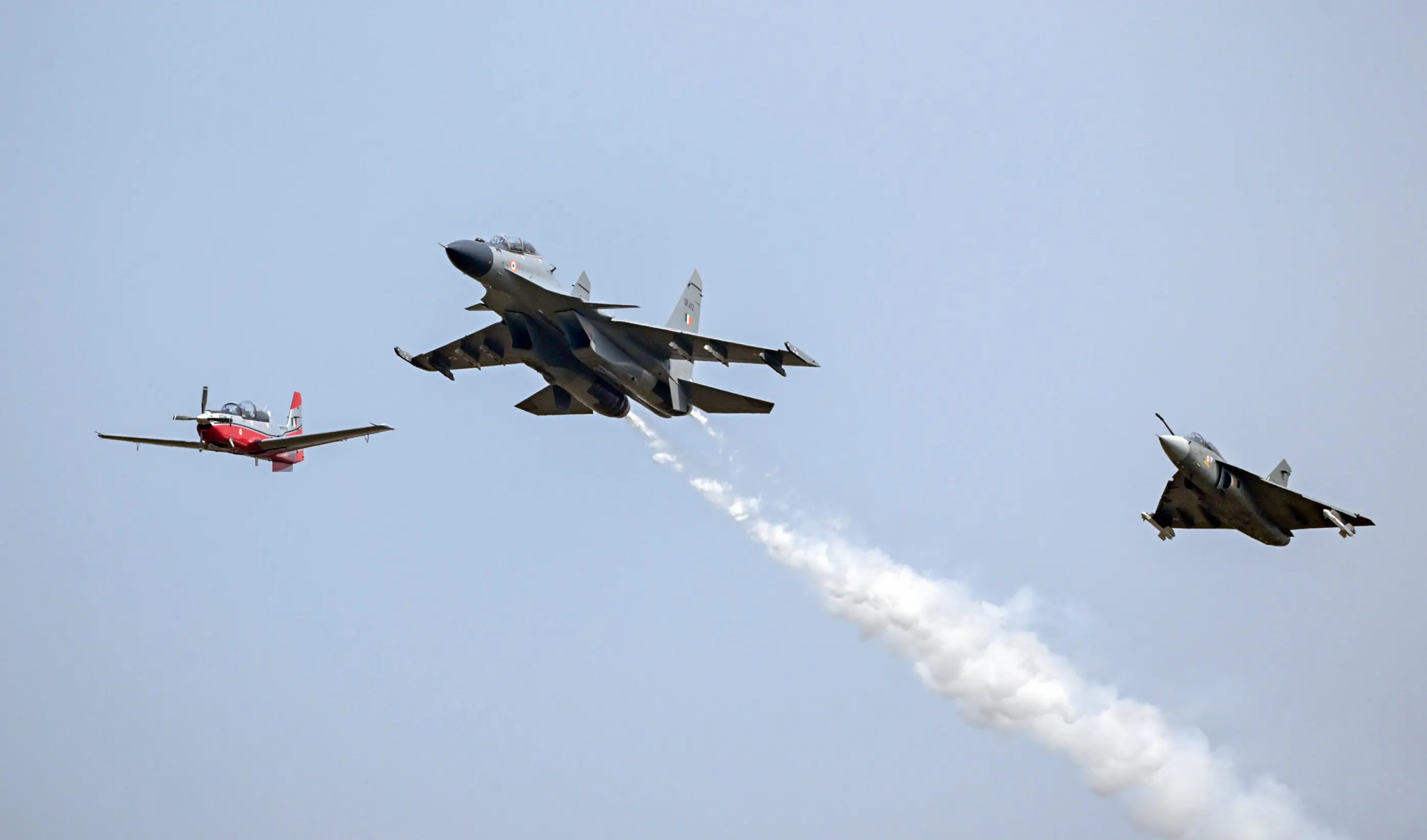
Three aircraft ready for delivery as engine supplies improve; programme highlights the importance of a reliable defence supply chain
Hindustan Aeronautics Limited (HAL) is preparing to deliver the first batch of HTT-40 basic trainer aircraft to the Indian Air Force (IAF), marking an important step forward in a programme that faced delays because of problems in securing engines.
Three HTT-40 aircraft are currently ready for delivery, according to officials familiar with the development. Two of the aircraft have been built at HAL’s facility in Bengaluru, while the third has been produced at Nashik. The development comes at a time when the IAF is looking to strengthen its training capacity to meet the requirements of a growing number of pilot trainees.
Why the HTT-40 is important
The HTT-40, or Hindustan Turbo Trainer-40, is a basic trainer aircraft developed and manufactured by HAL. Basic trainers play an important role in military aviation because they are among the first aircraft flown by newly recruited pilots. Before moving on to more advanced aircraft, trainee pilots use these platforms to learn fundamental flying skills.
The IAF had placed an order for 70 HTT-40 aircraft worth ₹6,838 crore around three years ago. The aircraft are intended to support the IAF’s basic flying training requirements and gradually strengthen the role of an Indian-built platform in the training pipeline.
Under the original delivery schedule, HAL was expected to provide 12 HTT-40 aircraft during the 2025-26 financial year. However, none could be delivered during that period because of delays in receiving the aircraft’s engines.
Engine shortage delayed aircraft deliveries
The HTT-40 is powered by the TPE331-12B turboprop engine, supplied by US-based Honeywell. The engine shortage became a major bottleneck for the aircraft programme. Even though HAL had developed the aircraft and established production facilities, the availability of engines affected the company's ability to complete and deliver the aircraft according to schedule.
Honeywell has now delivered the first batch of engines after overcoming the supply-chain problems. The company has also assured HAL that engine supplies will be maintained on schedule, allowing production and deliveries of the HTT-40 to move forward.
The episode highlights an important reality of modern defence manufacturing: building an aircraft involves much more than assembling the final platform. A shortage of even one critical component can hold up an entire production programme.
Honeywell contract includes technology transfer
HAL and Honeywell had signed a contract worth around $100 million for the supply and manufacture of 88 TPE331-12B engines and kits. Under the agreement, Honeywell was originally expected to deliver the first engine in September 2025. The arrangement involves both direct supply and local production.
Honeywell will supply 16 engines, while HAL will manufacture the remaining engines in India through technology transfer. This model is significant from a long-term defence manufacturing perspective because it can help India develop greater domestic capability in producing and supporting critical aircraft systems.
However, the recent delay also shows that technology transfer and local manufacturing capacity need to be supported by a dependable supply of critical components and raw materials.
Production capacity expanded at Nashik
HAL has also been strengthening its production infrastructure for the HTT-40. In October last year, Defence Minister Rajnath Singh inaugurated new production lines for the HTT-40 and the LCA-Mk1A at HAL’s Nashik facility. With production facilities in both Bengaluru and Nashik, HAL now has the capacity to manufacture up to 20 HTT-40 aircraft every year.
This capacity could become important as the IAF's requirement for basic trainers grows and the service seeks greater certainty in its pilot training pipeline.
How IAF pilots are trained
The HTT-40 will enter the early stage of the IAF's pilot training system. At present, rookie pilots undergo their initial Stage-I flying training on the Swiss-origin Pilatus PC-7 MkII basic trainer aircraft. This first stage is common for all pilots.
After completing it, pilots are divided into three broad streams, fighter, transport and helicopter depending on their aptitude and future roles. Pilots selected for the fighter stream continue their training on the PC-7 MkII and Kiran Mk-1A jet trainers during Stage-II.
They then move to the Hawk advanced jet trainer, built to prepare them for the demands of flying high-performance fighter aircraft. The availability of reliable basic trainers is therefore critical because any disruption at the initial stage can have an impact further down the training pipeline.
The bigger issue is defence supply-chain resilience
The HTT-40 delay offers a wider lesson for India's growing defence manufacturing sector.
India is investing heavily in developing indigenous aircraft, helicopters and other military platforms. But the success of these programmes increasingly depends on the availability of a large network of suppliers producing engines, avionics, materials, components and other specialised systems.
The HTT-40 experience demonstrates how a programme can face delays even when the final aircraft is being manufactured domestically. A locally produced aircraft still depends on a global supply chain if critical systems are sourced from outside the country. This makes supply-chain resilience an increasingly important part of India's defence strategy.
For major defence programmes, securing multiple sources for critical components, developing domestic manufacturing capabilities and maintaining adequate inventories of essential parts can be just as important as increasing final assembly capacity.
From production to lifecycle support
The HTT-40 programme also has significance beyond the delivery of the first 70 aircraft. Once the aircraft enter service, HAL and its suppliers will have to support them throughout their operational life. This means ensuring the availability of engines, spare parts, maintenance capabilities and technical support over many years.
For a training aircraft fleet, this becomes particularly important because these aircraft are expected to fly frequently. High utilisation means that maintenance and spare-parts availability must keep pace with aircraft production.
The long-term success of the HTT-40 will therefore depend not only on how quickly HAL can manufacture the aircraft, but also on how effectively the wider Indian aerospace ecosystem can support them.
A step forward, but lessons remain
The planned delivery of the first three HTT-40 aircraft is a positive development for both HAL and the IAF. It demonstrates that the programme is moving forward after the engine-related setback and that production infrastructure is now in place to support higher output.
At the same time, the delay provides an important lesson for India's ambitions to become a major defence manufacturing hub. Indigenisation is not simply about manufacturing the final product in India. It is about creating a resilient ecosystem capable of supplying, maintaining and upgrading every critical part of that product.
As India expands its domestic defence production, strengthening this ecosystem will be essential to ensure that future programmes are not held back by bottlenecks in a single critical component.
For the IAF, the arrival of the HTT-40s will add much-needed capacity to the basic training fleet. For India's defence industry, the programme could become an important test of whether the country can combine indigenous manufacturing with a dependable and resilient supply chain.