Seshan wanted to halt polls, be home minister after Rajiv’s death: Gopal Gandhi's new book
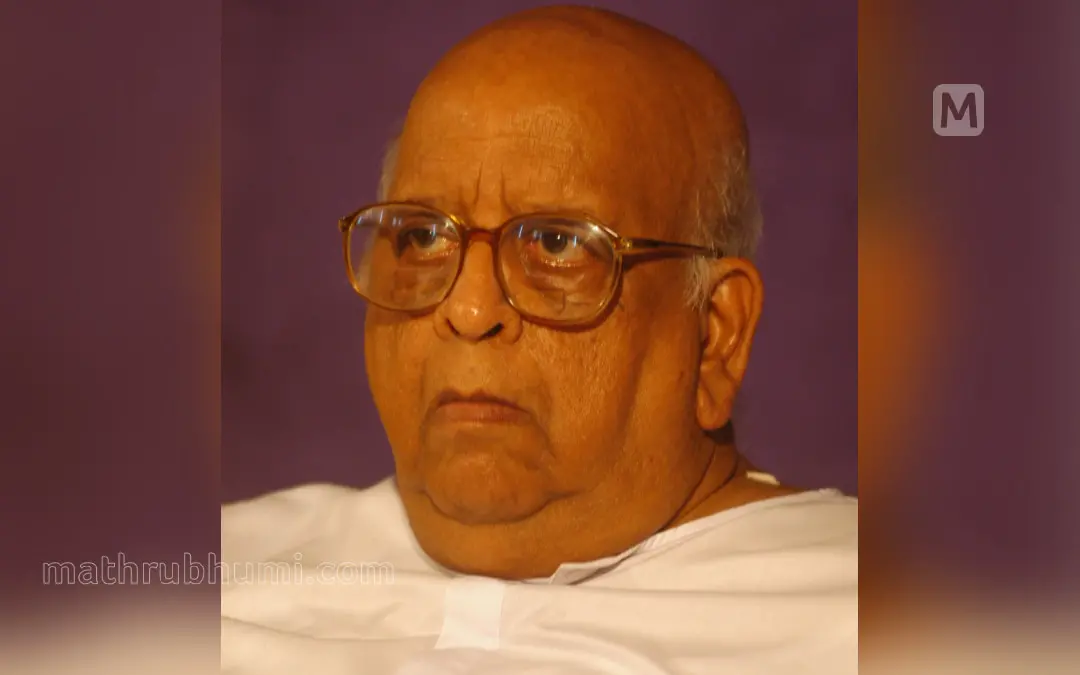
New Delhi: Former West Bengal governor Gopal Krishna Gandhi has made a striking revelation in his new book, claiming that former Chief Election Commissioner T.N. Seshan proposed an immediate stop to the general election process following the assassination of Rajiv Gandhi in 1991 and even suggested himself as a candidate for the post of home minister.
Gopal Gandhi, who was then serving as joint secretary to President R. Venkataraman, recounts the events of May 21, 1991, when the former prime minister was killed in a suicide bomb attack during an election rally in Sriperumbudur, Tamil Nadu.
In his book "The Undying Light: A Personal History of Independent India", which was launched on Wednesday by veteran actor Sharmila Tagore at the India International Centre (IIC), Gandhi writes that it was Seshan who informed the president of the assassination.
He further recalls that Seshan reached Rashtrapati Bhawan "super-fast" that night. Gandhi, who was present there along with President Venkatraman, Seshan, and the president’s secretary P. Murari, notes that the chief election commissioner confided in him just a few feet away from where the president was sitting.
"With wide eyes and shovelling hands, Seshan spoke in whispered urgency. He said he felt the election process needed to be stopped straightaway, the nation's security be brought under swift and strict control, and that he was ready to play his role beyond his office of CEC and, if RV thought fit, could serve as the country's home minister," reads the book.
"A kind of euphoria had possessed the civilian, a surge of power, a suffusion of energy," Gandhi says in his latest book.
In early 1991, Congress withdrew its support from Prime Minister Chandra Shekhar's government, alleging that it had spied on Rajiv Gandhi. Chandra Shekhar stepped down and, with no other party able to provide a stable alternative, fresh elections were called.
Rajiv Gandhi's assassination by a suicide bomber associated with the LTTE (Liberation Tigers of Tamil Eelam), a militant separatist organization from Sri Lanka, came right in the middle of the election campaign.
According to Gandhi's diary on that day, Seshan, credited with ushering in major electoral reforms during his tenure as the 10th CEC between December 12, 1990, and December 11, 1996, was "present throughout" the tense situation, being "bossy and trying to take charge".
However, none of Seshan's suggestions were considered. Both Prime Minister Chandra Shekhar and cabinet secretary Naresh Chandra, who also met with the president shortly afterwards, reassured him that “every step is being taken to contain the crisis... there is no need for any panic, no need to pause the election process”.
"The prime minister here, Chandra Shekharji, as you have yourself explained, is prime minister in every sense of the term and is heading the government that is in total control of the situation and will handle any fallout, internal or external, with total confidence. India is secure. Please be assured," the book quotes Chandra as saying.
Meanwhile, unable to stop the elections altogether, Seshan, according to the book, ordered a significant postponement of the second and third phases of polling -- rescheduling them from their original dates to June 12 and 15, following the first round held on May 20.
The Ramon Magsaysay awardee, according to the book, had claimed in an interview that the polling dates were dictated by the government. However, this was met with an "emphatic denial" from Chandra Shekhar.
"Why would Seshan be doing this? Only Seshan knew. VP Singh and IK Gujral called on RV on 15 June to complain about the EC's 'strange' practices," Gandhi says.
"The Undying Light" also draws from Venkataraman's memoir “The President Years” to say how the president viewed the CEC.
Venkataraman acknowledges in it that Seshan did his work impartially and firmly but "during all these charges and counter-charges CEC Seshan maintained an unnecessarily high profile, holding press conferences every day, giving his views on all issues and hurting people by his brashness".
Touted to be a "magisterial account of seminal events in the country from Independence to the present day", "The Undying Light", is published by Aleph Book Company.