G20 Sherpa Amitabh Kant, IAS officer Smita Sabharwal under fire for remarks on UPSC disability quota
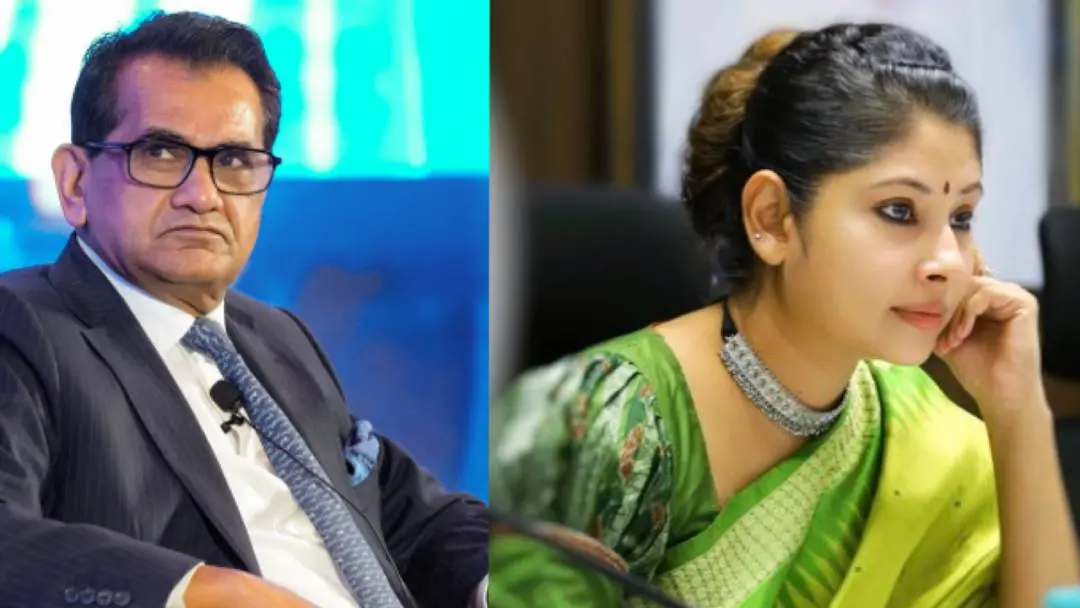
New Delhi: The controversy surrounding India's disability quota in the UPSC exams has sparked widespread criticism from disability rights activists, directed particularly at India's G20 Sherpa Amitabh Kant and IAS officer Smita Sabharwal. Their remarks suggesting a review of the disability quota have been condemned for undermining the competence of persons with disabilities.
The debate intensified following allegations against IAS probationer Puja Khedkar, accused of exploiting disability and Other Backward Class (OBC) quotas to secure her candidature in the civil services exam. The Union Public Service Commission (UPSC) initiated legal action against Khedkar for allegedly using fake identities to extend her attempts beyond permissible limits.
Amitabh Kant, formerly CEO of Niti Aayog, voiced concerns over fraudulent activities related to disability reservations, advocating for a thorough investigation and stringent actions against offenders. He emphasised the importance of maintaining selection based on competence and integrity, hinting at potential misuse of disability quotas.
"I am in favour of SC/ST or OBC reservation," Kant stated, "with regulations to enforce the creamy layer criteria. However, reservations for physically and mentally handicapped individuals, as well as the proposed 1% reservation for the third gender in top civil services, need reconsideration due to reported misuse."
Smita Sabharwal, an IAS officer, further ignited the controversy with her comments questioning the necessity of disability quotas in services like the IAS, known for demanding fieldwork and extended hours. Her remarks triggered backlash from activists and professionals advocating for disability rights.
Responding to Sabharwal, disability rights activist Dr. Satendra Singh highlighted the achievements of individuals with disabilities across various professions, asserting competence irrespective of physical challenges. He criticised Sabharwal's viewpoint as narrow and lacking understanding of the capabilities of differently-abled individuals.
Arman Ali, executive director of the National Centre for Promotion of Employment for Disabled People, underscored the accomplishments of disabled professionals such as Maj Gen Ian Cardozo, the first war-disabled officer to command a battalion, and renowned oncologist Dr. Suresh Advani. Ali criticised the tendency to judge ability solely through physical capacity, urging a broader perspective.
Prominent lawyer Karuna Nundy expressed astonishment at the ignorance displayed by an IAS officer regarding disabilities, emphasising that most disabilities do not hinder intellectual or professional capabilities. Nundy stressed the urgent need for diversity and awareness in such critical positions.
In defence of her stance, Sabharwal clarified that while she recognized the legal framework for equality, she believed that certain roles within the All India Services (AIS) might not be suited to individuals with certain disabilities. She maintained that talented differently-abled individuals could find suitable opportunities in other governmental roles better aligned with their capabilities.
Kant, in a subsequent clarification, affirmed his call for a review of disability quotas rather than their elimination. He clarified concerns about misuse of mental disability certificates for gaining advantages not intended under the quota system.
Muralidharan, General Secretary of the National Platform for the Rights of the Disabled (NPRD), issued a robust condemnation of Kant and Sabharwal's remarks, accusing them of revealing inherent biases and prejudices. He stressed that disability reservations were not acts of sympathy but measures designed to ensure equal opportunities based on the capability of individuals to fulfil specific job responsibilities.
The controversy has prompted a broader discussion about the role and implementation of disability quotas in India's civil services. Activists argue that reservations are essential to counter historical discrimination and provide equitable opportunities based on merit and capability rather than physical attributes.
Critics of Kant and Sabharwal assert that their comments overlook the contributions and abilities of disabled professionals across diverse fields, reinforcing stereotypes and undermining efforts towards inclusivity and diversity in public service.
Moving forward, stakeholders advocate for a more nuanced approach to disability policies, emphasising rigorous implementation of legal safeguards while promoting a more inclusive understanding of disability in professional settings. The ongoing dialogue underscores the need for sensitivity, awareness, and proactive measures to uphold the rights and opportunities of persons with disabilities in India's public sector. PTI