Firhad Hakim quits as Kolkata mayor: Is TMC's civic fortress beginning to crack?
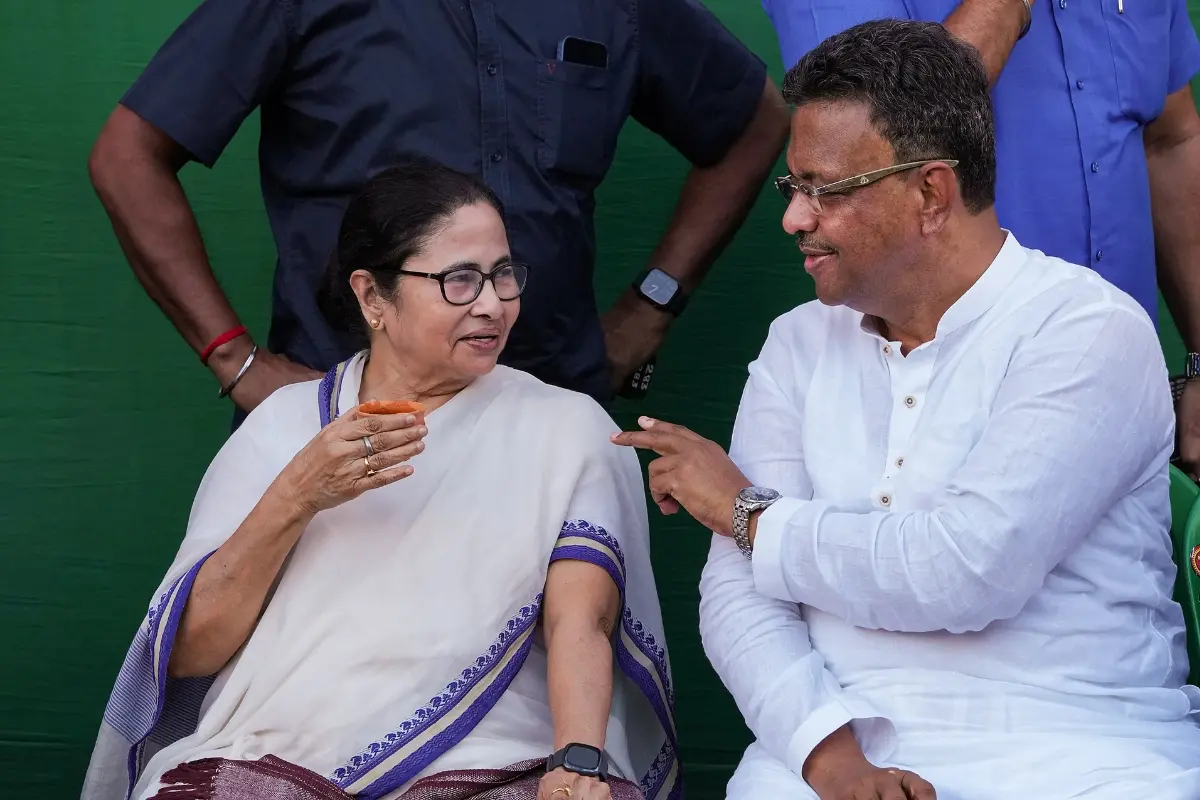
Kolkata: Senior Trinamool Congress (TMC) leader Firhad Hakim resigned as the mayor of Kolkata on Friday, bringing an end to nearly eight years at the helm of the Kolkata Municipal Corporation (KMC).
His resignation comes amid a series of exits by civic leaders across West Bengal, sparking fresh political debate about the state of the ruling party's municipal network.
Hakim cites inability to function effectively
Announcing his decision, Hakim said he could no longer perform his responsibilities in the manner expected of the office. He reflected on his tenure, which included managing the city's response to major challenges such as Cyclone Amphan and the COVID-19 pandemic.
The veteran TMC leader said he had always worked with authority and conviction but felt that continuing under the present circumstances would not be appropriate. He added that he preferred to leave the post with dignity rather than remain in office without the ability to function effectively.
Decision taken after consulting Mamata Banerjee
Hakim revealed that he had informed TMC chief and West Bengal Chief Minister Mamata Banerjee about his decision before stepping down. According to him, Banerjee accepted his request to resign.
He also acknowledged that several civic projects remained unfinished and expressed hope that future administrators would continue the work and achieve better results for the city.
Resignation follows a series of civic exits
The development comes just a day after the resignations of Bidhannagar Mayor Krishna Chakraborty and Chandannagore Mayor Ram Chakraborty. It also follows reports of councillors and civic office-bearers stepping away from organisational responsibilities in several municipalities across the state.
These developments have fuelled speculation about growing political shifts within local governance structures that have traditionally served as important centres of TMC influence.
Hakim became Kolkata mayor in November 2018 after the resignation of Sovan Chatterjee. During his tenure, he emerged as one of the most influential figures in the city's administration and became the first Muslim mayor of Kolkata since Independence.
The office he leaves behind carries considerable historical significance. Over the decades, it has been held by prominent leaders including Chittaranjan Das, Subhas Chandra Bose and Bidhan Chandra Roy.
Hakim said he never imagined he would one day occupy a position previously held by such distinguished personalities.
BJP criticises Hakim's tenure
The resignation triggered an immediate political response from the opposition BJP. Party leader and councillor Sajal Ghosh criticised Hakim's performance as mayor and argued that the resignation reflected deeper problems within the ruling establishment.
The BJP also linked the development to broader political changes taking place in the state following recent electoral developments.
With Hakim stepping down, the administration of the Kolkata Municipal Corporation is expected to temporarily move into the hands of senior bureaucrats until the state government decides on a successor or alternative arrangement.
Political observers believe the resignation is significant not only because of Hakim's stature within the TMC but also because it comes at a time when several municipal bodies across West Bengal are witnessing leadership changes.
Why the resignation matters
For more than a decade, municipalities and municipal corporations have been central to the TMC's grassroots organisational strength. Kolkata Municipal Corporation, in particular, has remained under the party's control since 2010 and has played a key role in its political expansion.
Hakim's departure is therefore being viewed as more than a routine leadership change. It highlights the challenges facing the party's local governance network and raises questions about how municipal politics in West Bengal may evolve in the coming months.