‘Prime Minister Ambani’: Elon Musk launches scathing attack over Starlink's blocked entry in India
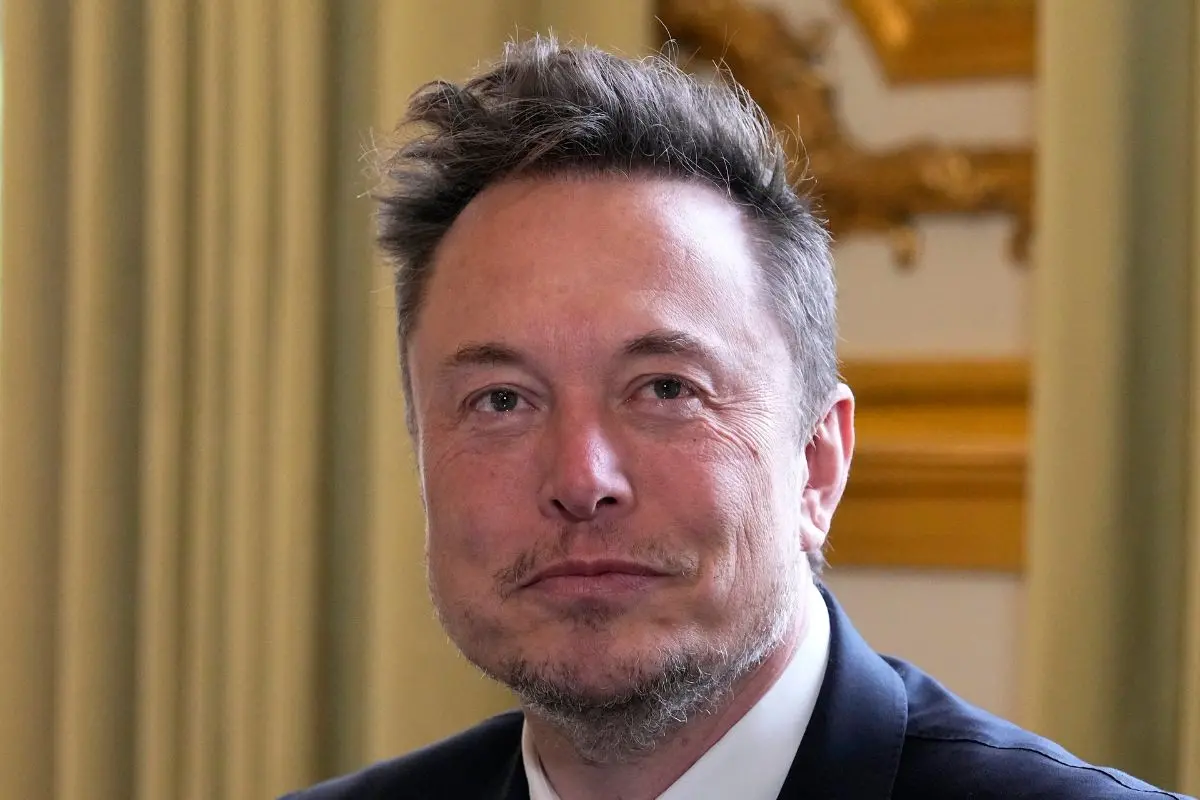
SpaceX Chief Executive Elon Musk intensified his ongoing public dispute regarding Starlink's proposed entry into the Indian market on Friday, sarcastically addressing industrialist Mukesh Ambani as "Prime Minister Ambani" and accusing him of attempting to preserve a monopoly, whilst questioning whether permission would be granted for the satellite internet provider to compete in the country.
Musk’s latest remarks on X arrived mere hours after Communications Minister Jyotiraditya Scindia maintained that India prohibits monopolies across all sectors, noting that although attention has focused heavily on one particular enterprise, three separate entities have secured satellite communication licences and are cleared to launch operations once individual security protocols and administrative milestones are met.
The tech billionaire's post marks a sharp escalation in the unfolding satcom row, which saw the US entrepreneur recently claim that powerful commercial interests were working to block his service in order to maintain their dominance over the domestic market.
ALSO READ: Elon Musk loses cool over Starlink India delay, accuses ‘oligarchs’ of blocking launch
In a social media post on Thursday, Musk had asked whether "Ambani is the real boss of India".
On Friday evening, Musk ratcheted up the tension with a direct post.
"Dear Prime Minister Ambani, Please accept my humble apologies for not realising that you are the real boss of India. Naturally, you would prefer to maintain your monopolistic exploitation of the great people of India, but would you nonetheless consider allowing Starlink to compete?" he wrote.
Musk also argued that numerous regions across India, mirroring conditions globally, lack internet connectivity, depriving children of educational opportunities and preventing small enterprises from reaching international digital markets.
"Starlink would change their lives for the better," Musk stated.
Moments later, he added in a subsequent post: "Starlink has proven to be essential for saving lives during natural disasters throughout the world, when all other communication systems have failed," noting further, "So you would also be helping save men, women and children throughout India."
Earlier on Friday, Minister Scindia reiterated that India does not tolerate monopolies in any industry.
"Let me set the record straight. For us, the Department of Telecommunications, we are technology agnostic... Our job is to be able to provide the bouquet of services to every single customer. It is for the customer to choose in a free market which service he or she prefers, and within that service bouquet, which company's service he or she prefers," the Union minister stated during a media briefing at the India Mobile Congress in New Delhi.
Scindia highlighted that three operators, Musk’s Starlink, Reliance Jio's satellite venture Jio Satcom, and the Bharti-backed Eutelsat OneWeb, have already been issued licences, whilst Amazon’s Kuiper has expressed formal interest and will be required to follow standard procedures.
While public discussion has centred on a single firm, three separate entities hold satcom permits, he added.
"We are very clear on our stand. There are three parties that have got a licence; as and when the government decides the charge system on the revenue basis, that spectrum will be assigned to them, and as and when they individually fulfil the security conditions, they can start operations," the minister explained.
ALSO READ: Govt hits back at Elon Musk's 'oligarchs' claim on Starlink
Scindia noted that the Telecom Regulatory Authority of India (TRAI) and the Department of Telecommunications are nearing a final determination on the pricing framework for satellite communication spectrum.
Directing criticism at the Congress party in light of recent exchanges between Rahul Gandhi and Musk on social media, Scindia remarked: "As far as the Congress is concerned... I don't think they themselves know whether they're going left or right."
He pointed out that the opposition party initially objected to a specific individual obtaining a licence, yet had subsequently formed common cause over delays in granting approvals to that same individual.
The war of words unfolded against the backdrop of an intense debate over satellite communication services, with Musk claiming that Starlink faced obstruction from domestic oligarchs seeking to "maintain their monopolistic chokehold on the Indian people".
As the India Mobile Congress proceeded in the capital, the administration and the billionaire traded barbs, with the Department of Telecommunications rejecting assertions that local commercial players were hindering Starlink's entry.
"Starlink is licensed in over 165 countries and has spent five years complying with every single law and requirement of the government of India, so why still no license?" Musk had earlier posted on X.
The telecommunications ministry has consistently maintained that India's regulatory architecture for telecommunications and satellite operations is equitable and impartial, dismissing any allegations of selective application as entirely baseless.
PTI