'No shame or hesitation': DMK’s personal jibe at Vijay over Trisha
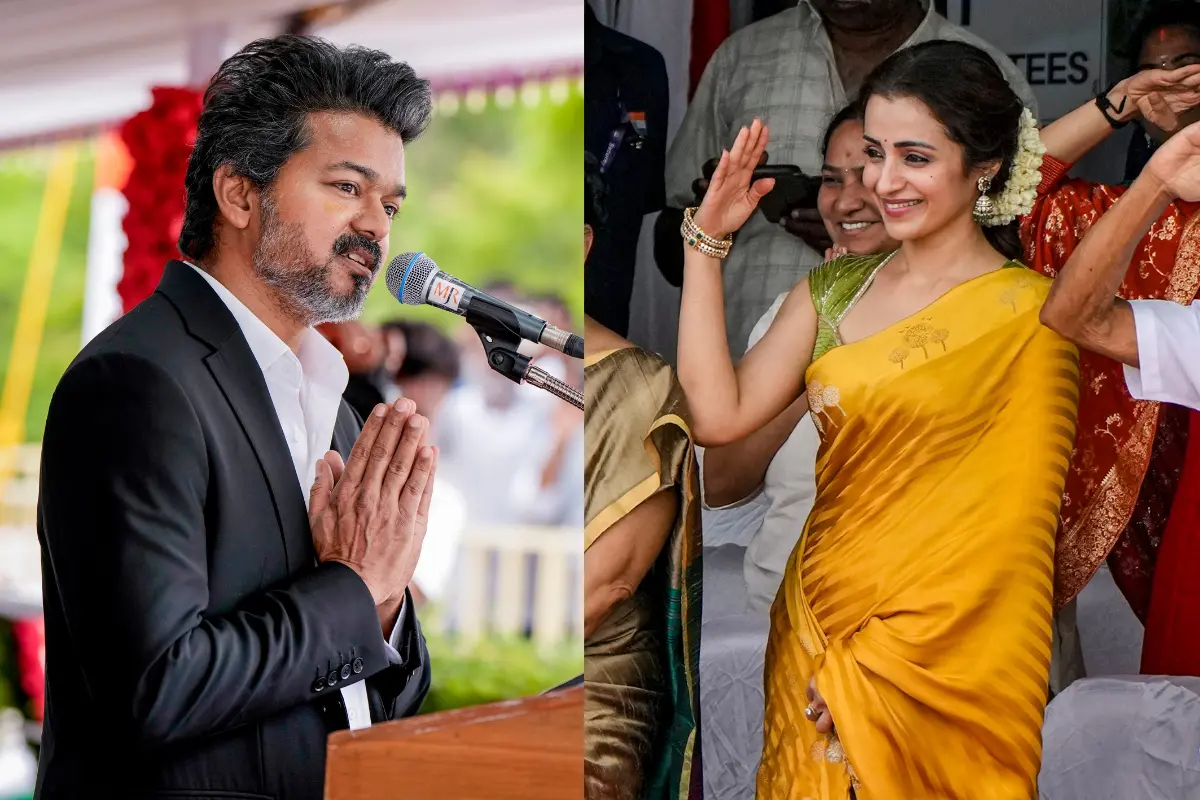
Chennai: The DMK's mouthpiece Murasoli has criticised Tamil Nadu Chief Minister Vijay over actor Trisha's presence at the Independence Day celebrations at Fort St George, calling their interaction inappropriate.
In an editorial, Murasoli criticised Vijay for having Trisha seated in the front row during the official Independence Day celebrations and for exchanging salutes with her.
The editorial described the scene as a “shameful spectacle” and questioned the propriety of the Chief Minister's conduct at an official government event.
Trisha was seated alongside Vijay's parents and was seen saluting as he hoisted the national flag.
Trisha’s presence sparks political controversy
Trisha's appearance at Vijay's official events has attracted attention, particularly after she attended his swearing-in ceremony in May.
Their friendship has been the subject of public speculation, while Vijay's personal life has also faced scrutiny. His wife, Sangeetha, had filed for divorce in February 2026 but withdrew the petition earlier this month.
The Murasoli editorial's comments have now brought the issue into Tamil Nadu's political discourse.
Udhayanidhi-Trisha row
The latest attack comes shortly after DMK leader Udhayanidhi Stalin was arrested on August 4 over remarks widely interpreted as being derogatory towards Trisha.
He was released on bail later that day.
Vijay's TVK had condemned the remarks, adding another layer to the political friction between the two camps.
The controversy comes as the DMK and Vijay's Tamilaga Vettri Kazhagam (TVK) remain political rivals in Tamil Nadu. The latest editorial indicates that the dispute has increasingly involved personal and celebrity-related issues alongside political criticism.
Why is Vijay-Trisha’s personal equation becoming a political issue?
Personal relationships involving public figures can attract attention, but criticism becomes a different matter when private lives are repeatedly used as a political weapon. In this case, the focus on Vijay and Trisha's equation raises questions about whether their personal interactions at public events are being given disproportionate political importance, particularly when there is no clear indication that the relationship has affected the functioning of the government or official duties.
The criticism has also been notably directed at Trisha. While Vijay is often defended or celebrated by sections of his supporters, Trisha has faced a significant share of the online speculation and hostility surrounding their friendship. That raises a broader question about why a woman is frequently made the focus of scrutiny over an association involving two adults.
There is also a distinction between questioning a Chief Minister's conduct at an official event and judging his private relationships. If an interaction genuinely affects protocol, administration or the functioning of government, it can be examined on those grounds. But turning personal speculation into a political attack risks shifting attention away from policy, governance and public accountability.
The latest Murasoli editorial has therefore brought the Vijay-Trisha equation back into the political conversation, with the DMK describing their interaction at the Independence Day event as a “shameful spectacle”.