'Our ministers don't have to resign': A throwback to BJP's response to calls for exits
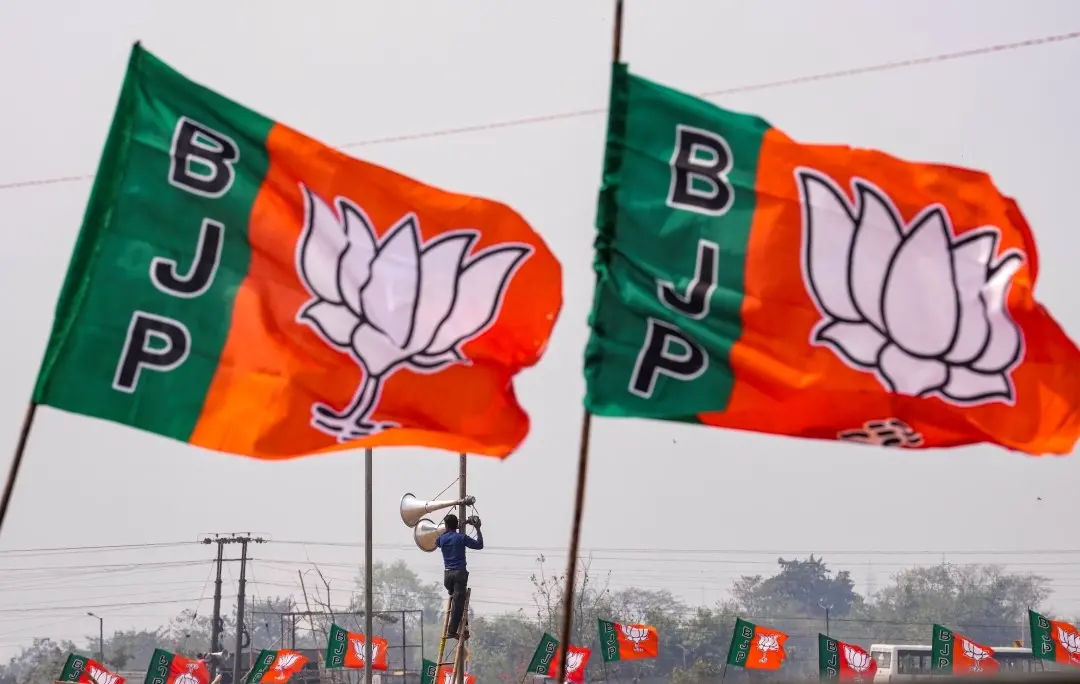
Union Education Minister Dharmendra Pradhan is facing mounting criticism over alleged irregularities in national examinations. Protesters from the Cockroach Janta Party (CJP) and activist Sonam Wangchuk have staged sustained demonstrations demanding his resignation.
On Friday, Union Health Minister J.P. Nadda met representatives of the CJP and assured them that the government would respond to their demands.
Speaking to reporters after the nearly two-hour meeting, Nadda said the delegation had presented three key demands and five suggestions for reforming the examination system.
"The meeting went on for almost 2 hours... They had 3 main demands and 5 reform suggestions for exams. We have told them that we will meet them again tomorrow afternoon and tell them about the discussion we had among the Government," he said.
The episode has once again raised a broader political question: why have resignation demands rarely resulted in Union ministers leaving office under the BJP-led government?
From demanding resignations to resisting them
A decade ago, the BJP, then in opposition, frequently demanded the resignation of Union ministers in the Congress-led UPA government. It disrupted Parliament in 2012 while pressing for the exit of leaders including A. Raja over the 2G spectrum case.
Over roughly 12 years of BJP-led rule, however, no Union minister has resigned solely because of sustained public or political demands for accountability. This has remained the case through controversies including the Rafale deal, the Pegasus allegations and high-profile financial fraud cases.
The government's position became clear in 2015 when the opposition demanded the resignation of External Affairs Minister Sushma Swaraj and Human Resource Development Minister Smriti Irani over separate controversies.
Rejecting the demands, then Union Home Minister Rajnath Singh said: "Our ministers do not have to resign. This is not their (Congress') government. This is NDA government."
Senior BJP leaders also argued that their ministers had not engaged in the kind of misconduct that had led to resignations during the UPA years.
Ministers stayed despite major controversies
The government's approach has since been tested by both tragedies and political controversies.
In 2021, the son of junior Union Home Minister Ajay Mishra Teni was accused in a fatal incident involving protesting farmers in Lakhimpur Kheri. Despite widespread demands for his removal, Teni remained in office for three more years and left the ministry only after losing his Lok Sabha seat in the 2024 general election.
Railway Minister Ashwini Vaishnaw has repeatedly faced calls to resign following major train accidents and concerns over railway management. Civil Aviation Minister K. Ram Mohan Naidu has also come under criticism over flight disruptions and aviation safety issues.
In each instance, the government defended its ministers, preferring investigations and administrative reforms over ministerial resignations.
The 2021 Cabinet reshuffle, which saw several ministers, including Dr Harsh Vardhan, leave office, was presented as a routine exercise rather than a response to the Covid-19 crisis. Dr Harsh Vardhan resigned as Union Health Minister on July 7, 2021, amid intense public and political criticism over the government's handling of the pandemic's second wave. His departure came as part of a wider reshuffle of Prime Minister Narendra Modi's Council of Ministers.
Critics and analysts offer differing explanations
Critics argue that the shift reflects a governance model in which political authority is concentrated in the Prime Minister's Office. They contend that forcing a minister to resign would be viewed as acknowledging the failure of a minister personally selected by the Prime Minister. In their view, protecting the minister also shields the image of the government's top leadership.
Political analysts offer another explanation. They argue that controversies are unavoidable in a government of such scale, and yielding to one resignation demand could encourage the opposition to seek the removal of ministers whenever another crisis emerges.
Analysts also point to the BJP's long-standing claim of maintaining higher standards of discipline than the UPA. According to this view, accepting that a minister should resign over a controversy would risk undermining a central political argument the party has made for years.