Delhi wakes up to toxic smog after Diwali; AQI crosses 400 in several areas
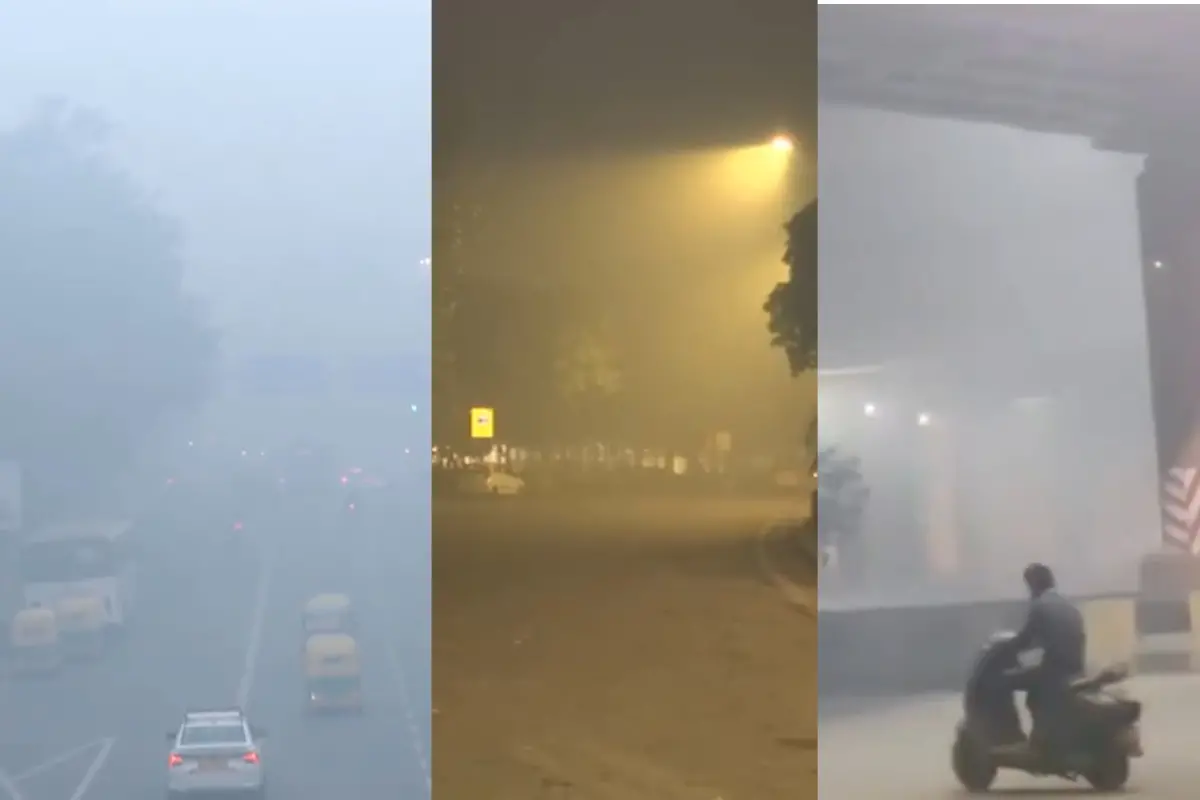
New Delhi: Residents of the national capital woke up to heavy toxic smog on Monday, November 9, a day after Diwali celebrations. Firecracker emissions overnight worsened Delhi's already deteriorating air quality, pushing pollution levels into the 'severe' zone across several neighbourhoods. The city's overall Air Quality Index (AQI) stood at 366 in the 'very poor' category at 6:15 am, according to official data from the Central Pollution Control Board's Sameer app. This follows an average AQI of 376 recorded on Sunday and 369 on Saturday.
Toxic smog impairs visibility as severe pockets emerge
A dense layer of smog enveloped several areas during the early hours of Monday, significantly impairing visibility for morning commuters, particularly around Inderlok. Whilst the overall city average remained in the 'very poor' bracket, pollution monitors recorded alarming spikes elsewhere. At 4:20 am, the monitoring station at ITO clocked an AQI of 406, entering the 'severe' range, having logged 404 later in the morning.
Sonia Vihar recorded the highest pollution level across Delhi with an AQI of 449. Other localities also witnessed hazardous air quality, including Burari Crossing at 445, Vivek Vihar at 441, Jahangirpuri at 439, Delhi University North Campus at 437, and Rohini at 435. Stations at DTU registered 431, Bawana 424, whilst both Chandni Chowk and Patparganj stood at 418. Mundka logged 413, followed by NIH Narela and Punjabi Bagh at 408 each, and the Commonwealth Sports Complex at 404. Meanwhile, central and southern parts fared marginally better but stayed in the 'very poor' category, with Rajiv Chowk recording 381 at 1:30 am and South Extension registering 360 at 4:00 am.
Political row erupts alongside emergency measures
The deteriorating environmental crisis has sparked sharp political friction in the capital. Delhi Minister Kapil Mishra mounted a direct attack on Aam Aadmi Party national convenor Arvind Kejriwal via a social media post on X. Mishra alleged that a deliberate campaign was being run from Kejriwal's residence to target the Hindu festival of Diwali and Sanatan Dharma under the guise of tackling air pollution. He further claimed that political figures and paid celebrities were being deployed to drive this targeted narrative.
Amidst rising public concern and worsening atmospheric conditions, authorities have enforced Stage III of the Graded Response Action Plan across Delhi and the neighbouring National Capital Region to curb further deterioration.