Red Fort blast: Delhi Police examine suspect’s 3-hour stay, possible sleeper cell role
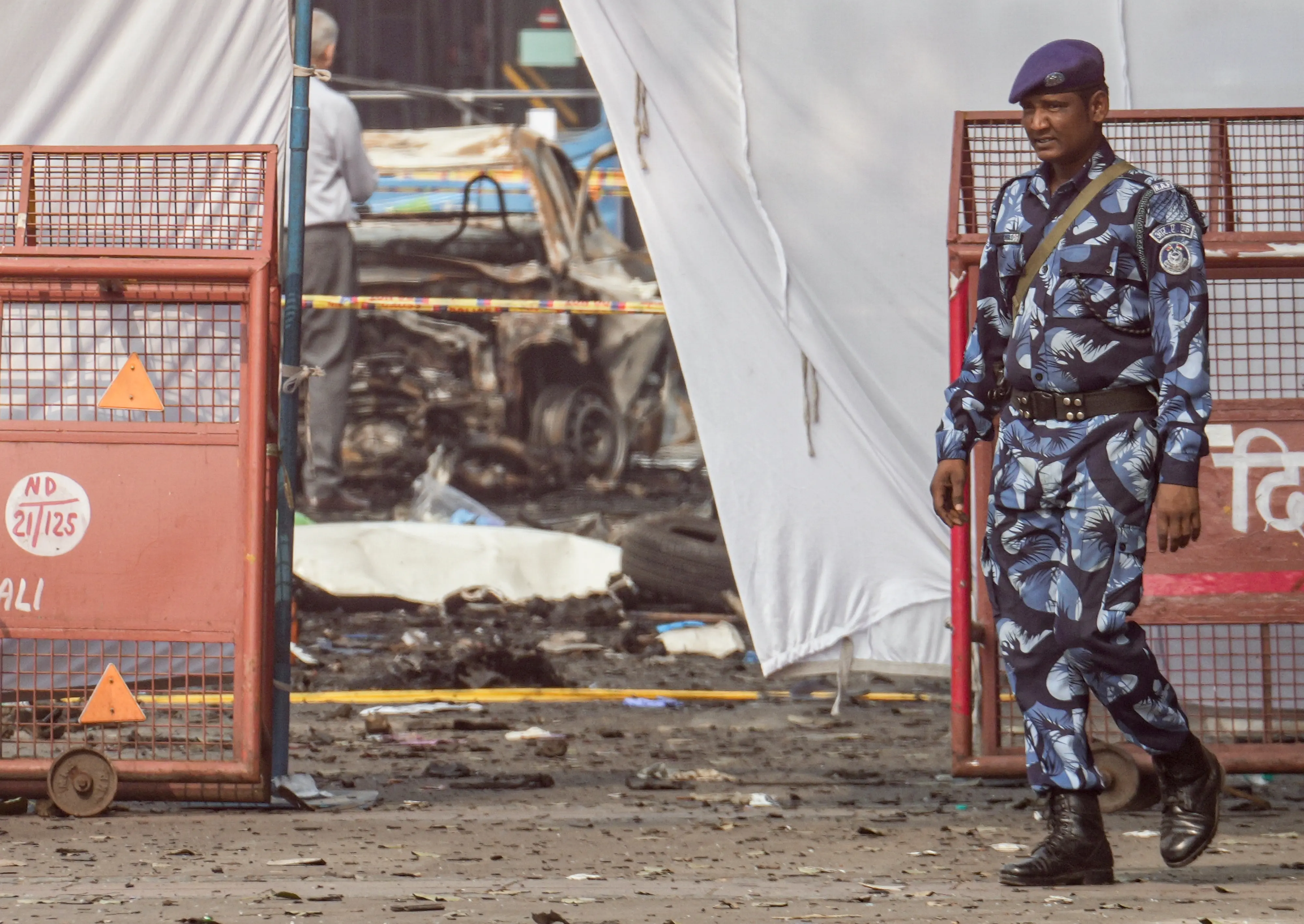
New Delhi: Delhi Police and central security agencies have zeroed in on three critical aspects of the investigation into Monday evening’s blast near the Red Fort complex, officials said on Tuesday.
According to sources within the Delhi Police, investigators are examining the movements of the main suspect, the possible network linked to a university in Faridabad, and the nature of the explosive used in the incident.
The most crucial part of the probe centres on the three-hour window when Dr. Umar, allegedly driving the Hyundai i20 in which the explosion occurred, parked the vehicle in the Red Fort parking area.
Officials said investigators are analysing what Umar did between 3:19 pm and 6:22 pm, specifically whether he stayed near the car, met anyone, or conducted reconnaissance of the area.
Police are also probing whether the suspect deliberately waited for the evening rush-hour crowd to gather on nearby roads before the blast occurred.
Sources said the suspect arrived at the parking area at 3:19 pm and left around 6:22 pm. Investigators are verifying if he communicated with anyone during that time or received instructions remotely.
Authorities are also questioning why he remained in a high-security zone for nearly three hours. “The possibility that he was awaiting logistical assistance or a signal from a sleeper cell is under scrutiny,” an official said.
The second line of investigation focuses on the suspected network of doctors from a university in Faridabad whose names surfaced during the probe. Police are identifying the number of active and inactive members linked to this alleged group, believed to have sleeper cell connections.
Officials suspect that the Delhi blast and the Faridabad recovery could be linked to a larger terror network operating across multiple states.
Agencies are also probing the origin of the recovered weapons and explosives — whether they arrived in separate consignments and who facilitated their delivery. Investigators are tracking other members of a Telegram group reportedly used for coordination, including how long it has been active and who managed it.
Authorities are also examining whether Umar, Mujammil, or Aadil personally carried out reconnaissance in Delhi or relied on another operative.
In a major breakthrough on Monday, Jammu and Kashmir Police, in coordination with the Haryana Police, recovered 360 kg of suspected ammonium nitrate and 2,900 kg of IED-making materials, including chemicals, detonators, and wires, from an apartment in Faridabad. Dr. Muzammil and Aadil Rather were arrested in connection with the recovery.
The third aspect of the investigation focuses on the nature of the blast itself. Unlike previous explosions in the capital that used shrapnel like nails, ball bearings, or blades to amplify impact, no such fragments were found at the Red Fort site.
Investigators remain puzzled by how the explosion caused significant damage — shattering nearby vehicles — without leaving a crater or the typical signs of a powerful detonation.