‘You Can Change Your Own Life’: Why anti-government posters inside Delhi Metro triggered an FIR
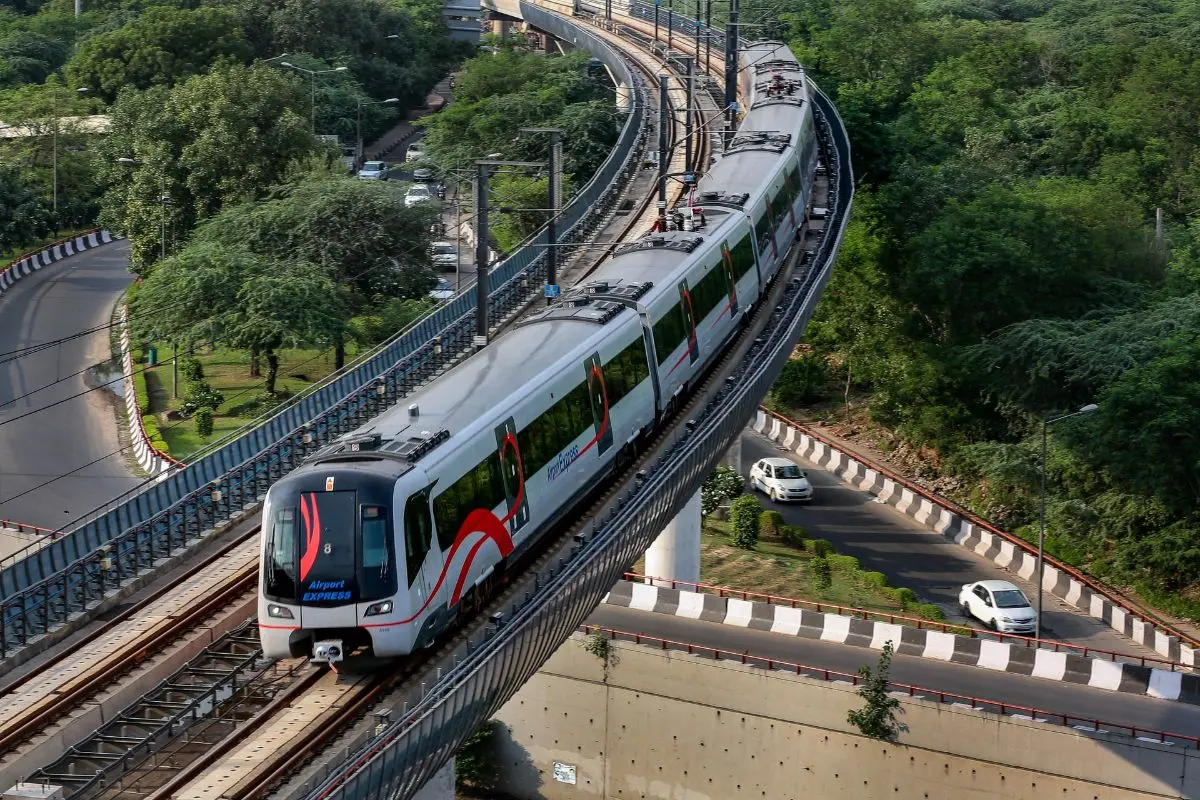
Delhi Police have registered an FIR against unidentified persons after two posters questioning the government’s performance were found inside a train on the Delhi Metro’s Airport Express Line. The posters contained political messaging, listed nine claims about changes in the country in recent years and included a QR code inviting people to join an online group, according to police sources cited in media reports.
The case centres not only on who put up the posters but also on the online group linked through the QR code. Police have seized the material, while the Special Cell has joined the investigation to help identify those responsible. The identity of the people behind the posters and the purpose of the online group have not been established in the reports available so far.
What did the posters say?
The two posters were printed in black and white on A4-sized sheets. They carried phrases including:
“Dissatisfied? You Are Not Alone”
“Voting Protest”
“You Can Change Your Own Life”
“Spectrum of Engagement”
“Community Building Reform”
The posters also listed nine claims about changes in India in recent years. A QR code invited passengers to join an online group, although the available reports do not establish who administered the group or what activities it was intended to facilitate.
How the posters were discovered
According to the FIR details reported, the incident came to light on October 20, 2026, when Tarun Chaudhary, a train operator with the Delhi Metro Rail Corporation (DMRC), was inspecting a train operating on the Airport Express Line.
The train departed from New Delhi station at around 6.50 pm and reached Yashobhoomi at approximately 7.15 pm. During an inspection from the driver's cabin, Chaudhary noticed two posters pasted on a seat inside the train.
He removed the posters and informed senior officials and the Operations Control Centre. He was subsequently directed to hand over the material to the station controller at Dwarka Sector 21, who alerted the police. The posters were later seized as part of the investigation.
FIR registered, Special Cell joins investigation
The FIR was registered against unidentified persons after the posters were found inside the metro coach. The case has been reported under the Delhi Prevention of Defacement of Public Property Act, 2007, and the Metro Railways (Operation and Maintenance) Act, 2002.
The Delhi Police Special Cell is also involved in the probe. Investigators are working to identify the person or persons who placed the posters inside the train. The QR code and the online group it linked to are additional aspects of interest, but no individual or organisation has been publicly identified as responsible in the reports cited here.
Why the QR code is a key part of the case
The QR code distinguishes these posters from material that simply displays a political message in a public place. It provided a digital route for passengers to move from seeing the posters to joining an online group.
That creates a separate investigative question: who operated the group, what information was presented to people who joined it, and whether it was connected to the people who placed the posters. These are questions for investigators; the available reporting does not establish the answers.
The episode also illustrates how physical messaging in public transport can be linked to online communication. Establishing that link, however, requires evidence connecting the posters, the QR code and the people responsible.
What the case means for political messaging in public spaces
The incident brings together three issues: political expression, the use of public infrastructure and the investigation of anonymous online organising.
The posters questioned the government’s performance and used language related to voting and community participation. Their presence inside a metro train prompted a police case, but the registration of an FIR does not by itself establish the identity of those responsible or prove that a particular person has committed an offence.
The investigation will need to establish who placed the material, the circumstances in which it was displayed and the relevance of the QR code and linked online group. Any legal conclusions will depend on the evidence and the applicable provisions of law.
For now, the central development is that Delhi Police have seized the posters and begun investigating an unidentified campaign that combined political messaging in a public transport setting with an invitation to join an online group.